
Sweet Potato and Sausage Dishes That Actually Make Weeknights Easy
Table of Contents
It was a Tuesday in October when I first threw sweet potatoes and sausage into the same pan without really thinking about it. I had half a bag of sweet potatoes going soft on the counter, two links of Italian sausage in the fridge, and about 35 minutes before everyone started circling the kitchen asking what was for dinner. What came out of that cast iron skillet stopped my husband mid-sentence. He looked at his plate, looked at me, and said, “We’re having this again.”
That was three years ago. Since then, sweet potato and sausage dishes have become one of my most-tested, most-requested category of weeknight meals. The combination works because sweet potatoes bring natural sweetness and a starchy depth that balances the savory, slightly fatty richness of sausage. Together, they hit every flavor note without needing a long ingredient list or a complicated technique.
This article covers everything I’ve learned: one master skillet recipe, variations, mistakes I’ve made so you don’t have to, and all the storage and serving details.
Why This Combination Works So Well
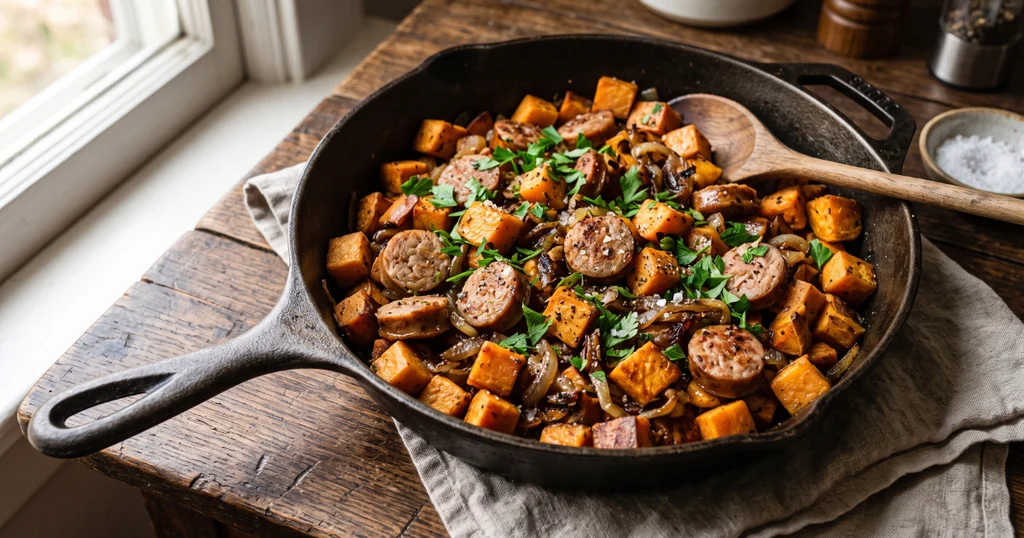
The first time I made sweet potato and sausage dishes on purpose — not just by accident — I started paying attention to why the flavors worked so well together. Sweet potatoes have a natural sugar content that caramelizes beautifully when you get them in a hot pan. That caramelization creates a slightly crisp edge with a fluffy, almost creamy interior.
Sausage, especially Italian or smoked sausage, brings fat, salt, and depth. When the sausage fat renders out, it coats the pan with flavor that the sweet potatoes absorb as they cook. You’re essentially building the sauce right in the pan.
I’ve made this with fresh sausage, pre-cooked smoked sausage, and even breakfast links. Each version produces a slightly different result, but all of them work. The ratio matters more than the variety — roughly equal parts sweet potato to sausage by weight gives you a balanced bite every time.
Ingredients
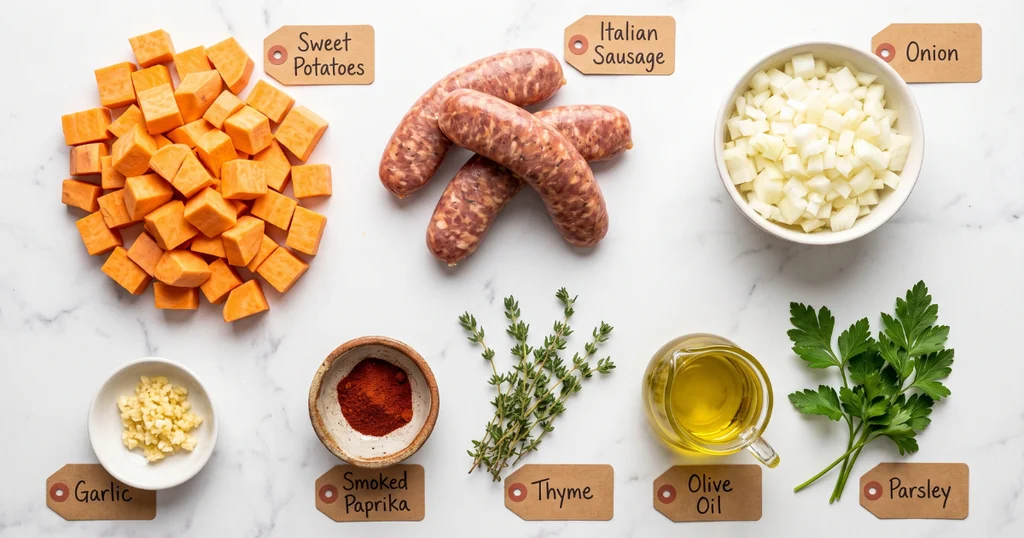
| Ingredient | Amount | Why It’s There / Substitute |
|---|---|---|
| Sweet potatoes, peeled and cubed | 2 lbs (about 3 medium) | The base — use Japanese yams for a drier texture |
| Italian sausage (mild or hot) | 1 lb | Flavor backbone — smoked kielbasa works great too |
| Yellow onion, diced | 1 large | Adds sweetness and body — red onion is fine |
| Garlic, minced | 4 cloves | Depth — garlic powder (½ tsp) if you’re out |
| Olive oil | 2 tablespoons | For searing — avocado oil if you need higher smoke point |
| Smoked paprika | 1 teaspoon | Warmth and color — regular paprika works, less smoky |
| Dried thyme | ½ teaspoon | Herbal note — fresh thyme (1 tsp) is even better |
| Crushed red pepper flakes | ¼ teaspoon | Heat — omit if cooking for kids |
| Salt | 1 teaspoon | Essential — adjust based on sausage saltiness |
| Black pepper | ½ teaspoon | Background spice |
| Chicken broth | ¼ cup | Deglazes the pan and steams the potatoes through |
| Fresh parsley, chopped | 2 tablespoons | Finish — fresh basil or chives also work |
Step-by-Step Instructions
Prep Your Ingredients
Start by peeling and cubing your sweet potatoes into ¾-inch pieces. Consistency matters here — if some pieces are twice the size of others, they won’t cook evenly and you’ll end up with some mushy and some underdone. I use a ruler the first time I make a new recipe just to calibrate my eye.
Slice the sausage into ½-inch rounds if using links. If you have bulk sausage, you’ll crumble it directly into the pan. Dice your onion and mince your garlic — have everything ready before the pan goes on heat because this moves fast.
Brown the Sausage
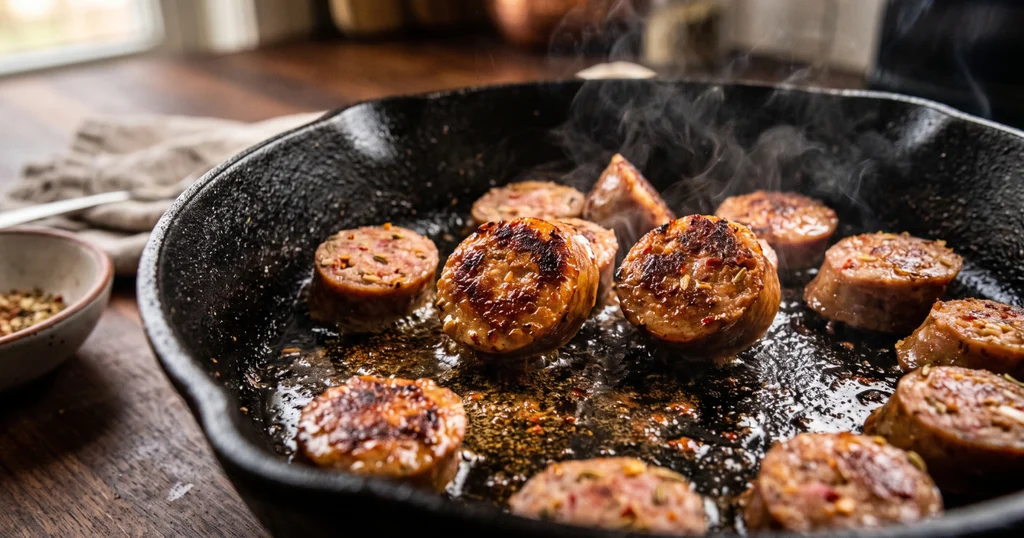
Heat a 12-inch cast iron skillet or heavy-bottomed pan over medium-high heat. Add 1 tablespoon of olive oil and let it shimmer — about 90 seconds. Add the sausage in a single layer and don’t touch it for 2–3 minutes.
You want a real sear here, not a steam. That brown crust on the sausage builds flavor that carries the whole dish. Flip the pieces and cook another 2 minutes. Transfer the sausage to a plate and leave all that rendered fat in the pan. Do not drain it. That fat is your flavor.
Cook the Sweet Potatoes and Aromatics
Add the remaining tablespoon of olive oil to the pan (the sausage fat is already in there). Add the cubed sweet potatoes in a single layer — don’t overcrowd. If your pan is smaller than 12 inches, work in two batches.
Cook without stirring for 4 minutes. You want golden-brown edges on at least two sides of each piece. Stir and cook another 3–4 minutes. Add the onion directly to the pan, stir to combine, and cook 3 more minutes until the onion softens and goes slightly translucent.
Add the garlic, smoked paprika, thyme, red pepper flakes, salt, and black pepper. Stir everything together and cook 60 seconds — just long enough to toast the spices without burning the garlic.
H4: Bring It Together
Pour in the chicken broth and use your spoon to scrape up any browned bits from the bottom of the pan. Those bits are caramelized flavor — don’t leave them. Add the sausage back in, stir gently, and reduce heat to medium.
Cover loosely and cook 5–7 minutes, stirring once halfway through, until the sweet potatoes are fork-tender but still hold their shape. If you see liquid still pooling at the 7-minute mark, remove the lid and let it reduce for 2 more minutes.
Finish with fresh parsley, taste for salt, and serve immediately.
Total active cook time: About 30 minutes.
Internal temperature of sausage should reach 160°F if using fresh/raw links — use an instant-read thermometer to check.
Pro Tips and Common Mistakes
Don’t cut the sweet potatoes too small. I did this the first three times I made sweet potato and sausage dishes, and I ended up with mash. ¾-inch cubes hold their shape. Anything under ½ inch turns to mush before the sausage is even done.
Don’t skip the sear on the sausage. I’ve watched people stir sausage constantly and wonder why the dish tastes flat. Stillness = browning = flavor. Set a timer and walk away.
Watch your salt. Smoked sausage and kielbasa are often very salty. If you switch from fresh Italian sausage to a pre-cooked smoked variety, cut your added salt in half and taste before you add more.
The pan temperature matters more than timing. If your sweet potatoes aren’t getting golden edges after 4 minutes, your pan isn’t hot enough. Raise the heat slightly. A pale sweet potato has a pale flavor.
Don’t use watery sausage. Some supermarket sausages release a ton of water when they cook, which steams everything instead of searing it. If this happens, pour off the liquid, turn up the heat, and let the pan get dry and hot again before continuing.
Variations and Substitutions
Spicy Cajun Version: Swap Italian sausage for andouille. Add ½ teaspoon of cayenne, a diced green bell pepper, and a stalk of celery with the onion. This version leans into sweet potato and sausage dishes with a Louisiana soul.
Sheet Pan Version: Toss everything with olive oil and seasonings, spread on a rimmed baking sheet, and roast at 425°F for 25–30 minutes, flipping once halfway. You lose some control over individual texture but gain almost no active cook time.
Breakfast Hash: Use breakfast sausage, dice the sweet potatoes smaller (½ inch), and add a fried or poached egg on top. This is one of my favorite weekend brunch sweet potato and sausage dishes — the runny yolk acts like a sauce.
With Greens: Stir in a large handful of baby spinach or kale in the last 2 minutes of cooking. The greens wilt down to almost nothing but add color and nutrition without changing the dish.
Creamy Skillet: After adding the broth, stir in 3 tablespoons of heavy cream or full-fat coconut milk. This creates a slightly saucy, almost curry-like version that’s excellent over rice.
Chicken Sausage: Works perfectly if you want a lighter option. Apple-chicken sausage is especially good here — the fruit note plays off the sweetness of the potato in a way that feels intentional.
Storage, Reheating, and Make-Ahead Instructions
Refrigerator: Let leftovers cool to room temperature (no longer than 2 hours out), then store in an airtight container for up to 4 days.
Freezer: This dish freezes reasonably well, though the sweet potato texture softens slightly after thawing. Freeze in a single-layer freezer bag or container for up to 2 months. Thaw overnight in the refrigerator.
Reheating: The best way to reheat sweet potato and sausage dishes is in a skillet over medium heat with a splash of broth or water to loosen everything. Microwave works in a pinch — cover loosely and heat in 90-second intervals, stirring between each.
Make-Ahead: You can cube the sweet potatoes up to 2 days ahead and store them submerged in cold water in the fridge (drain and dry thoroughly before cooking). Brown the sausage up to a day ahead and refrigerate separately. Day-of assembly takes about 15 minutes.
Serving Suggestions
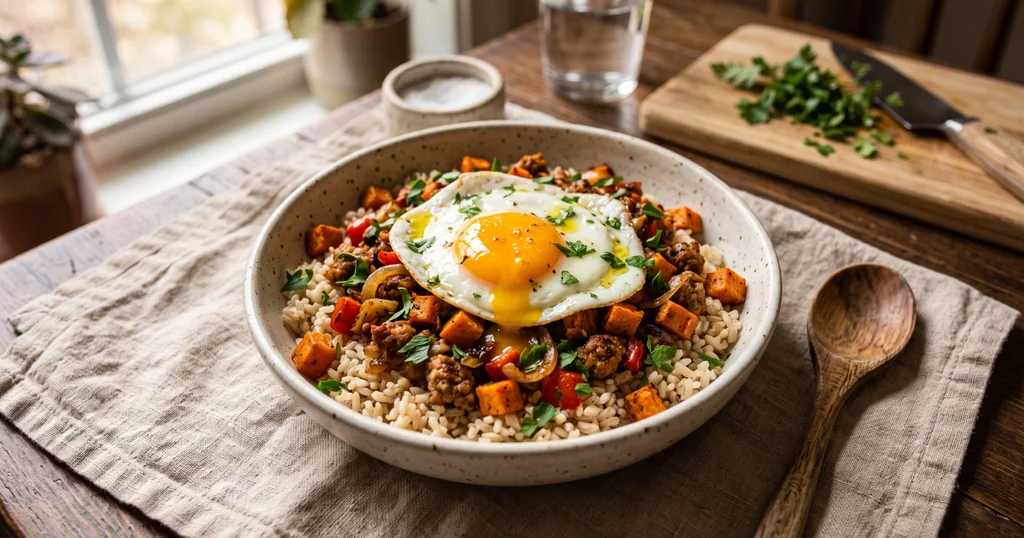
Over rice or quinoa: The dish has enough sauce and richness to work as a bowl meal over a simple grain. Brown rice is my go-to.
With crusty bread: Good for soaking up the pan juices. I sometimes make a batch of dinner rolls alongside — a simple yeasted roll is the perfect companion.
As a stuffed pepper filling: Hollow out bell peppers, stuff them with this mixture, top with shredded cheese, and bake at 375°F for 20 minutes. One of the most impressive-looking sweet potato and sausage dishes you can make for guests with almost no extra effort.
Alongside a simple salad: A lemon-dressed arugula salad cuts through the richness nicely. The bitterness of arugula is a good contrast to the sweetness of the potato.
With eggs at breakfast: Reheat a portion in a skillet and crack two eggs directly into the pan, cover, and cook until the whites are set. Instant savory breakfast with no additional work.
For other hearty dinner ideas that pair well with seasonal vegetables, check out the meat recipes — there are some great options that follow similar weeknight-friendly methods.
FAQ
Can I use regular white potatoes instead of sweet potatoes?
Yes, but the dish changes significantly in character. White or Yukon Gold potatoes are starchier and more neutral, so you lose the natural sweetness that balances the sausage. If you do substitute, add a teaspoon of honey or maple syrup to the broth to approximate that flavor. The cook time stays roughly the same.
How long does it take to make sweet potato and sausage dishes from start to finish?
The skillet version in this article takes about 35–40 minutes total, including prep. The sheet pan version requires about 10 minutes of hands-on time and 30 minutes in the oven. Either way, you’re looking at under an hour for a complete dinner.
Can I make this dish dairy-free and gluten-free?
It’s naturally both. There’s no dairy in the base recipe, and sausage is the only potential gluten source — check the label, as some brands use fillers that contain wheat. Italian sausage from most major brands is gluten-free, but always verify if celiac is a concern. The USDA’s food labeling guidelines are a useful reference for reading sausage ingredient panels.
What’s the difference between using fresh sausage versus pre-cooked smoked sausage?
Fresh sausage (like raw Italian links) renders more fat as it cooks, which gives you more natural oil in the pan for cooking the sweet potatoes. It also takes longer to reach a safe internal temperature. Pre-cooked smoked sausage (like kielbasa) needs only to be heated through and browned, so it’s faster. The flavor profile is different too — smoked sausage has a stronger, woodsier note versus the herby, fennel-forward flavor of Italian sausage.
Can I add other vegetables to sweet potato and sausage dishes?
Absolutely. Bell peppers and zucchini are the most common additions — add them with the onion since they have a similar cook time. Broccoli works well if you add it at the same time as the broth and cover the pan (the steam cooks it through). Avoid vegetables with high water content like tomatoes or mushrooms unless you cook them separately first, or they’ll make the pan soggy and prevent browning.
Is sweet potato healthy to eat regularly?
Sweet potatoes are genuinely nutrient-dense — they’re high in fiber, vitamin A, and potassium. According to Healthline’s nutritional breakdown of sweet potatoes, one medium sweet potato provides over 100% of your daily vitamin A from beta-carotene. Paired with protein-rich sausage, this dish is a reasonably balanced one-pan meal.
Can I make sweet potato and sausage dishes in a slow cooker?
You can, with a caveat: you won’t get the caramelization that makes this dish special unless you sear the sausage and sweet potatoes in a skillet first. If you do the sear step, then transfer everything to the slow cooker with the broth and cook on low for 3–4 hours, the texture holds surprisingly well. Skip the sear and it’ll taste flat and steamed.
Conclusion
Sweet potato and sausage dishes have saved more Tuesday dinners in my house than I can count. The combination is forgiving, flexible, and genuinely delicious — not in a “good for a weeknight” way, but in a “someone always asks for the recipe” way. Once you get the technique down — hot pan, real sear, consistent cube size — you can riff on this in whatever direction your fridge demands. Try it once with the recipe as written, then make it your own.
For more easy dinner inspiration using simple, seasonal ingredients, the easy recipes is worth bookmarking.
Written by Oussama Ij, home cook and food writer.