
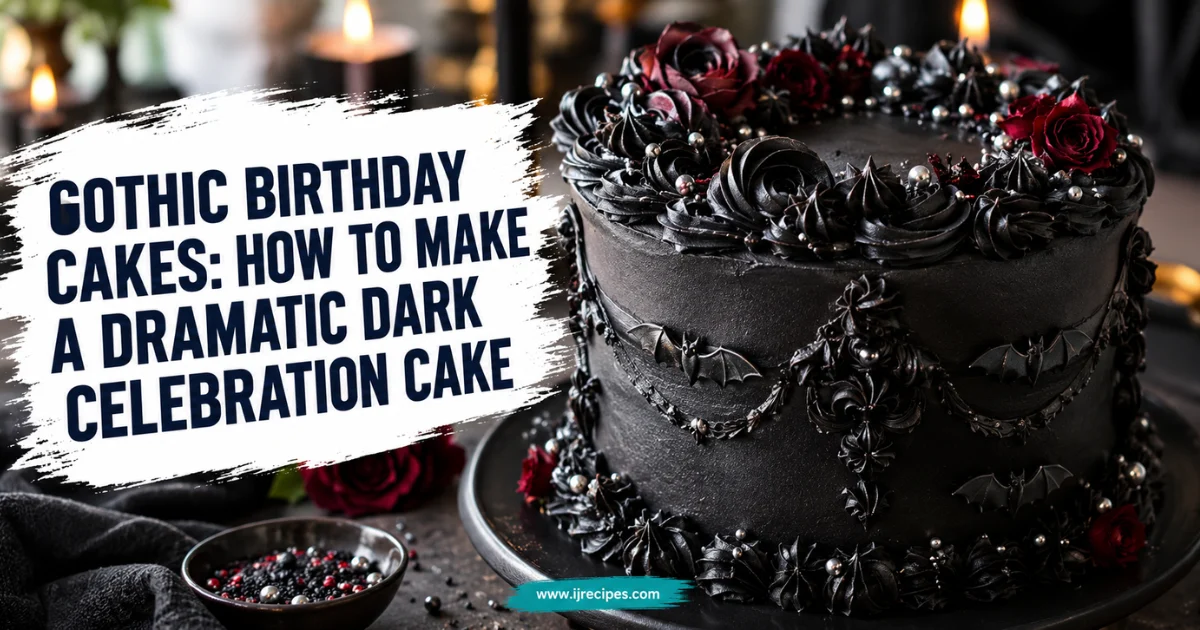
Gothic Birthday Cakes: How to Make a Dramatic Dark Celebration Cake
Table of Contents
My daughter turned thirteen last October and declared she no longer wanted “normal birthday cakes.” What she wanted — her exact words — was “something that looks like it came from a haunted castle.” I had never made gothic birthday cakes before. My first attempt was a flat disaster: the black food coloring turned my frosting a sickly gray, the layers slid sideways because I hadn’t chilled the crumb coat, and the drip looked less like dramatic dark chocolate and more like a melting wax candle gone wrong.
But that failed cake taught me everything I needed to know. The second attempt — built on black cocoa powder, a properly set ganache drip, and real planning — was the most showstopping thing I’d ever pulled out of my kitchen. This guide is everything I learned condensed into one reliable recipe.
Why This Gothic Birthday Cake Recipe Works
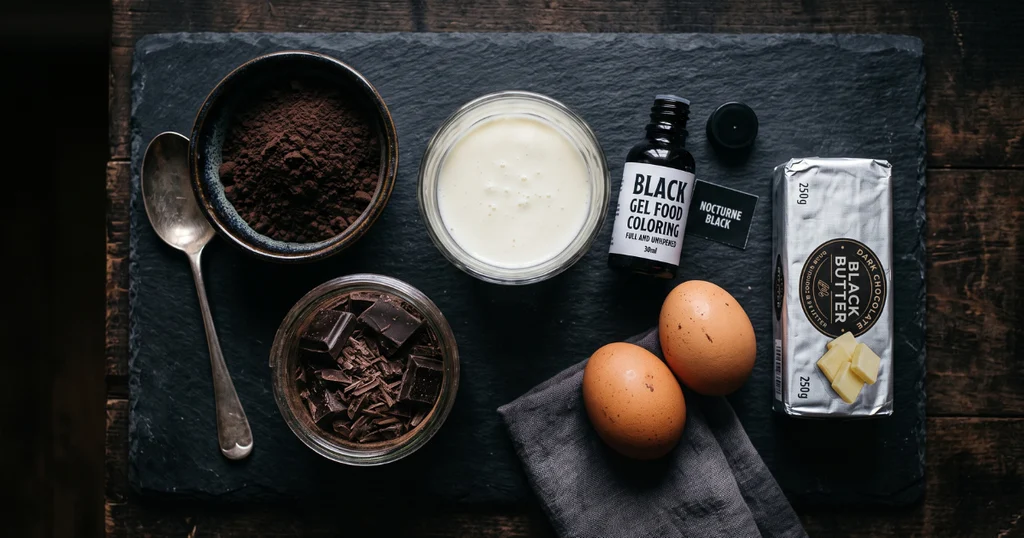
The secret to an actually dark cake is black cocoa powder, not food coloring alone. Black cocoa is Dutch-processed to an extreme — it’s what gives Oreos that deep, almost charcoal hue, and it works the same magic here. I use it alongside standard cocoa so the flavor stays complex and deeply chocolatey rather than flat.
The frosting is a black ermine (or cooked flour) buttercream. Ermine takes food coloring better than American buttercream because there’s less sugar to compete — you get true black without dumping in half a bottle of gel. And the ganache drip is made with heavy cream and dark chocolate, set at room temperature so it drips at exactly the right viscosity. No more sliding puddles.
Ingredients
| Ingredient | Amount | Why It’s There / Substitute |
|---|---|---|
| All-purpose flour | 2 cups (250g) | Structure; cake flour gives a softer crumb |
| Black cocoa powder | ½ cup (50g) | Deep dark color; Dutch-process cocoa works too |
| Unsweetened cocoa powder | ¼ cup (25g) | Rounds out flavor depth |
| Baking soda | 1½ tsp | Reacts with buttermilk for lift |
| Baking powder | 1 tsp | Extra rise for tall, even layers |
| Salt | 1 tsp | Balances sweetness, sharpens chocolate flavor |
| Unsalted butter (softened) | ½ cup (115g) | Fat for moisture; substitute refined coconut oil |
| Vegetable oil | ½ cup (120ml) | Keeps crumb moist after chilling |
| Granulated sugar | 1¾ cups (350g) | Sweetness and structure |
| Eggs (large) | 3 | Binds batter; flax eggs for vegan version |
| Pure vanilla extract | 2 tsp | Rounds out cocoa bitterness |
| Buttermilk | 1 cup (240ml) | Tenderizes; sub plain yogurt + splash of milk |
| Hot strong black coffee | ¾ cup (180ml) | Intensifies chocolate; hot water works too |
| Black gel food coloring | 1–2 tsp | Optional boost for extra-dark crumb |
| Frosting — Flour / Ermine Buttercream | ||
| Whole milk | 1 cup (240ml) | Base of the roux |
| All-purpose flour | 5 tbsp | Thickens the roux |
| Unsalted butter (room temp) | 1 cup (225g) | Body and silk of the frosting |
| Granulated sugar | 1 cup (200g) | Sweetness; powdered sugar makes it gritty |
| Black gel food coloring | 1½–2 tsp | Start with 1 tsp; deepen as needed |
| Ganache Drip | ||
| Dark chocolate (70%), chopped | 4 oz (115g) | Deep bitter flavor; milk chocolate won’t look dark |
| Heavy cream | ¼ cup (60ml) | Emulsifies the ganache; full-fat only |
Step-by-Step Instructions
1. Bake the Cake Layers
Prep
Preheat your oven to 350°F (175°C). Grease and line three 8-inch round cake pans with parchment. In a large bowl, whisk together the flour, black cocoa, cocoa powder, baking soda, baking powder, and salt. Set it aside — you want your dry mix ready before you start working the wet ingredients.
Mix the Batter
In the bowl of a stand mixer fitted with the paddle attachment, beat the softened butter and sugar on medium-high for 3 full minutes. It won’t look fluffy — that’s fine, because the oil is carrying the moisture here. Add the oil and beat another 30 seconds. Add the eggs one at a time, then the vanilla.
With the mixer on low, alternate adding the dry ingredients and the buttermilk in three additions each, starting and ending with the dry. Mix only until just combined after each addition — overmixing makes a tough cake. Scrape the bowl, then stir in the hot coffee (and gel color if using) by hand. The batter will look very dark and thin. That’s exactly right.
Bake
Divide the batter evenly among the three pans — a kitchen scale is your best friend here. Bake for 28–32 minutes, until a toothpick inserted in the center comes out with a few moist crumbs (not wet batter). Cool in pans 10 minutes, then turn out onto a wire rack. Cool completely before frosting — I usually bake the day before and wrap the cooled layers tightly in plastic wrap overnight. Cold layers are easier to stack.
2. Make the Ermine Buttercream
Cook the Roux
In a medium saucepan over medium heat, whisk together the milk and flour constantly until the mixture thickens to a paste the consistency of thick pudding — about 4–5 minutes. Don’t stop whisking or you’ll get lumps. Press plastic wrap directly onto the surface of the roux and let it cool completely to room temperature (at least 45 minutes). If it’s even slightly warm, your butter will melt and the frosting will break.
Whip the Buttercream
Beat the butter and sugar on high speed for 5–6 minutes, until genuinely pale and light. Add the fully cooled roux one tablespoon at a time with the mixer running on medium. Once all the roux is incorporated, beat on high for another 3 minutes. The frosting should look silky and voluminous. Add gel food coloring now, starting with 1 teaspoon. Beat 2 more minutes, then check the color. Real black usually takes 1½–2 tsp of good-quality black gel — I use AmeriColor Super Black.
3. Assemble and Crumb Coat
Place one cake layer on a rotating cake stand set over a sheet of parchment. Spread roughly ½ cup of frosting evenly across the top. Stack the second layer and repeat. Place the third layer cut-side down. Apply a thin crumb coat — a layer of frosting just thick enough to seal in the crumbs — all over the outside of the cake.
Refrigerate for 20–30 minutes until the crumb coat feels firm to the touch. This step is non-negotiable. If you skip it, the black frosting will drag crumbs into the final layer and look muddy.
4. Final Frosting and Ganache Drip
Final Coat
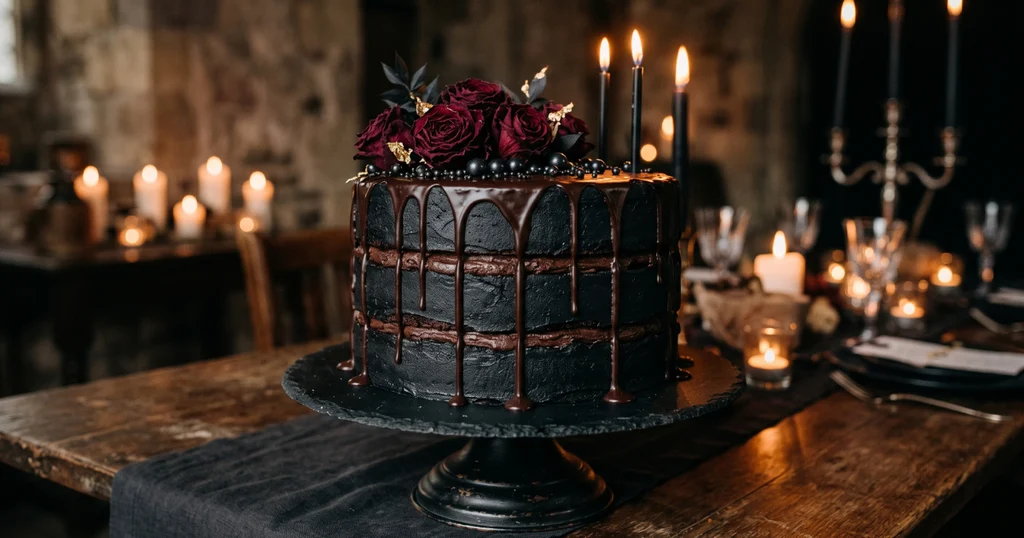
Apply the remaining frosting over the chilled crumb coat using a bench scraper pulled straight along the sides. For gothic birthday cakes, a slightly textured or rough finish actually looks more dramatic than a perfectly smooth one — think cracked stone or aged plaster.
Ganache Drip
Place the chopped chocolate in a heatproof bowl. Heat the heavy cream in a small saucepan until it just begins to simmer (tiny bubbles at the edges), then pour it over the chocolate. Let it sit 2 minutes without stirring, then whisk from the center outward until fully smooth and glossy. Let the ganache cool at room temperature for 15–20 minutes. Test the drip consistency on the back of a spoon — when it drips slowly and holds its shape, it’s ready.
Spoon the ganache around the top edge of the chilled cake, pushing small amounts over the edge to create drips of varying lengths. Fill the center of the top with the remaining ganache. Let it set 10 minutes at room temperature.
5. Decorate
Arrange your chosen decorations while the ganache is still slightly tacky. Black sugar pearls, dried edible roses, silver dragées, Halloween-style skull picks, or dark purple fondant spiders all work beautifully. A light dusting of black edible luster dust over the finished frosting gives it an almost metallic, moody sheen.
Pro Tips and Common Mistakes
Don’t skip the coffee. Hot black coffee in a chocolate cake doesn’t make it taste like coffee — it deepens and amplifies the cocoa. I tested it with water and the difference was noticeable. Use brewed coffee, not instant.
My biggest mistake the first time: I tried to frost the cake while the layers were still faintly warm. The frosting slid. Refrigerating layers overnight is genuinely the move.
Gray frosting is a coloring problem. If your “black” frosting is coming out dark gray or navy, your gel color either isn’t concentrated enough or you’re using it in too-sweet American buttercream. Ermine (cooked) buttercream takes color dramatically better.
Too-runny drip. If your ganache drip runs all the way to the bottom of the cake, the ganache is too warm or thin. Let it cool another 10 minutes and test again before proceeding.
Overbeating the roux. When the ermine buttercream looks curdled or soupy, it usually means the roux was still warm. Pop the entire bowl in the fridge for 15 minutes and beat again — it almost always comes back together.
Variations and Substitutions
Red Velvet Gothic Cake: Swap the black cocoa for standard cocoa and use deep crimson gel food coloring in both batter and frosting. A cream cheese–ermine hybrid frosting dyed blood red looks spectacular.
Vegan Gothic Cake: Use flax eggs (1 tbsp ground flaxseed + 3 tbsp water per egg), plant-based butter, and full-fat oat milk in place of buttermilk (add 1 tbsp apple cider vinegar). The texture changes slightly — a touch denser — but the color and decoration hold up perfectly.
Midnight Vanilla Gothic Cake: Drop the cocoa entirely and make a black velvet vanilla cake. Use the same base but sub the cocoa with 2 extra tablespoons of flour and increase the gel color significantly. The flavor is lighter; the drama is identical.
Purple Gothic Variation: Tint the ermine buttercream deep violet instead of black. Pair with a dark chocolate drip for a jewel-toned effect that reads gothic without being quite as stark.
Storage, Reheating, and Make-Ahead Instructions
Baked cake layers can be wrapped tightly in plastic wrap and stored at room temperature for up to 2 days, or refrigerated for up to 5 days. They also freeze well for up to 3 months — wrap in plastic, then foil.
The ermine buttercream can be made 3 days ahead and refrigerated in an airtight container. Bring it back to room temperature and re-beat on medium for 2–3 minutes before using.
The assembled, frosted cake keeps well covered in the refrigerator for up to 5 days. Because black food coloring can transfer, use a cake box or dome cover rather than pressing plastic wrap directly onto the frosting.
The ganache drip is best made the day of serving, but you can reheat leftover ganache gently in the microwave in 10-second intervals, stirring between, until pourable again.
There’s no “reheating” this cake — serve it at room temperature, which means pulling it from the fridge about 45 minutes before serving so the crumb softens and the frosting loses its refrigerator-cold edge.
Serving Suggestions
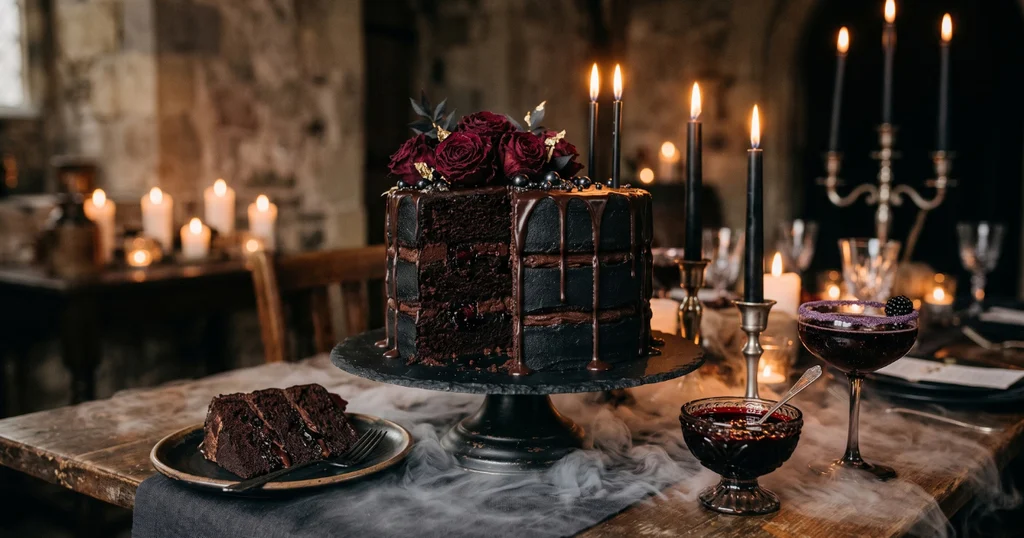
For a full gothic birthday spread, serve this cake alongside dark-colored berry coulis (black currant or blackberry), edible gold and black sprinkles, and Gothic candles with taper holders. Dry ice placed under the cake stand (not touching the cake) creates a dramatic fog effect that makes gothic birthday cakes look like something out of a Victorian horror story.
Pair slices with a scoop of dark chocolate or blackberry gelato. For drinks, a black cherry lemonade or a dark sparkling grape juice served in coupe glasses keeps the aesthetic cohesive.
Frequently Asked Questions
Can I make a gothic birthday cake without a stand mixer?
Yes, but the ermine buttercream requires sustained beating — at least 5–6 minutes. A hand mixer works fine; just expect your arms to get a workout. Don’t try to make it by hand.
How long does it take to make this cake from start to finish?
The total active time is about 2 hours. But realistically, build in a full day: bake the layers one day, make and assemble the next. The mandatory chilling steps (crumb coat, and resting the ganache) add up to 45 minutes minimum on assembly day alone.
What’s the difference between black cocoa and Dutch-process cocoa?
Dutch-process cocoa is treated with an alkali to neutralize its acidity, making it darker and milder than natural cocoa. Black cocoa is Dutch-processed to an extreme degree — it’s the most heavily alkalized cocoa available and produces the deepest color. It’s what’s used in commercial dark cookies and sandwich cookies. You can find it online or in specialty baking shops.
Can I use black fondant instead of buttercream for gothic birthday cakes?
Absolutely. Pre-colored black fondant (Satin Ice and Fondarific both make good black versions) saves you the food-coloring step entirely. Just be aware that fondant typically runs sweeter than ermine buttercream, so reduce the sugar in the cake layers slightly to compensate.
Will the black food coloring stain people’s teeth and mouths?
It will, temporarily. Gel coloring is concentrated and does leave a harmless gray-blue tint on lips and teeth that fades within an hour. Most guests at a gothic birthday party consider this part of the fun. If it’s a concern, use slightly less coloring in the frosting.
Can I turn this into cupcakes instead?
Yes — this batter makes about 24 standard cupcakes. Fill liners two-thirds full and bake at 350°F for 18–20 minutes. The black ermine frosting pipes beautifully from a star tip. Cupcakes are actually a great option for gothic birthday cakes because each one becomes its own miniature decoration.
Conclusion
Gothic birthday cakes are genuinely one of the most rewarding things I make — dramatic enough to stop a room, but built on skills any home baker already has. Once you understand that the darkness comes from ingredient choices (black cocoa, gel color in the right buttercream), not just from dumping in food coloring, the whole thing clicks into place. Make the layers the day before, take your time on the crumb coat, and don’t rush the ganache. The result is a cake that’s as good to eat as it is to look at.
Written by Oussama Ij , home cook and food writer.