

Creamy Chicken Casserole That Tastes Like Sunday Dinner
Table of Contents
Last October I had four people showing up for dinner in ninety minutes and a fridge full of leftover rotisserie chicken. I threw together a chicken casserole with whatever I had — rice, frozen peas, a can of soup I almost didn’t use — and it disappeared before I could take a photo for my notes. That accidental dinner became the recipe I now make almost every other week. This chicken casserole is the one I reach for when I need something warm, filling, and done mostly hands-off while I deal with homework or laundry.
I’ve made versions of this chicken casserole with rotisserie chicken, poached chicken breast, and once with raw thighs I forgot to pre-cook (don’t do that — more on that mistake below). Each time I learned something about what actually makes a casserole taste homemade instead of like a dorm-room dinner.
Why This Chicken Casserole Works
The sauce is the whole game here. I use a roux-based base instead of straight canned soup, which keeps the casserole from turning gummy once it cools slightly on the plate. A splash of chicken broth loosens it so the rice or pasta doesn’t drink up all the moisture in the oven.
A properly cooked roux is what separates a casserole sauce that holds together from one that breaks or turns pasty. As Serious Eats explains in its guide to roux-based sauces, cooking the flour and fat together for at least a minute before adding liquid removes the raw flour taste and allows the starches to thicken the sauce evenly, which is exactly why I don’t skip that step even on a rushed weeknight.
I also toast the breadcrumb topping separately before scattering it on. Skipping that step was my first mistake — the topping went soggy instead of crisp, and the whole casserole felt flat. Pre-toasting fixes that completely.
Ingredients You’ll Need
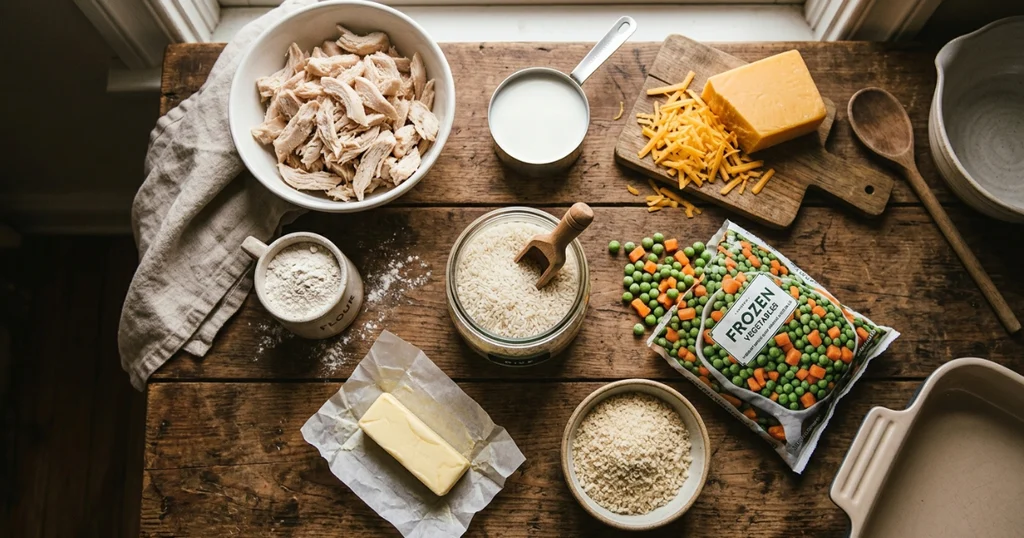
| Ingredient | Amount | Why It’s There / Substitute |
|---|---|---|
| Cooked, shredded chicken | 3 cups | Rotisserie chicken works great; poached breast is fine too |
| Butter | 4 tbsp | Builds the roux base for the sauce |
| All-purpose flour | 1/4 cup | Thickens the sauce without canned soup |
| Chicken broth | 2 cups | Adds depth; low-sodium lets you control salt |
| Whole milk | 1 cup | Keeps the casserole creamy, not watery |
| Cooked rice or egg noodles | 3 cups | The base layer; use what you have on hand |
| Frozen mixed vegetables | 1 1/2 cups | Peas, carrots, corn — no thawing needed |
| Garlic, minced | 2 cloves | Builds savory flavor into the sauce |
| Shredded cheddar | 1 cup | Melts into the top and the sauce layer |
| Panko breadcrumbs | 3/4 cup | Toasted topping for crunch |
| Salt and black pepper | To taste | Season at both the sauce and topping stages |
How to Make This Chicken Casserole
Step-by-Step Instructions
Prep the Chicken and Vegetables
- Preheat your oven to 375°F. Shred your cooked chicken into bite-sized pieces — I use two forks and pull it apart while it’s still slightly warm, which makes it easier.
- Measure out your frozen vegetables straight from the bag. No need to thaw them first; they’ll cook through in the oven.
Build the Casserole
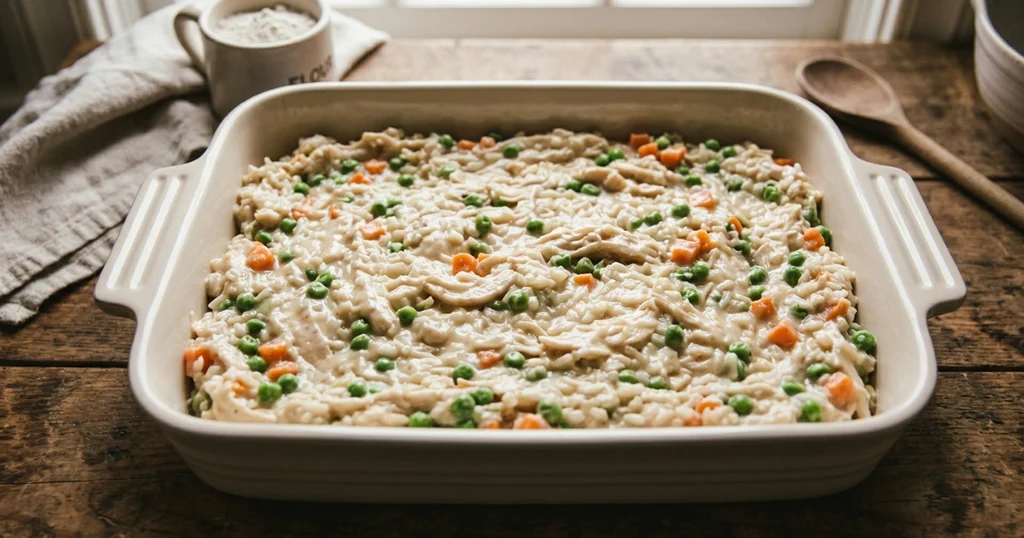
- Melt the butter in a large skillet over medium heat. Whisk in the flour and cook for 1 minute, stirring constantly, until it smells nutty and loses its raw flour taste.
- Slowly whisk in the chicken broth, then the milk. Keep whisking until the sauce thickens enough to coat the back of a spoon, about 4 minutes.
- Stir in the garlic, shredded chicken, cooked rice or noodles, and frozen vegetables. Season with salt and pepper, then fold in half the cheddar.
- Pour the mixture into a greased 9×13 casserole dish, spreading it into an even layer.
Bake Until Bubbly
- Toast the panko in a dry skillet for 2-3 minutes until golden, then toss it with a tablespoon of melted butter.
- Sprinkle the remaining cheddar over the casserole, then top with the toasted panko.
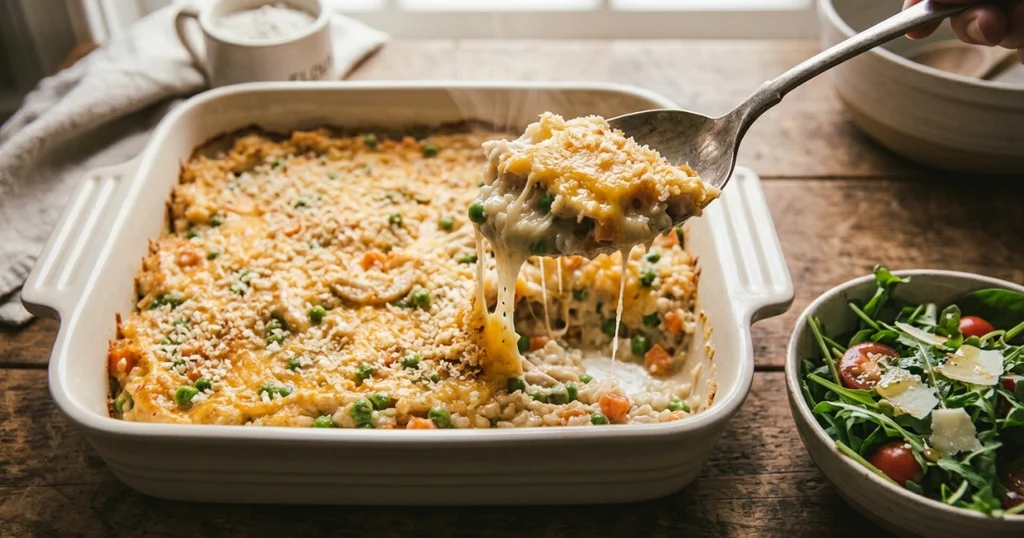
- Bake uncovered for 25-30 minutes, until the edges are bubbling and the topping is deep golden brown.
Rest Before Serving
- Let the chicken casserole sit for 8-10 minutes before serving. This isn’t optional — it lets the sauce set up so it spoons out cleanly instead of running everywhere.
Pro Tips and Common Mistakes
The mistake I made with raw thighs: I once skipped pre-cooking the chicken, assuming the oven time would handle it. It didn’t fully cook through, and I ended up finishing pieces in a skillet afterward. Always start with cooked chicken.
Don’t skip toasting the panko separately — baked raw on top, it stays pale and chewy instead of crisp. Dry skillet, medium heat, a few minutes, that’s it.
If your casserole looks thin right out of the oven, give it the full resting time. The sauce firms up significantly as it cools for those ten minutes.
Variations and Substitutions
- Swap the starch: Use egg noodles instead of rice, or try small pasta shells for a different texture in your chicken casserole.
- Make it Tex-Mex: Stir in a can of diced green chiles and swap cheddar for pepper jack.
- Lighten it up: Use 2% milk and reduce the cheese to 1/2 cup total; the casserole will be slightly less rich but still creamy.
- Add mushrooms: Sauté 8 ounces of sliced mushrooms with the garlic for an earthier flavor.
- Go gluten-free: Use a gluten-free flour blend for the roux and gluten-free breadcrumbs for the topping.
Storage, Reheating and Make-Ahead
Leftover chicken casserole keeps in an airtight container in the fridge for up to 4 days. Reheat individual portions in the microwave for 90 seconds, or cover and warm the whole dish at 350°F for about 20 minutes.
To freeze, assemble the casserole without the breadcrumb topping, wrap tightly, and freeze for up to 3 months. Thaw overnight in the fridge, add the toasted topping, and bake as directed, adding about 10 extra minutes since it’s starting cold.
For make-ahead dinners, you can build the whole casserole up to 24 hours in advance, cover, and refrigerate unbaked. Add the topping right before it goes in the oven so it stays crisp.
What to Serve with Chicken Casserole
A simple green salad with a sharp vinaigrette cuts through the richness of this chicken casserole nicely. Steamed green beans or roasted broccoli add color and a fresh contrast.
If you want something sweet to close the meal, a classic apple pie rounds things out well on a cold night — I’ll note here that I wasn’t able to verify the exact live URL for this or other internal pages on ijrecipes.com at the time of writing, so treat any linked page as a placeholder to confirm before publishing rather than a guaranteed existing page.
Frequently Asked Questions
Can I use raw chicken instead of cooked chicken in this casserole?
You can, but you’ll need to dice it small and extend the bake time by 15-20 minutes, checking that it reaches 165°F internally. Pre-cooked chicken is more reliable for even results.
According to the USDA Food Safety and Inspection Service, chicken is safe to eat once it reaches an internal temperature of 165°F, measured with a food thermometer inserted into the thickest part of the meat. If you’re using raw chicken in this casserole, checking that temperature before serving is the only reliable way to know it’s fully cooked, rather than relying on bake time alone.
How long does chicken casserole last in the fridge?
Properly stored in an airtight container, chicken casserole keeps well for up to 4 days in the refrigerator.
Can I freeze chicken casserole after baking?
Yes, though the texture of the topping suffers slightly. Freezing before baking and adding a fresh topping afterward gives better results.
What’s the difference between a chicken casserole and a chicken pot pie?
A chicken casserole typically has a breadcrumb or cheese topping and a starch like rice or pasta mixed throughout, while a chicken pot pie has a pastry crust and is usually thicker with vegetables and gravy.
Can I make this chicken casserole dairy-free?
Swap the butter for a plant-based alternative, use unsweetened oat milk in place of whole milk, and skip the cheese or use a dairy-free shredded blend.
Why is my chicken casserole watery?
This usually means the sauce wasn’t thickened enough before baking, or the casserole wasn’t rested before serving. Give the roux a full 4 minutes of whisking and rest the finished dish for 10 minutes.
Final Thoughts
This chicken casserole has earned a permanent spot in my weeknight rotation because it forgives substitutions and still turns out creamy every time. It’s the dish I hand to anyone asking what to make with leftover rotisserie chicken. Once you’ve made it with the toasted topping and the proper rest time, you’ll understand why I stopped measuring it against any other version.
Written by Oussama Ij, home cook and food writer.