

The Best Breakfast Sandwich Recipe: Crispy, Cheesy, and Ready in 15 Minutes
Table of Contents
Last Tuesday my husband stood in the kitchen doorway at 6:45 a.m. and asked if I could “do that breakfast sandwich thing” before he left for work. I had eleven minutes. The first time I tried to speed-run a breakfast sandwich, back when my son started early soccer practice, I scrambled the egg instead of frying it and the whole thing slid apart in his hands on the walk to the car. This version fixes that — a fried egg that stays put, cheese that actually melts, and a muffin that doesn’t turn soggy before you take the first bite.
Cook undisturbed for 1 minute, then cover the pan with a lid and drop the heat to low. Cook 2 more minutes for a yolk that’s just set at the edges and still soft in the center — this timing lines up with USDA guidance on safe egg temperatures and keeps the sandwich from being runny or rubbery.
Why This Recipe Works
The egg gets a lid, not a flip. Covering the pan traps steam so the yolk sets without you ever having to flip a fragile fried egg and risk breaking it.
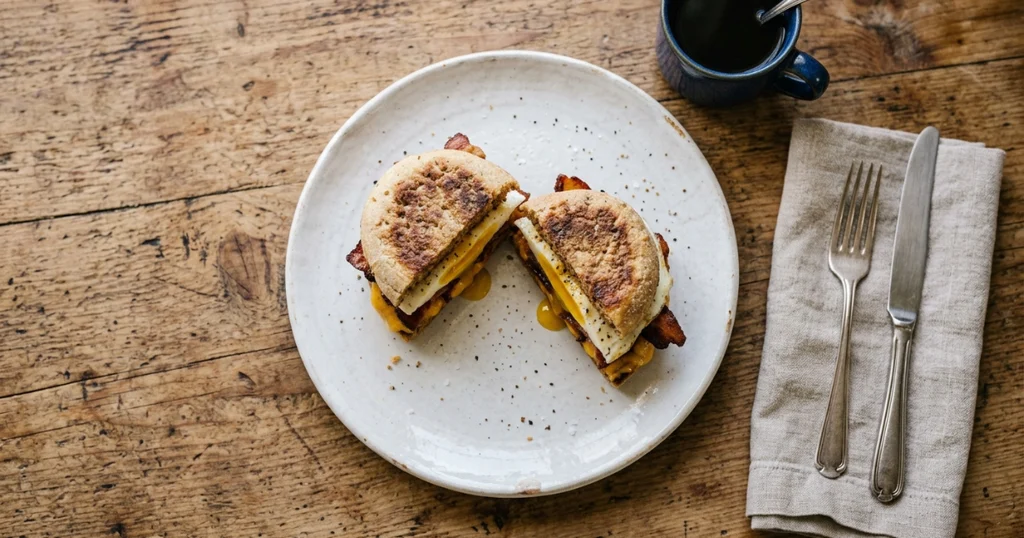
Cheese goes directly on the hot egg, not on the muffin. It melts into a seal that holds every layer of the breakfast sandwich together instead of sliding around.
Toasting the muffin in the bacon fat left in the pan means one less dish and a muffin that tastes like bacon from the first bite.
Ingredients
| Ingredient | Amount | Why It’s There / Substitute |
|---|---|---|
| English muffin | 1, split | Classic breakfast sandwich base; brioche bun also works |
| Large egg | 1 | Fried, not scrambled, for structure |
| Bacon | 2 slices | Sausage patty or Canadian bacon are good swaps |
| Sharp cheddar | 1 slice | Melts fast; American cheese melts even faster |
| Butter | 1 tsp | For toasting the muffin |
| Salt and pepper | To taste | Season the egg, not just the finished sandwich |
| Hot sauce (optional) | A few dashes | Cuts the richness of the egg and cheese |
How to Make This Recipe
Crisp the Bacon
Lay the bacon in a cold nonstick skillet, then turn the heat to medium. Cold-starting it renders the fat slowly so the bacon doesn’t curl into a tight, uneven shape.
Cook 6 to 8 minutes, flipping once, until deep golden and crisp at the edges. Move it to a paper-towel-lined plate and leave the fat in the pan — you’ll need it.
Toast the Muffin
Split the English muffin and lay both halves cut-side down in the same bacon fat over medium heat. Toast 1 to 2 minutes until the edges are deep golden and the center still has a little give.
Set the muffin halves aside, cut side up, so steam doesn’t make them go soft again.
Cook the Egg
Add the butter to the pan and let it foam. Crack the egg in gently so the yolk stays whole, then season with salt and pepper.
Cook undisturbed for 1 minute, then cover the pan with a lid and drop the heat to low. Cook 2 more minutes for a yolk that’s just set at the edges and still soft in the center — this timing is what keeps the sandwich from being runny or rubbery.
Build the Breakfast Sandwich
Lay the cheese directly on top of the hot egg and let it sit 30 seconds so it starts melting before you move anything. This is the step that keeps a breakfast sandwich from sliding apart.
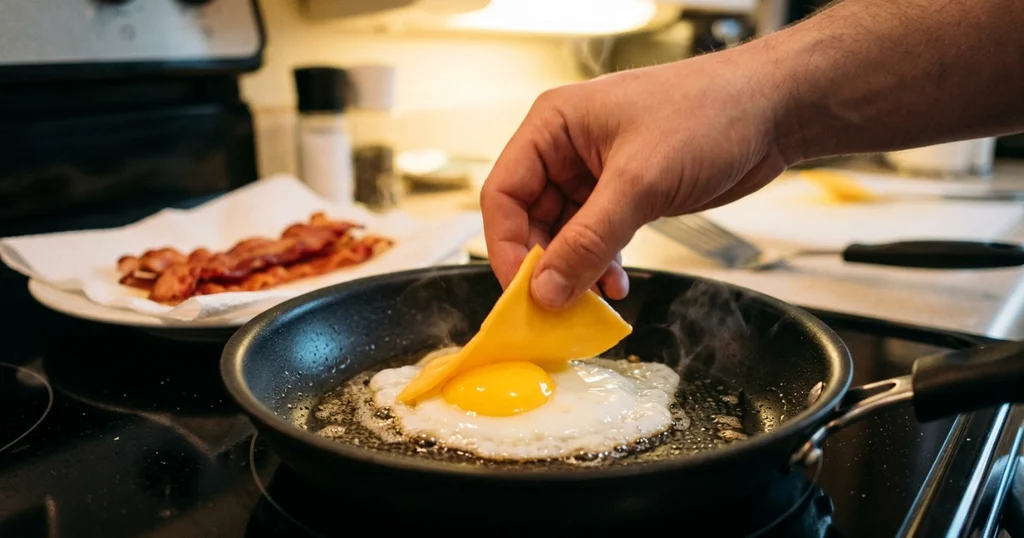
Slide the egg and cheese onto the bottom muffin half, add the bacon, a dash of hot sauce if you’re using it, and close with the top half. Press down lightly so the cheese glues everything together.
Pro Tips & Common Mistakes
I used to scramble the egg because it felt faster — don’t. Scrambled egg has no structure, so it squeezes out the sides with the first bite of a breakfast sandwich. The cold-start bacon method works for the same reason chefs recommend it — rendering fat slowly gives bacon a more even texture instead of curling it into a tight, uneven shape.
Don’t skip the lid on the egg. Without it, you either flip a fragile yolk and break it, or you overcook the top while the bottom burns.
Toast the muffin before you cook the egg, not after. A warm muffin holding a cold egg is the single most common mistake I see people make with a breakfast sandwich.
Salt the egg itself, not just the finished sandwich. Seasoning on top of melted cheese barely registers.
Variations & Substitutions
Sausage breakfast sandwich: Swap the bacon for a thin sausage patty, cooked the same way, for a heartier version that holds up even better to travel.
Vegetarian breakfast sandwich: Skip the meat and add a thick slice of tomato and a smear of avocado instead — the cheese still needs that direct contact with the hot egg to hold things together.
Spicy breakfast sandwich: Spread a thin layer of a cajun-style cream sauce on the muffin instead of butter; it adds heat and richness without extra prep, and it’s close to the flavor profile in this cajun cream sauce recipe, just thinned slightly for spreading.
Low-carb breakfast sandwich: Replace the muffin with two large portobello caps, grilled until tender, as the “bread.”
Breakfast sandwich for a crowd: Bake eggs in a muffin tin at 350°F for 12 minutes instead of frying individually, then assemble each breakfast sandwich the same way.
Storage, Reheating & Make-Ahead
A fully assembled breakfast sandwich keeps in the fridge, wrapped tightly in foil, for up to 3 days. The egg texture holds up better than you’d expect if you don’t overcook it initially.
To reheat, unwrap and microwave 45 to 60 seconds, or warm it in a 325°F oven for 8 minutes for a crispier muffin. Avoid the toaster — cheese and egg make a mess of it.
For meal prep, cook a batch of eggs and bacon on Sunday, then store the components separately in the fridge for up to 4 days. Assemble each breakfast sandwich fresh so the muffin doesn’t turn soft.
To freeze, wrap each cooled, fully built breakfast sandwich in foil, then a freezer bag, for up to 2 months. Reheat straight from frozen in a 325°F oven for 20 minutes.
Serving Suggestions
I usually put out a bowl of fruit alongside this breakfast sandwich — a spoonful of warm peach pie filling over Greek yogurt turns it into an actual breakfast spread instead of just a sandwich on a plate.
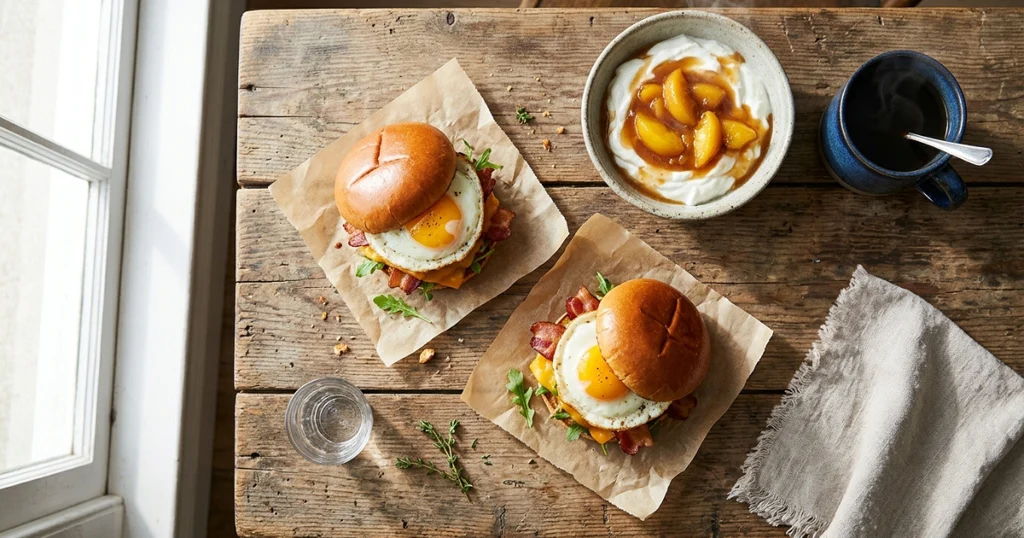
For weekend brunch, a platter of these breakfast sandwiches next to a tray of Nestle chocolate chip cookies covers both savory and sweet without much extra effort.
Hash browns or a simple green salad with vinaigrette both work if you want something lighter on the side.
FAQ
Can I make a breakfast sandwich ahead of time for the week?
Yes. Cook the eggs and bacon separately, refrigerate up to 4 days, and assemble each breakfast sandwich fresh so the muffin stays crisp instead of going soft.
How long does a breakfast sandwich last in the fridge?
A fully assembled one keeps about 3 days wrapped tightly in foil. After that, the egg texture starts to turn rubbery.
What’s the difference between a breakfast sandwich and a breakfast burrito?
A breakfast sandwich uses bread — a muffin, bun, or biscuit — as its base, while a burrito wraps the same ingredients in a flour tortilla. The fillings often overlap, but the structure and eating experience are different.
Can I freeze a breakfast sandwich?
Yes, wrapped individually in foil and a freezer bag, for up to 2 months. Reheat from frozen in a 325°F oven rather than the microwave for the best texture.
Why does my breakfast sandwich fall apart?
Usually it’s a scrambled egg instead of a fried one, or cheese that never got direct contact with hot egg to melt properly. Both fixes are in the method above.
What’s the best cheese for a breakfast sandwich?
Sharp cheddar and American cheese both melt quickly and evenly. American melts slightly faster if speed matters more than flavor intensity.
Can I make a breakfast sandwich without a stove?
A toaster oven or air fryer can toast the muffin and bake the egg in a small ramekin, though the texture of a stovetop breakfast sandwich is hard to match exactly.
Final Thoughts on This Breakfast Sandwich
This breakfast sandwich has become the thing I make without thinking now — bacon in the cold pan, muffin in the fat, egg under a lid. Eleven minutes, start to finish, and nothing slides out the side on the drive to work or school.
If you make it, pay attention to that 30-second pause after the cheese goes on the egg. It’s the small step that separates a breakfast sandwich that holds together from one that doesn’t.
Written by Clara Gonzalez, home cook and food writer.