
Soft and Chewy Peanut Butter Cookies
Table of Contents
My nephew texted me at four on a Thursday afternoon asking if I could bring peanut butter cookies to his soccer team the next morning. I said yes before checking the pantry. That’s how I ended up using a jar of natural peanut butter with oil pooled on top.
The dough looked fine, but the cookies melted into one thin, greasy sheet on the pan. I remade them that night with regular creamy peanut butter, then baked six more test batches over the following week. I changed the sugar ratio, the flour, the bake time, and the pan.
This version finally gave me crisp edges, a soft middle, and a deep roasted peanut flavor. These peanut butter cookies need no chilling and take about 30 minutes start to finish. If you’ve ever pulled a tray of dry, crumbly peanut butter cookies from the oven, the method below fixes that.
Why These Peanut Butter Cookies Work
Three small decisions make the difference. First, I use equal parts white and brown sugar. White sugar gives crisp edges, and brown sugar adds moisture and a faint molasses note that keeps the centers soft for days.
Second, the dough has both butter and peanut butter. Peanut butter alone makes a dense, sandy cookie. Half a cup of butter adds the structure and richness that keep each peanut butter cookie tender.
Third, I pull the tray while the centers still look slightly underdone. Peanut butter cookies keep cooking on the hot pan, and that carryover heat sets the middle. The first time I baked them until they “looked done,” they were hard as crackers by morning.
Ingredients for Peanut Butter Cookies
This makes about 24 cookies. Prep takes 15 minutes and baking takes 10 to 11 minutes per tray.
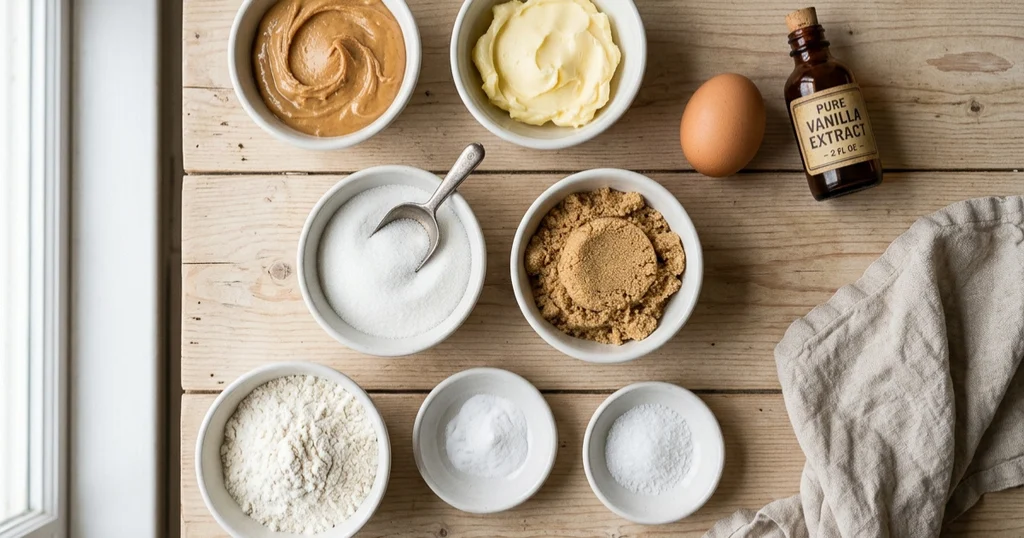
| Ingredient | Amount | Why It’s There / Substitute |
|---|---|---|
| Creamy peanut butter (regular, not natural-style) | 1 cup (250 g) | Stays emulsified; crunchy works too. |
| Unsalted butter, softened | ½ cup (113 g) | Tenderness; if salted, cut the salt to ¼ tsp. |
| Granulated sugar | ½ cup (100 g), plus 2 tbsp for rolling | Crisp edges and a sparkly crust. |
| Light brown sugar, packed | ½ cup (100 g) | Moisture; dark brown sugar also works. |
| Large egg, room temperature | 1 | Binds the dough; a cold egg can seize the butter. |
| Vanilla extract | 1 tsp | Rounds out the roasted peanut flavor. |
| All-purpose flour | 1¼ cups (155 g) | Structure; spoon and level, don’t scoop. |
| Baking soda | ½ tsp | Gentle spread and golden color. |
| Baking powder | ½ tsp | Light lift so the cookies aren’t dense. |
| Fine salt | ½ tsp | Sharpens the peanut flavor. |
How to Make Peanut Butter Cookies Step by Step
Prep and Mix the Dough
Set Up
- Heat the oven to 350°F (175°C) with a rack in the middle. Line two baking sheets with parchment. Take the butter and egg out 30 minutes ahead.
- Whisk the flour, baking soda, baking powder, and salt in a medium bowl. Set it aside.
Cream and Combine
- Beat the butter, peanut butter, ½ cup granulated sugar, and brown sugar on medium speed for about 2 minutes. It should look pale and fluffy. Scrape the bowl once.
- Add the egg and vanilla. Beat for 30 seconds, until the dough looks glossy.
- Add the dry ingredients and mix on low just until no flour streaks remain. The dough should be soft and slightly tacky. Overmixing made batch three tough.
Shape and Bake
Scoop and Press
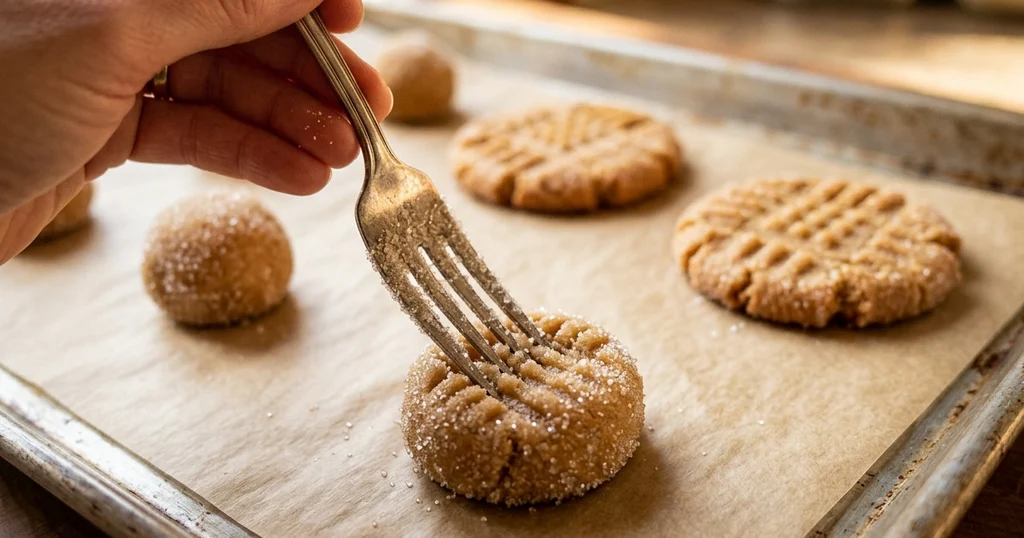
- Scoop 1½ tablespoons of dough (about 30 g) and roll it into a ball. Roll each ball in the remaining 2 tablespoons of sugar. Place them 2 inches apart, 12 per sheet.
- Dip a fork in sugar and press a crisscross into each ball. Flatten to about ½ inch thick. Re-dip the fork if it sticks.
Bake and Cool
- Bake one sheet at a time for 10 to 11 minutes. The edges should be set and lightly golden while the centers still look puffy and a little soft.
- Cool on the hot sheet for 5 minutes. They’re fragile until then. Move them to a rack to finish cooling.
Dark Pan Note
If you use dark nonstick sheets, start checking at 9 minutes. The bottoms brown faster than on light aluminum pans.
Pro Tips and Common Mistakes
- Using natural peanut butter. My first batch spread flat because the oil separated from the solids. Regular creamy peanut butter holds together far better.
- Overbaking. Golden all over means crunchy tomorrow. Pull them when the centers look slightly underdone.
- Scooping flour from the bag. A packed cup can hold up to a third more flour than a spooned one, and my cookies came out dry and sandy. Weigh it, or follow King Arthur Baking’s guide to measuring flour.
- Skipping the flattening. A rounded ball bakes unevenly, with a raw center and dark edges.
- Crowding the pan. Twelve cookies per sheet is the limit. At 15 they merged at the edges.
- Using warm butter. Butter that’s greasy-soft instead of cool-soft leads to excess spread.
Variations and Substitutions
- Chocolate chip: Fold in ¾ cup of semisweet chips after the flour.
- Sea salt finish: Sprinkle flaky salt on the cookies right after pressing the fork marks.
- Crunchy: Swap in crunchy peanut butter one-to-one for a chewier, nuttier bite.
- Oat version: Replace ¼ cup of the flour with old-fashioned oats for a heartier cookie.
- Natural peanut butter: Stir it very well, add 2 extra tablespoons of flour, and expect a more crumbly result.
- Gluten-free: Try a one-to-one gluten-free baking blend. I haven’t tested every brand, so bake one test cookie first.
If you like these, my other cookie recipes cover the same quick, no-chill approach.
Storage, Reheating, and Make-Ahead Instructions
Room temperature: Store the cookies in an airtight container for up to 5 days. A slice of sandwich bread in the container keeps them soft.
Freezing baked cookies: Layer them with parchment in a freezer bag for up to 3 months. Thaw on the counter for 30 minutes.
Freezing dough: Freeze scooped, sugar-rolled dough balls on a tray, then bag them for up to 3 months. Press and bake from frozen, adding 1 to 2 minutes.
Make-ahead dough: Refrigerate the dough, covered, for up to 48 hours. Let it sit 10 minutes before scooping.
Reheating: Microwave one cookie for 8 to 10 seconds, or warm a few at 300°F (150°C) for 4 to 5 minutes.
Serving Suggestions
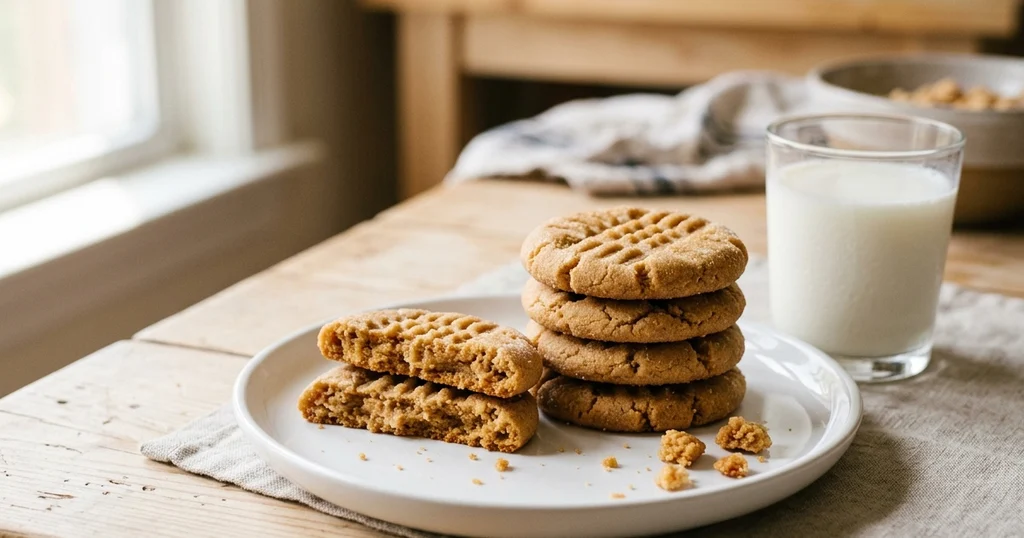
A warm peanut butter cookie with a cold glass of milk is the classic for a reason. For dessert, sandwich two cookies around vanilla ice cream and freeze for an hour. My cream recipes include fillings that work well here.
Crumble a cookie over a banana split, or serve them alongside coffee at a get-together. They also pack well in lunchboxes. For more ideas in the same spirit, browse our dessert recipes.
Peanut Butter Cookies FAQ
Why are my peanut butter cookies dry and crumbly?
Usually it’s too much flour or too much bake time. Spoon and level the flour, and pull the tray while the centers still look soft.
Can I use natural peanut butter for peanut butter cookies?
You can, but expect a crumblier cookie that spreads more. Stir it thoroughly and add 2 tablespoons of flour. Regular creamy peanut butter is more reliable.
How long do peanut butter cookies last?
They stay soft for about 5 days in an airtight container at room temperature. Frozen, they keep for 3 months.
Can I freeze peanut butter cookie dough?
Yes. Freeze scooped balls on a tray, then bag them. Bake from frozen and add 1 to 2 minutes.
Why did my peanut butter cookies spread too thin?
The usual culprits are overly soft butter, a warm pan, or separated natural peanut butter. Let a pan cool completely between batches.
What’s the difference between peanut butter cookies and flourless peanut butter cookies?
Flourless versions use only peanut butter, sugar, and egg. They’re gluten-free but more fragile and sandier. This recipe uses flour and butter for a chewier, sturdier cookie.
Final Thoughts
Once you’ve baked this batch, you’ll notice how much the small details matter: regular peanut butter, level flour, and pulling the tray a minute early. Those three choices turned my greasy first attempt into the cookies my nephew’s team asked for again the next week.
Make a double batch and freeze half of the dough balls. You’ll have fresh peanut butter cookies on hand whenever someone texts you at four o’clock.
Written by Clara Gonzalez , home cook and food writer.