
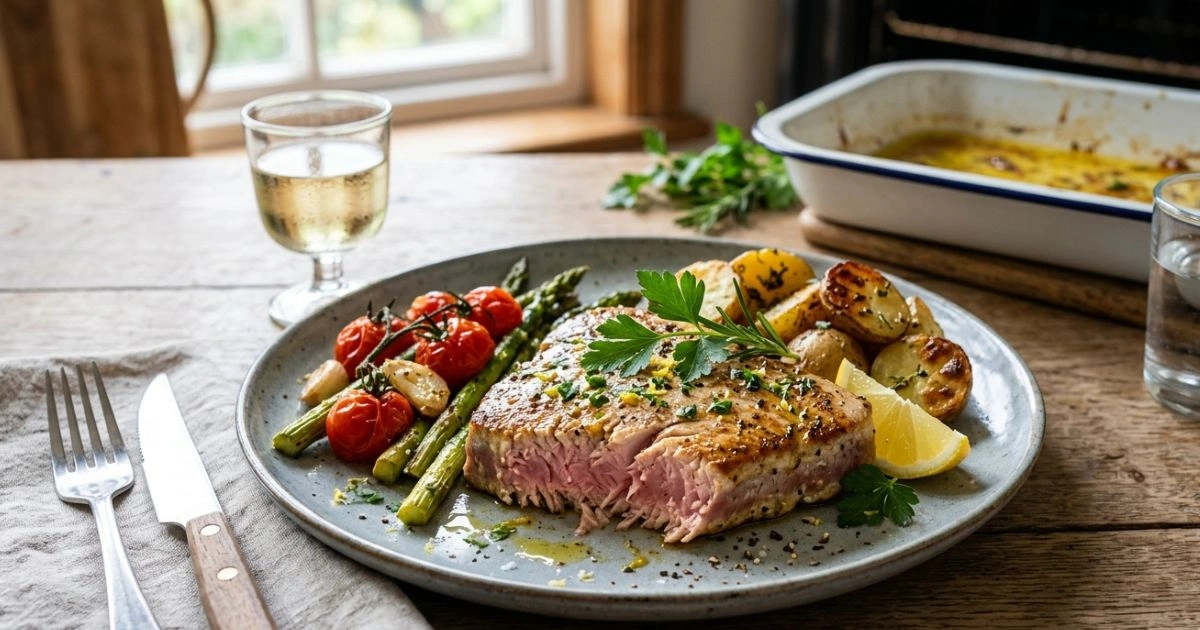
Baked tuna steak recipe: Juicy, Flavorful and Easy Guide
Table of Contents
You know that moment when you bite into a piece of fish and it’s dry, chalky, and honestly a little sad? Yeah — most people have been there with tuna. Somewhere along the way, tuna got a bad reputation in the kitchen. Either it ends up overcooked and crumbly, or bland and forgettable. But here’s the thing: that’s never the fish’s fault. It’s the method.
When you bake tuna steak the right way, something almost magical happens. The outside develops a subtle golden crust while the inside stays silky, rich, and deeply satisfying. It tastes like something you’d order at a seaside restaurant — not something you pulled together on a Tuesday night. And the best part? It can be completed in under 30 minutes from start to finish.
This guide is going to walk you through everything — the ingredients, the technique, the timing, the mistakes to avoid, and the little chef tricks that make all the difference. Whether you’re cooking for yourself, your family, or trying to impress someone at the dinner table, this baked tuna steak recipe will absolutely deliver.
Why You’ll Love This Baked Tuna Steak Recipe
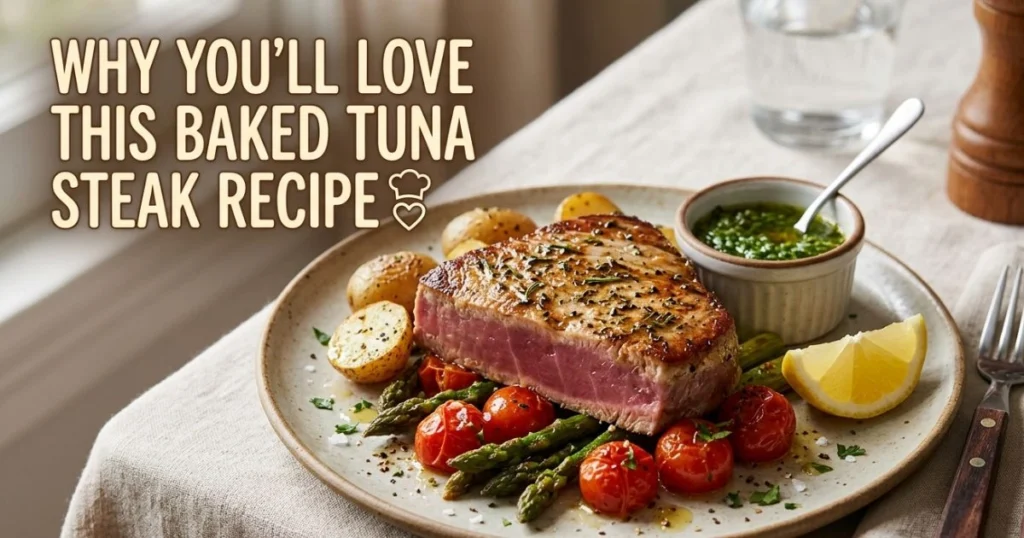
The Health Benefits Are Hard to Ignore
Before you even get to how good this tastes, let’s talk about what tuna does for your body. A single 6-ounce tuna steak delivers roughly 42 grams of protein — making it one of the most protein-dense whole foods you can put on your plate. Beyond protein, you’re looking at a serious lineup of nutrients:
- Omega-3 fatty acids — supports heart and brain health
- Vitamin B12 — up to 160% of your daily value per serving
- Vitamin D — around 50% DV, rare to find in food sources
- Selenium — a powerful antioxidant mineral
- Low saturated fat — lean, clean energy without the heaviness
If you’re trying to eat healthier without feeling like you’re sacrificing flavor, tuna steak is genuinely one of the smartest choices you can make.
Why Baking Beats Other Methods
You might be wondering — why bake it instead of searing or grilling? Here’s the honest answer: baking gives you the most control. The oven wraps the steak in consistent, even heat from all sides, which means you’re far less likely to overcook one side while the other stays raw. Compared to pan-searing, baking requires less oil and far less attention. You’re not standing over a hot pan watching every second. You put it in, set a timer, and it comes out right.
Grilling is fantastic too, but it demands experience and an eye for fire management. Baking is repeatable, forgiving, and produces a consistently juicy result — every time.
Ingredients for the Perfect Baked Tuna Steak Recipe
Getting the ingredients right is where flavor actually begins. This isn’t a complicated list — but each element plays a specific role.
| Ingredient | Quantity | Notes |
|---|---|---|
| Fresh tuna steaks | 2 pieces (6 oz each) | 1-inch thick preferred |
| Olive oil | 3 tablespoons | Extra virgin recommended |
| Garlic cloves | 3, minced | Fresh is best |
| Lemon juice | 2 tablespoons | Freshly squeezed |
| Lemon zest | 1 teaspoon | Adds brightness and depth |
| Soy sauce | 1 tablespoon | Low-sodium preferred |
| Dijon mustard | 1 teaspoon | Adds subtle tang |
| Fresh thyme | 1 teaspoon | Or ½ tsp dried |
| Fresh rosemary | 1 teaspoon | Or ½ tsp dried |
| Smoked paprika | ½ teaspoon | Adds warmth and color |
| Black pepper | ½ teaspoon | Freshly cracked |
| Sea salt | ½ teaspoon | To taste |
| Red chili flakes | ¼ teaspoon | Optional, for heat lovers |
Choosing Your Tuna
Not all tuna steaks are created equal. For baking, Yellowfin (Ahi) tuna is the gold standard — it’s firm enough to hold its shape in the oven, has a rich buttery flavor, and turns a beautiful color when cooked. Albacore is a milder, lighter option if you prefer something less intense. Bluefin is the most flavorful of all but also the most expensive.
If you’re using frozen tuna, that’s completely fine — just make sure to thaw it overnight in the refrigerator and pat it very dry before using. Excess moisture is the enemy of good texture.
Smart Substitutions
- No Dijon? Use whole grain mustard or a tiny drop of honey
- No fresh herbs? Dried work well at half the quantity
- Gluten-free? Swap soy sauce for tamari or coconut aminos
- No lemon? A good splash of white wine vinegar brings similar brightness
Equipment You’ll Need
You don’t need a professional kitchen for this. Here’s your checklist:
- Baking dish or oven-safe skillet — ceramic or cast iron works best
- Mixing bowl — for the marinade
- Whisk or fork — to emulsify the marinade
- Meat thermometer — non-negotiable for perfect doneness
- Aluminum foil — to lock in moisture during the first phase
- Citrus zester and juicer — for fresh lemon
- Sharp knife — for clean cuts and garnish prep
The meat thermometer deserves special mention. It’s the single tool that separates a dry tuna disaster from a perfectly cooked steak. Don’t skip it.
How to Make Baked Tuna Steak — Step-by-Step
Step 1 — Build Your Marinade
In a mixing bowl, combine your olive oil, minced garlic, lemon juice, lemon zest, soy sauce, Dijon mustard, thyme, rosemary, smoked paprika, black pepper, and salt. Whisk everything together until the oil and liquids come together into a cohesive mixture. Let it sit for about five minutes before applying — this short rest lets the garlic and herbs bloom into the oil, making the whole marinade more aromatic and flavorful.
Step 2 — Prep and Marinate the Tuna
This step is where most people skip something important: pat your tuna steaks completely dry before adding the marinade. Use paper towels and press firmly on all sides. Removing surface moisture allows the marinade to actually stick to and penetrate the fish rather than sliding off a wet surface.
Once dry, place the steaks in a shallow dish and pour the marinade over them. Flip to coat every surface. Cover with plastic wrap and refrigerate for 15 to 30 minutes. Don’t push past one hour — the acid from the lemon juice will start breaking down the fish proteins, giving you a mushy texture instead of a firm, satisfying bite.
Step 3 — Preheat Your Oven
Set your oven to 400°F (200°C) and let it fully preheat before the fish goes in. Position your oven rack in the center — this ensures equal heat from top and bottom elements. Putting tuna into an oven that hasn’t reached full temperature throws off your timing and leads to uneven cooking. This five-minute wait matters.
Step 4 — Bake the Tuna Steaks
Lightly oil your baking dish and arrange the marinated steaks with some space between them — don’t crowd the pan. Cover the dish tightly with aluminum foil and slide it into the preheated oven.
Use this timing guide based on how you like your tuna done:
| Doneness Level | Internal Temperature | Baking Time (1-inch steak) |
|---|---|---|
| Rare | 110–115°F | 8–10 minutes |
| Medium-rare ✅ Recommended | 125–130°F | 10–12 minutes |
| Medium | 140°F | 12–14 minutes |
| Well done | 160°F+ | 14–16 minutes |
At the halfway point, remove the foil and spoon some of the pan juices back over the steaks. This basting step adds another layer of flavor and keeps the surface from drying out while the top gets a gentle color. If you want a slightly firmer crust, you can switch to the broiler for the final 90 seconds — watch it closely.
Step 5 — Rest and Serve
When your thermometer reads your target temperature, pull the dish from the oven and let the steaks rest for 3 to 5 minutes before cutting or serving. Resting allows the internal juices to redistribute throughout the flesh rather than spilling out the moment you cut in. It’s a small wait with a big payoff.
Finish with fresh lemon slices, a scattering of chopped parsley, and a few capers if you have them on hand. A flaky pinch of sea salt right before serving wakes everything up.
Pro Tips for the Juiciest Results
Mistakes You Need to Avoid
Even a great recipe can go sideways when these common errors slip in:
- Over-marinating — More than one hour breaks down the texture
- Skipping the dry step — Wet fish steams instead of baking properly
- Relying on time alone — Ovens vary; use the thermometer every time
- Using steaks thinner than ¾ inch — They overcook in minutes
- Baking straight from the fridge — Cold fish cooks unevenly; bring to room temperature 15 minutes before baking
- Cutting immediately after baking — Always rest first
Chef-Level Tricks That Make a Real Difference
- Room temperature start — 15 minutes on the counter before the oven dramatically improves even cooking
- Butter baste at the end — Drop a small knob of butter on each steak in the last two minutes of baking for richness and gloss
- Cast iron baking dish — Retains heat better than glass or ceramic and gives a subtle sear effect on the bottom
- Brown sugar in the marinade — Just a pinch creates beautiful caramelization on the surface
- Finishing salt — Flaky Maldon or fleur de sel right before serving adds a satisfying crunch and burst of salinity
Flavor Variations Worth Trying
Once you’ve nailed the base recipe, this is where cooking gets genuinely fun. Each variation below works with the same core method — just swap the marinade.
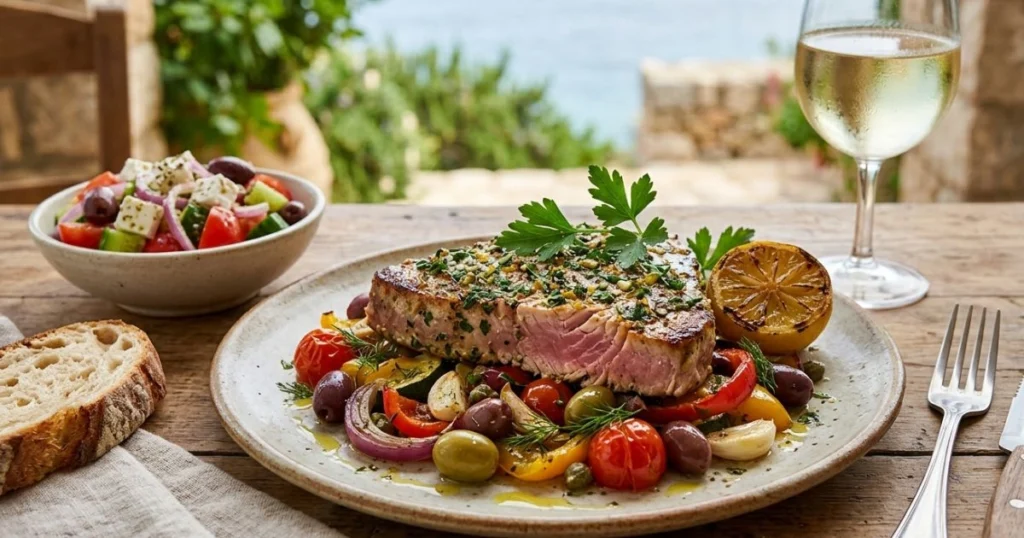
Mediterranean Style
Replace the soy sauce with a splash of white wine. Add chopped kalamata olives, halved cherry tomatoes, and capers to the baking dish. Crumble feta over the top before serving.
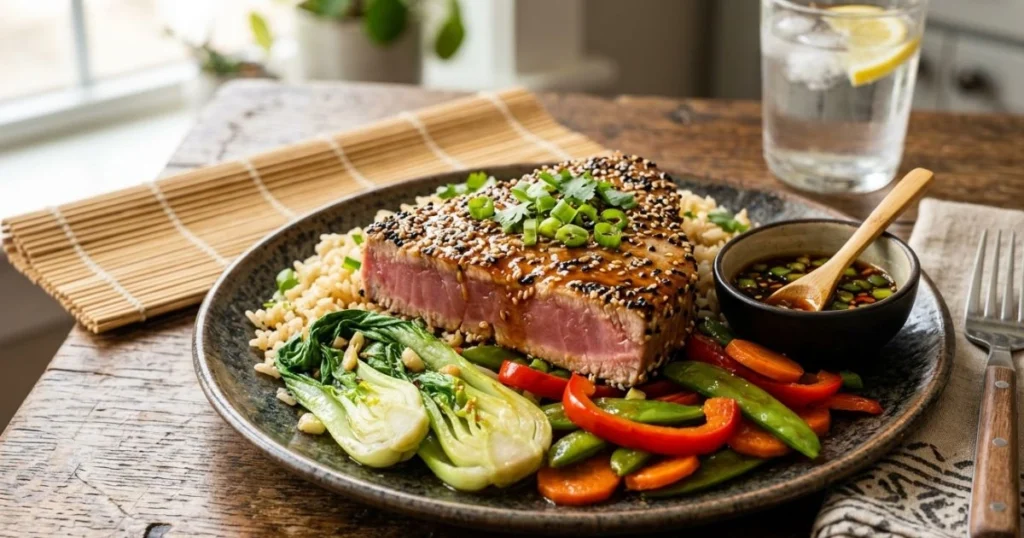
Asian-Inspired Baked Tuna
Swap the olive oil for sesame oil, use fresh ginger instead of rosemary, add a tablespoon of honey to the marinade, and finish with toasted sesame seeds and sliced scallions.
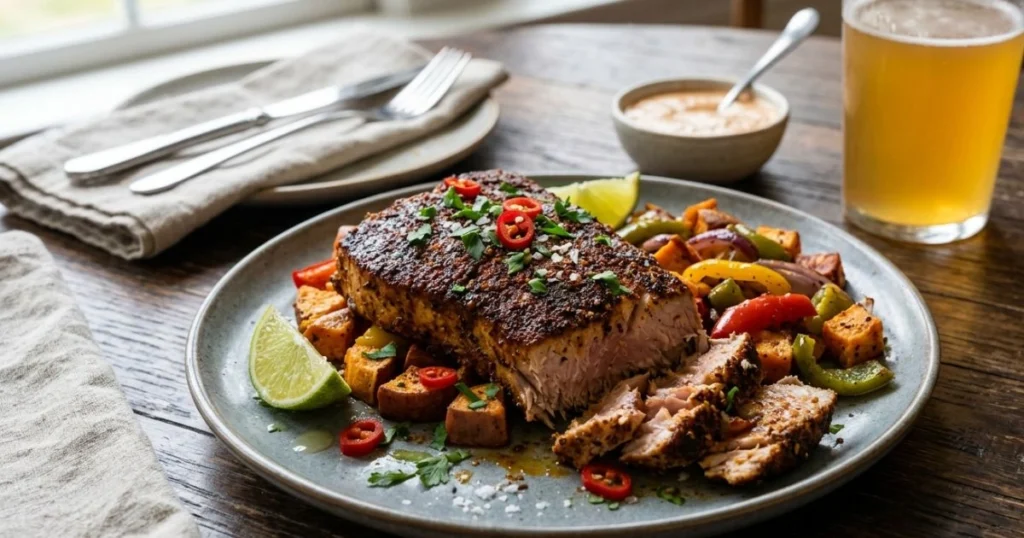
Spicy Cajun Baked Tuna
Skip the herbs and use a generous Cajun spice blend instead. Add a few dashes of hot sauce to the marinade and squeeze fresh lime over the top before serving.
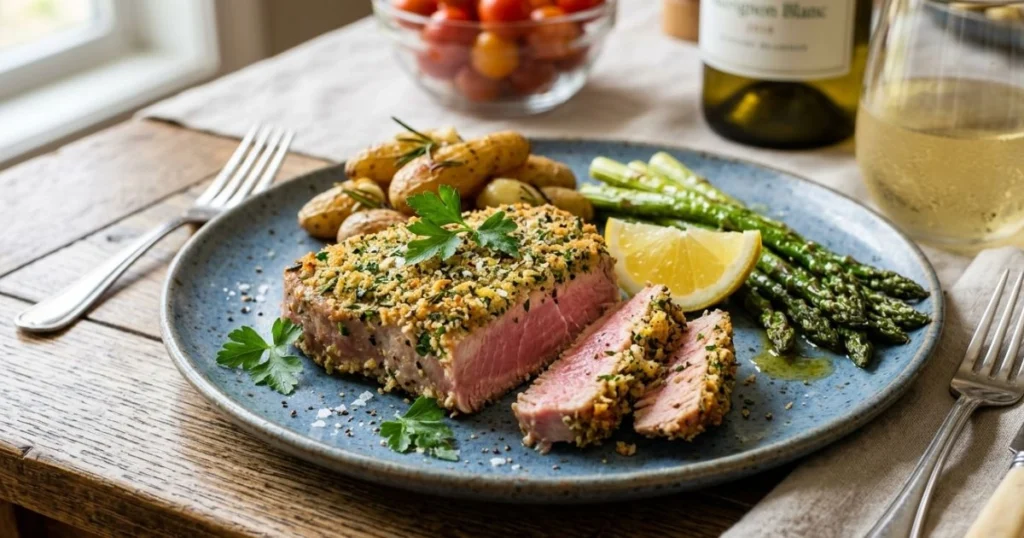
Herb-Crusted Baked Tuna
Mix panko breadcrumbs with finely grated parmesan, chopped fresh herbs, and a drizzle of olive oil. Press this mixture onto the top of each steak before baking uncovered for a golden, crunchy crust.
What to Serve With Your Baked Tuna Steak
The perfect side dish can transform a great main course into a complete, satisfying meal. Here are the best pairings:
| Category | Side Dish Options |
|---|---|
| Vegetables | Roasted asparagus, sautéed spinach, grilled zucchini |
| Starches | Garlic mashed potatoes, wild rice, quinoa, crusty sourdough |
| Salads | Greek salad, arugula lemon salad, avocado cucumber salad |
| Sauces | Tzatziki, mango salsa, lemon caper butter sauce |
| Light options | Steamed broccoli, cauliflower rice, mixed baby greens |
A simple arugula salad dressed with lemon and olive oil is honestly one of the best pairings — the peppery greens cut right through the richness of the fish.
How to Store and Reheat Baked Tuna Steak
Storage
- Refrigerator: Place in an airtight container and use within 2 days
- Freezer: Wrap tightly in plastic wrap then foil — good for up to 1 month
- Never store cooked tuna in the marinade — the acid continues working on the fish
Reheating Without Ruining It
- Oven (best method): 275°F, covered with foil, 10–12 minutes — comes out nearly as good as fresh
- Skillet: Low heat with a small splash of water or fish stock, lid on
- Microwave (last resort): 50% power in 30-second bursts — avoids rubbery texture
- Best leftover use: Flake it into pasta, toss through a grain bowl, or stuff into tacos with avocado and lime crema
Nutritional Information
| Nutrient | Per Serving (6 oz) |
|---|---|
| Calories | ~280 kcal |
| Protein | 42g |
| Total Fat | 11g |
| Saturated Fat | 2g |
| Omega-3 Fatty Acids | ~1.5g |
| Carbohydrates | 2g |
| Sodium | 380mg |
| Vitamin D | 50% DV |
| Vitamin B12 | 160% DV |
| Selenium | 120% DV |
Conclusion
Here’s what it comes down to: baked tuna steak isn’t complicated — it just requires a little knowledge and a lot of respect for the ingredient. When you dry your fish, build a proper marinade, bake at the right temperature, and pull it at the right moment, you get something genuinely special. A steak that’s moist in the center, fragrant from the herbs, bright from the lemon, and satisfying in a way that feels both healthy and indulgent at the same time.
You don’t need a culinary degree. You don’t need expensive equipment. You just need this guide and a little confidence in your kitchen.
Try this baked tuna steak recipe this week — and when you do, pay attention to how different it feels from any tuna you’ve had before. Then make it your own: try the Mediterranean version, add a spice crust, experiment with the sides. Cooking is most enjoyable when you treat a recipe as a starting point rather than a rulebook.
Share this recipe with someone who thinks they don’t like tuna. You might just change their mind.
FAQ — Baked Tuna Steak Recipe
What temperature should I bake tuna steak at?
The ideal oven temperature for baked tuna steak is 400°F (200°C). This heat level cooks the fish quickly enough to retain moisture while developing a subtle outer color without drying out the center.
How long do I bake tuna steak in the oven?
For a 1-inch thick steak, bake for 10 to 12 minutes for medium-rare, which is the recommended doneness for tuna. Adjust slightly up or down based on thickness and your personal preference.
Can I use frozen tuna for this baked tuna steak recipe?
Absolutely. Thaw your frozen tuna overnight in the refrigerator — never at room temperature. Before marinating, pat the steaks very dry with paper towels to remove excess moisture from the thawing process.
How do I know when my baked tuna steak is done?
The most reliable method is a meat thermometer. Aim for an internal temperature of 125–130°F for medium-rare. The flesh should be opaque on the outside and still slightly translucent or deep pink at the very center.
Should I cover tuna steak when baking?
Yes — cover the baking dish with aluminum foil for the first half of the cooking time. This traps steam and keeps the steak juicy. Remove the foil for the second half to allow light browning on the surface.
Is baked tuna steak healthy?
Very much so. It’s high in lean protein, packed with Omega-3 fatty acids, and loaded with Vitamin D, B12, and selenium — all with minimal saturated fat and around 280 calories per serving.
Can I prepare this baked tuna steak recipe ahead of time?
You can prepare and refrigerate the marinade up to 24 hours ahead. You can also marinate the fish up to 30 minutes before baking. However, bake fresh for the best possible texture — reheated tuna, while still good, is never quite as silky as freshly baked.
What’s the best type of tuna for baking?
Yellowfin (Ahi) tuna is the top choice — firm texture, rich flavor, and it holds up beautifully in the oven. Albacore is a great milder alternative. Avoid very thin steaks regardless of variety, as they overcook extremely fast.