
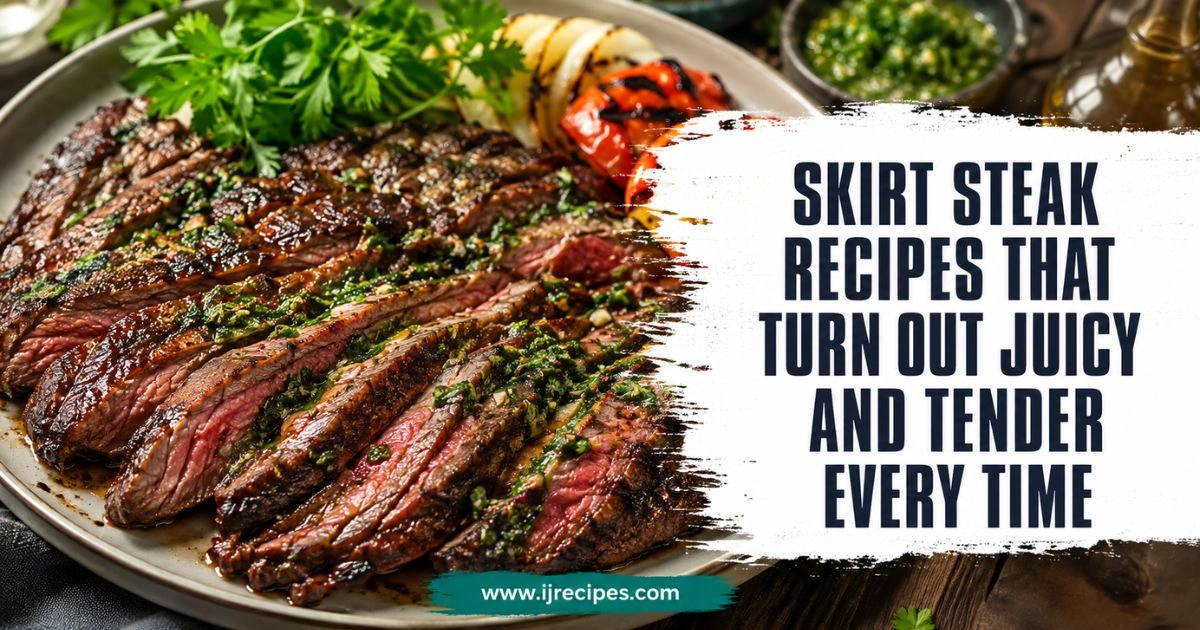
Skirt Steak Recipes That Turn Out Juicy and Tender Every Time
Table of Contents
I burned my first skirt steak so badly the smoke alarm chased my husband out of the kitchen. That was four years ago, on a Tuesday when I’d promised tacos and had exactly twenty minutes before soccer pickup. Since then I’ve made this cut of beef more times than I can count, and I finally have skirt steak recipes that work even when I’m rushing. The keyword here isn’t fancy technique — it’s heat, timing, and slicing against the grain, and once you have that down, skirt steak recipes stop feeling intimidating and start feeling like your fastest weeknight win.
This particular version is the one I come back to on repeat. It’s a soy-and-lime marinade that does its job in as little as thirty minutes, a blistering-hot pan or grill, and a rest period nobody wants to skip but everybody should respect.
Why This Skirt Steak Recipe Works
Skirt steak is thin, loosely grained, and cooks in minutes, which means the usual low-and-slow beef logic doesn’t apply here. The marinade’s acid (lime juice) and salt (soy sauce) start tenderizing almost immediately, so you get real flavor penetration without an overnight wait. I tested this exact ratio six times before settling on it — too much lime and the meat turned mushy at the edges; too little and the char never balanced the beef’s mineral flavor. This version hits both.
The other reason it works: skirt steak has a pronounced grain running in one direction, so slicing against it isn’t optional. Get that step right and even a slightly overcooked piece still eats tender. Skip it and even a perfect sear turns chewy.
I’ve tried building skirt steak recipes around longer marinades, fancier spice blends, and even a coffee rub before landing here. What kept winning in my own kitchen was simplicity: a handful of pantry staples, a hot pan, and a short window of active time. That’s the version I’m sharing, and it’s the one I actually make on a Tuesday, not just the one I photograph for a blog post.
Skirt steak also has more surface area relative to its thickness than most beef cuts, which means more of it comes into direct contact with a hot pan. That’s part of why good skirt steak recipes lean on searing rather than roasting — you’re maximizing crust, not trying to cook something through gently.
Ingredients for Skirt Steak Recipes
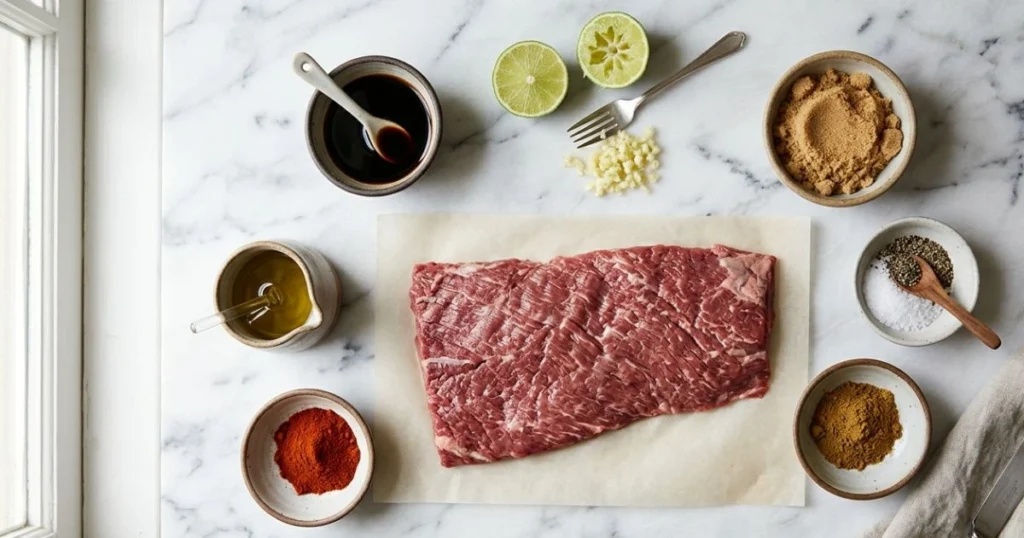
This table makes enough for four people, with extra marinade held back for basting.
| Ingredient | Amount | Why It’s There / Substitute |
|---|---|---|
| Skirt steak | 1.5 lbs (about 2 steaks) | The star cut; flank steak works as a substitute with a longer cook time |
| Soy sauce | 1/3 cup | Salt and umami; use tamari for gluten-free |
| Fresh lime juice | 3 tbsp | Brightens and lightly tenderizes; lemon juice works in a pinch |
| Garlic | 4 cloves, minced | Builds the marinade’s backbone flavor |
| Brown sugar | 2 tbsp | Balances the acid and helps the sear caramelize |
| Ground cumin | 1 tsp | Warm, earthy note that pairs naturally with beef |
| Smoked paprika | 1 tsp | Adds color and a mild smokiness without a grill |
| Olive oil | 2 tbsp | Carries flavor and helps prevent sticking |
| Kosher salt | 1 tsp, plus more to taste | Seasons beyond what the marinade provides |
| Black pepper | 1/2 tsp, freshly cracked | Rounds out the seasoning |
| Fresh cilantro | 1/4 cup, chopped, for serving | Optional finishing herb; parsley works if you’re not a cilantro person |
Step-by-Step Instructions
Prep the Marinade and Steak
- Pat the skirt steak dry with paper towels — this matters more than people think, because a wet surface steams instead of searing.
- Whisk the soy sauce, lime juice, garlic, brown sugar, cumin, and smoked paprika in a shallow dish or zip-top bag.
- Add the steak, making sure it’s fully coated, and marinate for at least 30 minutes at room temperature or up to 8 hours in the fridge. Beyond that, the acid starts breaking down the texture too much.
Sear the Steak
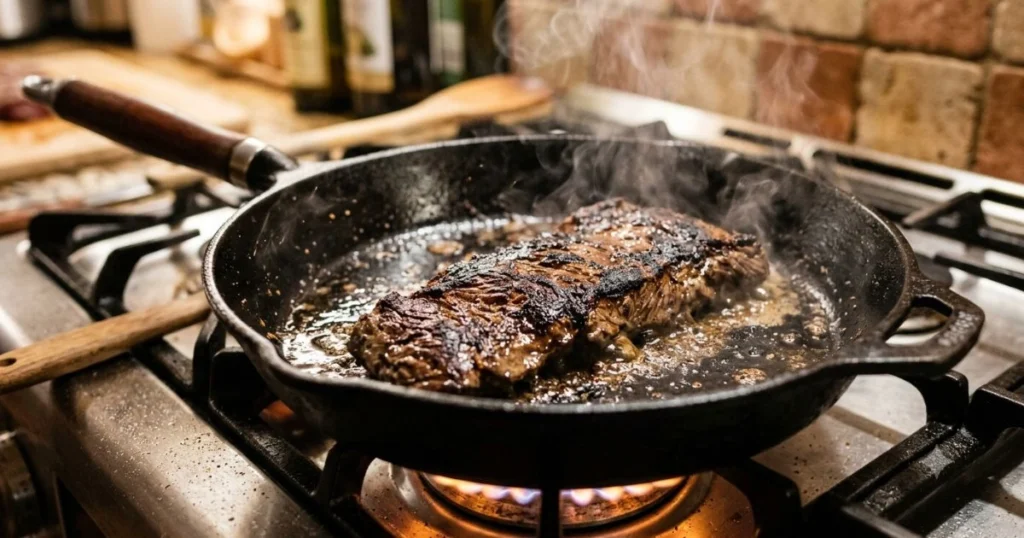
- Remove the steak from the marinade and let excess liquid drip off; pat it dry again if it’s very wet.
- Heat a cast-iron skillet or grill pan over high heat for a full 3 minutes before adding oil — this is the step I used to rush, and my early skirt steak recipes suffered for it with a gray, steamed crust instead of a brown one.
- Add olive oil, then lay the steak in the pan away from you to avoid splatter.
- Sear 2 to 3 minutes per side for medium-rare, until a deep brown crust forms and the internal temperature reads 130 to 135°F on an instant-read thermometer.
Rest and Slice
- Transfer the steak to a cutting board and tent loosely with foil. Rest for 5 to 7 minutes — this redistributes the juices so they stay in the meat, not on your board.
- Locate the grain (the visible lines running through the meat) and slice against it, at a slight angle, in thin strips no more than a quarter-inch thick.
- Scatter with chopped cilantro and serve immediately while the crust is still crisp.
Pro Tips and Common Mistakes
The biggest mistake I made early on was crowding the pan with both steaks at once. The temperature dropped, the meat released liquid instead of searing, and I ended up with steamed, gray beef. Cook in batches if your skillet is smaller than 12 inches.
Another one: skipping the rest. I plated straight off the pan once for impatient dinner guests, and half the juice pooled on the cutting board instead of staying in the meat. Five minutes of patience makes a visible difference.
Don’t over-marinate. Skirt steak is thin enough that the acid in these skirt steak recipes works fast; past eight hours, the texture turns mushy rather than tender, which is the opposite of what you want.
Finally, always slice against the grain. This single step affects perceived tenderness more than the cook temperature does — America’s Test Kitchen’s meat recipe collection makes the same point about technique mattering as much as the cut itself.
One more mistake worth naming: pulling the steak straight from the fridge into the pan. Cold meat seizes up against high heat and cooks unevenly. Let skirt steak sit at room temperature for 15 to 20 minutes after marinating, before it ever touches the skillet.
I’ve also seen people reach for a fork to flip the steak, which pierces the crust and lets juices escape before they’ve had a chance to set. Use tongs instead, and only flip once — resist the urge to keep checking on it, since every flip resets the searing process.
Variations and Substitutions
Chimichurri version: Skip the cumin and paprika, and instead top the sliced steak with a fresh chimichurri of parsley, oregano, garlic, red wine vinegar, and olive oil. This is my favorite of all my skirt steak recipes for summer entertaining.
Spicy version: Add 1 tablespoon of chipotle in adobo sauce (minced) to the marinade for smoky heat that holds up well against the beef’s char.
Asian-style version: Swap lime for rice vinegar, add a tablespoon of sesame oil, and finish with toasted sesame seeds and sliced scallions instead of cilantro.
Low-sodium version: Cut the soy sauce to 3 tablespoons and add 2 tablespoons of beef broth to keep the marinade volume the same without doubling the salt.
Grain-free taco version: Serve the sliced steak in lettuce cups with avocado and pico de gallo instead of tortillas.
Sheet-pan version: Broil the marinated steak on high for 4 to 5 minutes per side if you don’t have a skillet or grill available; it won’t get quite the same crust, but it’s a fast weeknight fallback.
Coffee-crusted version: Rub the seared steak with a mix of finely ground coffee, brown sugar, and chili powder before it hits the pan for a deep, slightly bitter crust that plays beautifully against the lime in the marinade.
Citrus-heavy version: Add orange juice alongside the lime for a sweeter, more tropical spin that works well with a mango salsa on top.
If you’re looking for another quick weeknight protein to rotate in alongside your skirt steak recipes, these meals with ground chicken follow the same fast-and-flavorful logic and freeze well for batch cooking.
Storage, Reheating, and Make-Ahead Instructions
Store leftover skirt steak in an airtight container in the fridge for up to 3 days. Because it’s already thinly sliced, it reheats fast and evenly.
To reheat, warm it gently in a covered skillet over medium-low heat for 2 to 3 minutes, or microwave in 20-second bursts. Avoid high heat here — it’s the fastest way to turn tender steak tough. The USDA’s food safety guidance recommends reheating cooked beef to an internal temperature of 165°F to ensure it’s safe to eat.
You can freeze cooked, sliced skirt steak for up to 3 months in a freezer bag with the air pressed out. Thaw overnight in the fridge before reheating, then warm gently rather than blasting it with high heat straight from frozen.
For make-ahead prep, you can mix the marinade up to 3 days in advance and store it in the fridge, or marinate the raw steak the night before and cook it fresh the next day for the best texture. I do this most Sundays for a Tuesday dinner, and it’s saved more weeknights than I can count.
Raw, unmarinated skirt steak also freezes well on its own for up to 6 months. I like to freeze it directly in the marinade in a zip-top bag, so it thaws and marinates at the same time — just give it a full day in the fridge before cooking.
Serving Suggestions
I usually build a full taco night around these skirt steak recipes: warm tortillas, quick-pickled red onions, avocado, and a squeeze of extra lime. It’s the meal my kids request most often.
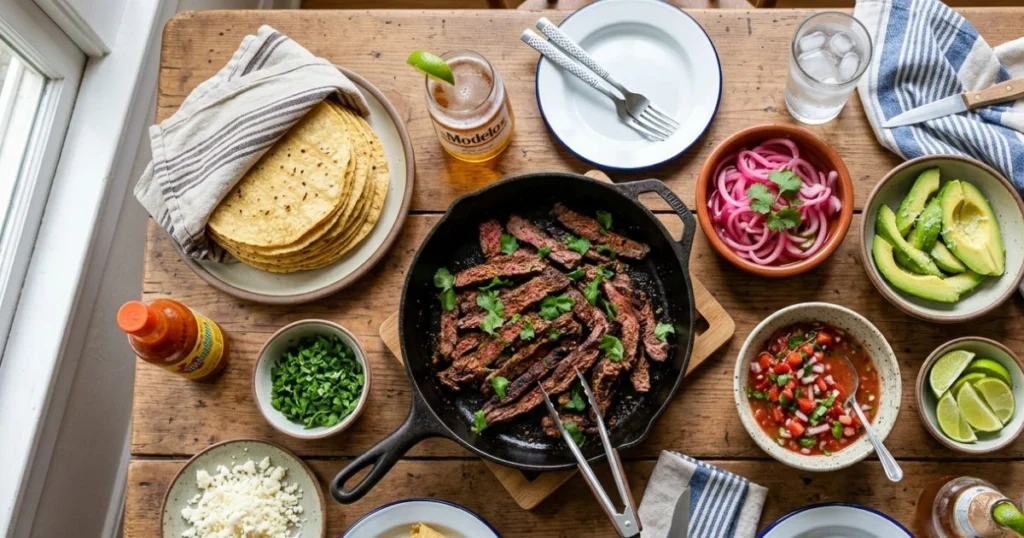
For a heartier plate, serve the sliced steak over cilantro-lime rice with black beans and grilled corn. The char from the steak plays well against the sweetness of the corn.
If you want to round out the meal with something sweet, this apple pie filling recipe turned into a quick crisp is an easy make-ahead dessert, or you can bake a batch of this Nestle chocolate chip cookie recipe while the steak rests.
Leftover steak also makes a fantastic salad topper — toss it over greens with a light vinaigrette for lunch the next day. Or fold it into a quesadilla with melted cheese for an even faster second meal.
A cold-weather variation I lean on: serve the steak alongside a simple baked potato and steamed green beans for a plate that feels like a steakhouse dinner without the steakhouse price tag. And if peach season overlaps with your grilling season, this peach pie filling recipe baked into a galette is a five-minute-effort dessert that pairs surprisingly well with the smoky char on the steak.
When friends come over, I’ll set out all the skirt steak recipe fixings — sliced steak, warm tortillas, three or four salsas, and a bowl of lime wedges — and let everyone build their own plate. It turns a weeknight recipe into something that feels like an event without any extra cooking on my end. This same build-your-own approach works well for a casual backyard gathering, too, since the steak stays good sitting out at room temperature for the length of a normal meal.
Frequently Asked Questions
What is the best way to cook skirt steak so it’s not tough? Cook it hot and fast to medium-rare (130–135°F), then slice thinly against the grain. Overcooking past medium is the most common reason skirt steak recipes turn out chewy.
Can I marinate skirt steak overnight? You can, but I don’t recommend going past 8 hours. The acid in most skirt steak marinades starts breaking down the texture too much beyond that window, leaving the meat mushy instead of tender.
What’s the difference between skirt steak and flank steak? Skirt steak is thinner, fattier, and cooks faster, with a looser grain; flank steak is leaner and slightly thicker. Both work in similar skirt steak recipes, but flank steak needs a minute or two more per side.
Do I need a grill to make skirt steak recipes work? No — a cast-iron skillet gets just as good a crust, sometimes better, because you control the heat more precisely than on an open flame.
How long does cooked skirt steak last in the fridge? Cooked skirt steak keeps for up to 3 days in an airtight container in the refrigerator, and it reheats well thanks to how thinly it’s typically sliced.
Can I use this marinade on other cuts of beef? Yes, it works well on flank steak, hanger steak, or even flat iron steak, though thicker cuts will need a longer sear time to reach the same internal temperature.
Why did my skirt steak turn out gray instead of browned? This usually means the pan wasn’t hot enough or the meat was too wet going in. Pat the steak dry and let your skillet preheat for a full 3 minutes before adding oil.
Is skirt steak a healthy choice for weeknight dinners? Skirt steak is a good source of protein and iron, though it runs fattier than leaner cuts like sirloin. Healthline’s guide to red meat and nutrition notes that lean cuts eaten in moderation can fit into a balanced diet, so I treat skirt steak as an occasional centerpiece rather than an everyday default.
What sides pair best with skirt steak recipes? Rice, roasted vegetables, tortillas, and simple green salads all work well, since the steak itself carries most of the bold flavor and doesn’t need a heavy side to compete with it.
Final Thoughts
Skirt steak rewards speed and confidence more than any fancy equipment. Once you’ve made this recipe two or three times, the timing becomes instinct — hot pan, quick sear, patient rest, thin slices against the grain. These skirt steak recipes have earned a permanent spot in my weekly rotation, and I think they’ll earn one in yours too.
If you make this and it becomes one of your go-to skirt steak recipes too, I’d genuinely love to hear which variation you landed on — the chimichurri version and the Asian-style spin are the two I get asked about most, and both started as small tweaks to this same base marinade.
Written by IJRecipes, home cook and food writer.