
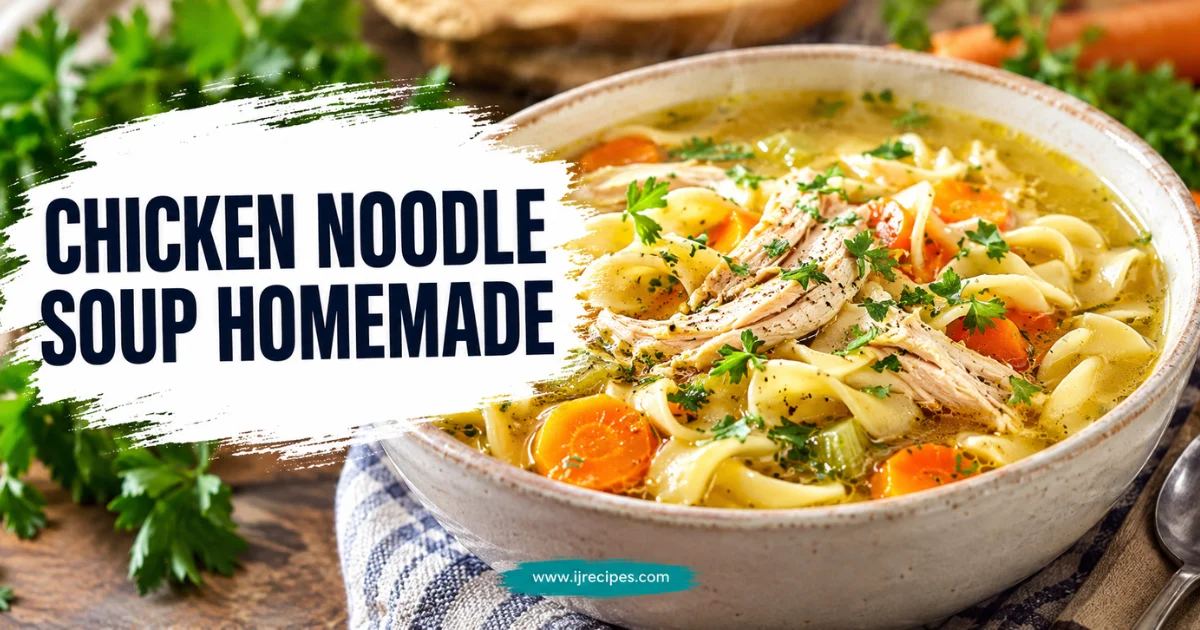
Chicken Noodle Soup Homemade: The Real-Broth Recipe That Changed How I Cook
Table of Contents
The first time I made chicken noodle soup homemade — truly from scratch, not from a can or a packet — it was a Tuesday in November and my daughter had a cold. She asked for “the soup from the store,” and something in me decided that wasn’t going to happen. Two hours later, she looked up from her bowl and said, “This is better.” That was three years ago, and I’ve made it at least forty times since.
I’m not going to pretend my first attempt was perfect. I used too much celery, the noodles went mushy because I added them too early, and I didn’t salt the broth properly. It tasted fine. It didn’t taste special. Over time, I fixed all of that — and this article is the version I’ve landed on after all those iterations.
This chicken noodle soup homemade recipe takes about 90 minutes start to finish. It makes enough to feed four people generously, with leftovers that taste even better the next day.
Why This Homemade Chicken Noodle Soup Recipe Works
The secret is layering flavor at every stage rather than trying to fix a flat broth at the end. I sauté the aromatics in butter before the liquid goes in — that fat-soluble flavor gets into the soup in a way that adding raw vegetables to cold water never achieves.
I also use bone-in chicken thighs instead of breast meat. They stay tender even if you slightly overcook them, and they produce a richer, more gelatinous broth. When I switched from boneless skinless breasts to thighs, the soup went from good to the kind of thing people ask me for when they’re sick.
Finally, I cook the egg noodles separately and add them just before serving. This is the single biggest mistake I see with chicken noodle soup homemade recipes: cooking noodles in the broth sounds easier, but they absorb liquid, turn soft, and break down overnight. Separate noodles mean your leftovers still taste like soup instead of porridge.
Ingredients
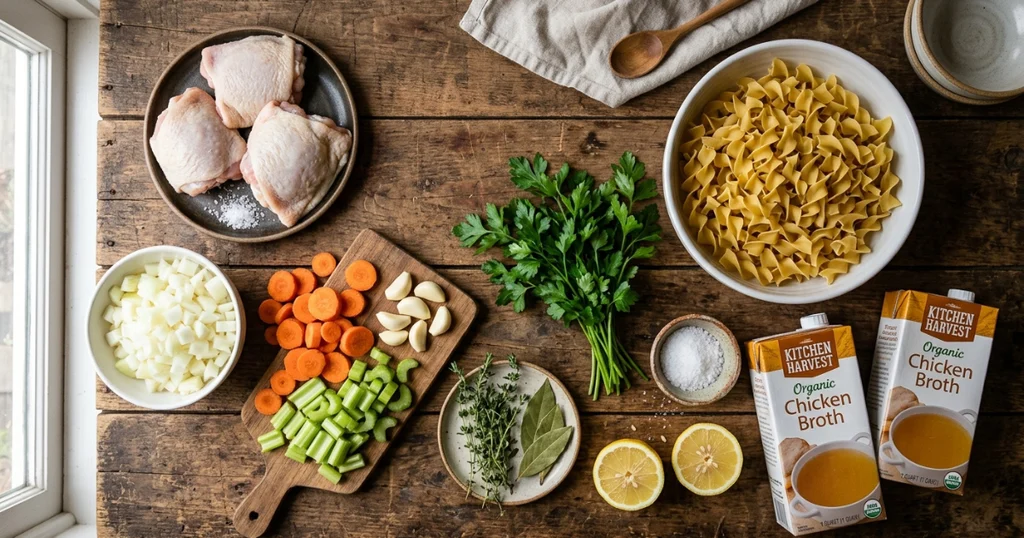
| Ingredient | Amount | Why It’s There / Substitute |
|---|---|---|
| Bone-in, skin-on chicken thighs | 4 large (about 2 lbs) | More flavor and fat than breast; swap for a whole chicken carcass for deeper broth |
| Yellow onion | 1 large | Sweetness base; white onion works fine |
| Carrots | 3 medium | Classic sweetness and color; parsnips add earthiness if you want a change |
| Celery stalks | 3 stalks | Savory depth; celery root (celeriac) is a good sub |
| Garlic cloves | 4 cloves | Aromatics; don’t skip — garlic powder is not the same here |
| Unsalted butter | 2 tablespoons | Sautéing fat that rounds out the flavor; olive oil works but changes character slightly |
| Chicken broth or stock | 8 cups | Base liquid; homemade stock gives the best result, but low-sodium store-bought is fine |
| Water | 2 cups | Dilutes the broth slightly so it isn’t overpowering |
| Fresh thyme | 4–5 sprigs | Earthy, warm herb note; ½ tsp dried thyme if fresh isn’t available |
| Bay leaves | 2 leaves | Background depth; remove before serving |
| Fresh parsley | ¼ cup, chopped | Brightness and color added at the end; flat-leaf preferred over curly |
| Wide egg noodles | 3 cups dry | The classic texture; rotini or ditalini work in a pinch |
| Kosher salt | 1½ tsp (adjust to taste) | Seasoning; table salt is more intense — use ¾ tsp if substituting |
| Black pepper | ½ tsp freshly ground | Warmth; white pepper gives a milder flavor |
| Lemon juice | 1 tablespoon | Brightness at the end; optional but highly recommended |
Step-by-Step Instructions
Prep the Vegetables and Chicken
- Dice the onion into roughly ½-inch pieces — no need to be precise, they’ll soften completely. Slice the carrots into rounds about ¼ inch thick. Slice the celery at a similar thickness. Mince the garlic.
- Pat the chicken thighs dry with paper towels. Season both sides with ½ teaspoon of kosher salt and a few grinds of black pepper. Dry chicken sears better and contributes more flavor to the fat.
- Have everything prepped before you turn on the heat. Once you start cooking, this moves quickly.
Build the Broth Base
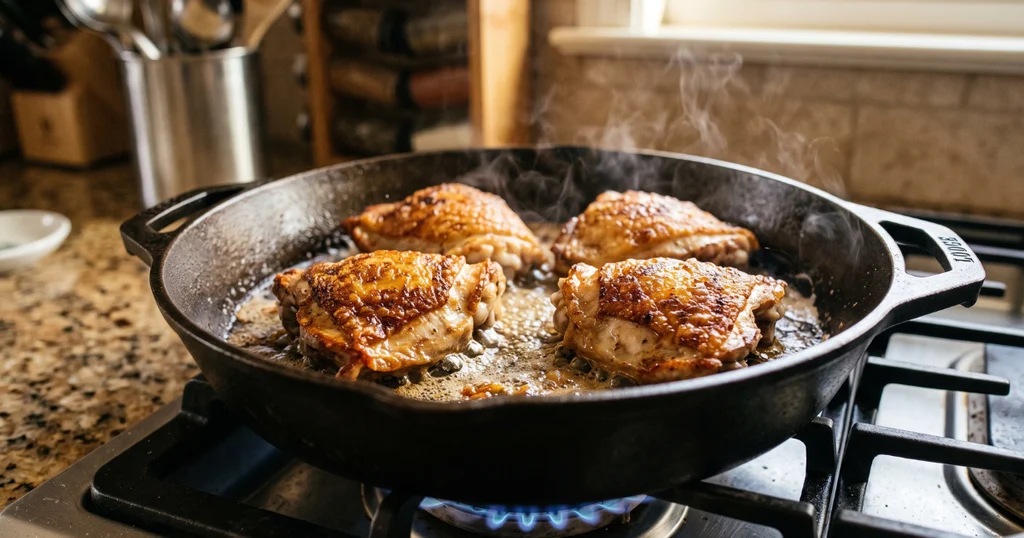
- In a large Dutch oven or heavy-bottomed pot (at least 6 quarts), melt the butter over medium heat. When it foams, add the chicken thighs skin-side down. Sear without moving them for about 4–5 minutes, until the skin is golden and releases easily. Flip and sear the other side for 2 minutes. Remove and set aside — they don’t need to be cooked through.
- Keep the rendered fat in the pot. Add the onion, carrot, and celery. Cook over medium heat, stirring occasionally, for about 6–7 minutes. You want the onion to turn translucent and start to take on a light golden color at the edges.
- Add the minced garlic. Stir constantly for 30 seconds — garlic burns fast and bitter garlic ruins a soup.
Simmer the Soup
- Return the chicken thighs to the pot, skin side up. Pour in the 8 cups of chicken broth and 2 cups of water. Add the thyme sprigs, bay leaves, and remaining 1 teaspoon of salt.
- Bring to a boil over medium-high heat, then reduce to a gentle simmer — you want bubbles breaking the surface every few seconds, not a rolling boil. A hard boil makes the broth cloudy and can toughen the chicken.
- Simmer uncovered for 35–40 minutes. The chicken is done when it reads 165°F internally and pulls apart easily with two forks.
- Use tongs to remove the chicken thighs to a cutting board. Remove and discard the thyme sprigs and bay leaves.
Shred the Chicken and Finish the Soup
- Once the chicken is cool enough to handle (about 5 minutes), remove and discard the skin and bones. Shred the meat into bite-sized pieces with two forks or your fingers.
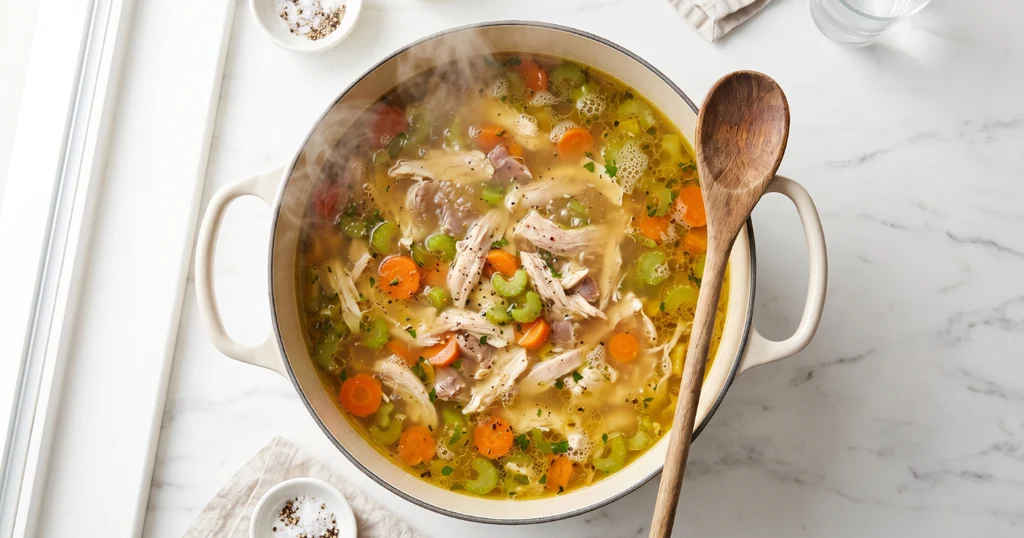
- Return the shredded chicken to the pot. Taste the broth now — this is your moment to adjust seasoning. It should taste well-seasoned but not salty, because it will reduce slightly as it sits. Add lemon juice, stir, and taste again.
- Bring the broth back to a low simmer while you cook the noodles.
Cook the Noodles Separately
- Bring a separate medium pot of well-salted water to a boil. Cook the egg noodles according to the package directions, but pull them out 1 minute before the suggested time — they’ll finish in the hot soup.
- Drain the noodles and add them directly to the soup pot. Stir gently and let everything come together for 1–2 minutes.
- Add the chopped fresh parsley. Taste one more time, adjust salt and pepper if needed, and serve immediately.
Pro Tips and Common Mistakes
Don’t skip the sear. I used to skip it when I was in a hurry and the difference in flavor is genuinely noticeable. That golden crust on the chicken adds depth to the broth that no amount of spices will replicate.
Salt in stages. Season the chicken before searing, season the broth when you add the liquid, and adjust again at the end. If you wait to season everything at the end, you’re chasing flavor instead of building it.
Don’t overcrowd the pot when searing. If your chicken thighs are large, sear two at a time. Crowding the pot drops the temperature and you get steaming instead of searing — no color, no flavor.
Noodles are the most common mistake in chicken noodle soup homemade recipes. Cook them separately every single time. Even if you’re serving the soup immediately, cooking noodles in the broth depletes the liquid and makes the texture inconsistent.
A slightly acidic finish is not optional. That tablespoon of lemon juice at the end lifts the entire bowl. The first time I skipped it I noticed immediately — the soup tasted flat even though nothing else changed.
Go easy on the celery. Too much celery dominates the broth. Three stalks is the limit I’ve found — more than that and it starts tasting medicinal rather than savory.
Variations and Substitutions
Rotisserie Chicken Shortcut: Skip the raw chicken and use a store-bought rotisserie chicken. Pull all the meat, add the carcass to the broth while it simmers for 20 minutes, then remove it, add the pulled meat, and proceed. You’ll lose some depth but save 30 minutes.
Turkey Noodle Soup: Swap the chicken thighs for turkey thighs or use leftover roast turkey. The technique is identical — especially useful after Thanksgiving.
Gluten-Free Version: Use rice noodles or gluten-free pasta in place of egg noodles. Check that your chicken broth is certified gluten-free.
Creamy Chicken Noodle Soup: Stir in ½ cup of heavy cream at the very end, just before adding the noodles. Don’t boil it after adding the cream.
Extra-Vegetable Version: Add ½ cup of frozen peas and a handful of baby spinach in the last 2 minutes of cooking. Both wilt fast and add color and nutrition without changing the flavor profile.
Low-Sodium Version: Use unsalted homemade stock or a no-salt-added store-bought broth, and season entirely with kosher salt to your own preference. According to USDA dietary guidelines, keeping sodium under 2,300mg daily is the general recommendation for most adults — something worth noting when you control how much goes in.
Storage, Reheating, and Make-Ahead Instructions
Storing: Let the soup cool completely before storing. Transfer to airtight containers and refrigerate for up to 4 days. Store noodles separately from the broth if you know you’ll have leftovers — they absorb liquid even in the fridge.
Freezing: The broth with chicken freezes beautifully for up to 3 months. Do not freeze with noodles already added — they break down and turn unpleasant. Freeze in quart-sized freezer bags laid flat, then stack them vertically once frozen to save space. Thaw overnight in the refrigerator.
Reheating: Warm gently on the stovetop over medium-low heat. Avoid boiling — it can toughen the chicken. Add a splash of water or extra broth if the soup has thickened in the fridge. Cook fresh noodles and add them to the reheated soup rather than microwaving them in it.
Make-Ahead Option: The broth with shredded chicken can be made up to 3 days ahead and refrigerated. The fat will solidify on the surface — skim it off before reheating if you want a leaner broth, or stir it back in for richness. Cook noodles fresh when you’re ready to serve.
Serving Suggestions
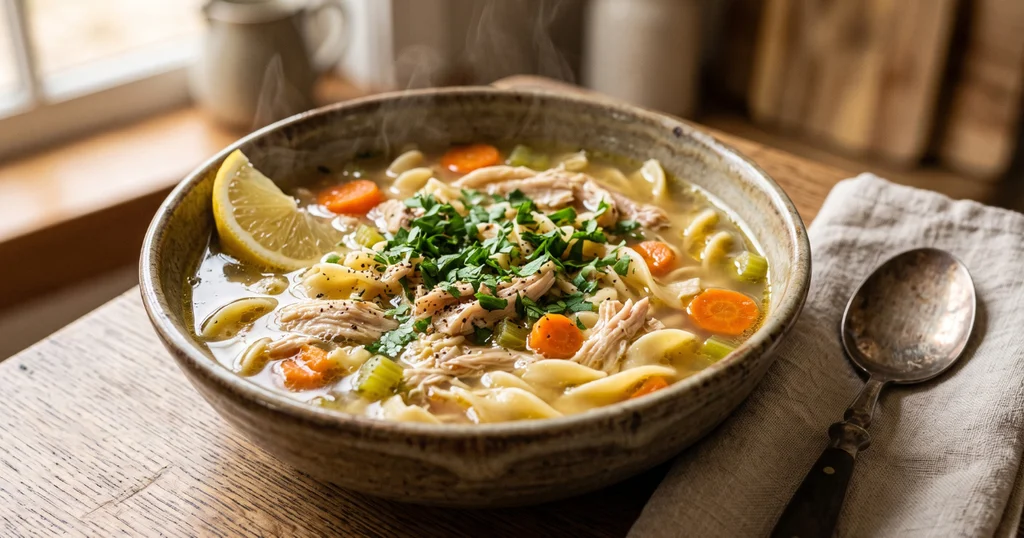
A bowl of chicken noodle soup homemade is complete on its own, but the right sides make it a real meal.
Crusty bread or a simple homemade biscuit is the classic pairing — something to tear and drag through the broth. If you want to lean into the comfort theme, a grilled cheese sandwich on the side is hard to argue with.
For something lighter, serve with a simple green salad dressed with a lemon vinaigrette. The acidity echoes the lemon in the soup.
If you’re feeding people who want more substance, a side of roasted potatoes or a piece of easy garlic bread fills the plate out well.
A sprinkle of extra fresh parsley and a crack of black pepper directly on each bowl just before serving makes a difference visually and in flavor.
FAQ
Can I use chicken breast instead of chicken thighs in homemade chicken noodle soup?
Yes, but I recommend bone-in breast over boneless skinless if you go that route. Boneless skinless breast dries out quickly and contributes almost no fat to the broth. If that’s what you have, shorten the simmer time to 20–25 minutes and shred it right away so it doesn’t overcook.
How long does homemade chicken noodle soup last in the fridge?
Up to 4 days in an airtight container, broth and chicken stored together. Noodles are best stored separately and added fresh each time you reheat. Food safety guidelines from the USDA recommend refrigerating cooked chicken soups within 2 hours of cooking.
What’s the difference between chicken broth and chicken stock in this recipe?
Broth is made primarily from meat and is lighter in body. Stock is made from bones and has more collagen, which gives it a slightly thicker, more gelatinous quality when chilled. Either works — stock gives a richer result. If you use store-bought, choose low-sodium so you control the salt level.
Can I make chicken noodle soup homemade in a slow cooker?
Yes. Add the seared chicken, sautéed vegetables, broth, and aromatics to the slow cooker and cook on low for 6–8 hours or high for 3–4 hours. Shred the chicken, return it, and add freshly cooked noodles just before serving. Don’t cook noodles in the slow cooker — they turn to mush.
Why does my homemade chicken noodle soup taste bland?
Almost always a salt issue. Broth needs more seasoning than you’d expect — taste it before the noodles go in and again after. The lemon juice at the end also makes a dramatic difference; without it, the soup can taste flat even when it’s properly salted. If the broth itself seems thin in flavor, try a longer simmer time or add a Parmesan rind while the soup simmers.
Can I freeze chicken noodle soup homemade with the noodles already in it?
Technically yes, but the noodles turn soft and fall apart after freezing and reheating. I always freeze just the broth and chicken, then cook fresh noodles when I’m ready to serve. It takes five extra minutes and the texture difference is significant. Serious Eats covers the science of how starches behave during freezing if you want to understand exactly why this happens.
Conclusion
This chicken noodle soup homemade recipe is the one I go back to every single time — when someone’s sick, when it’s cold, when I want something that actually tastes like it was made with care. The techniques are simple but they matter: the sear, the separate noodles, the lemon at the end. Make it once and you’ll have a version to call your own. Adjust the vegetables, swap the noodles, use turkey instead. The bones of it are solid and the results are worth every minute.
Written by Oussama Ij, home cook and food writer.