
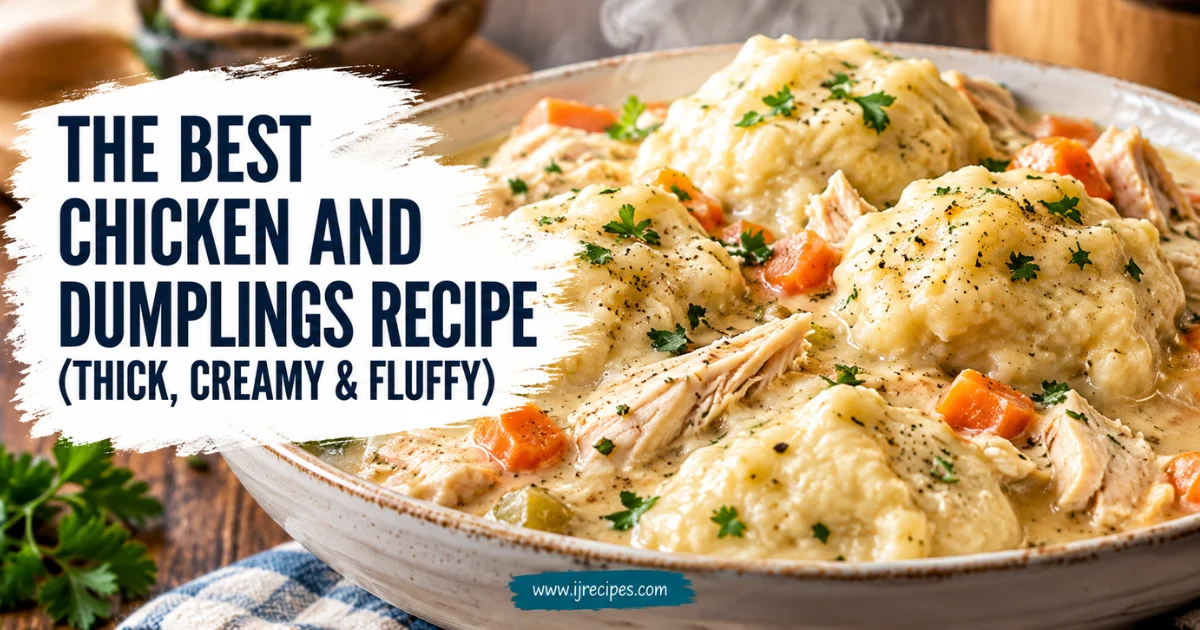
The Best Chicken and Dumplings Recipe (Thick, Creamy & Fluffy)
Table of Contents
The first time I made a chicken and dumplings recipe from scratch, I pulled gummy, dense lumps out of a watery broth and served them to my mother-in-law with a straight face. She was kind about it. I was mortified. That was five years ago, and I’ve made this dish at least forty times since — tweaking the fat ratio in the dumplings, adjusting when I add the cream, figuring out exactly why my first batch went sideways.
What I have now is a deeply satisfying, old-fashioned chicken and dumplings recipe that produces a thick, velvety broth with pillowy, cloud-like dumplings every single time. It’s the meal my kids request when they’re sick, when it’s cold, when they just want something that feels like home.
Why This Chicken and Dumplings Recipe Works
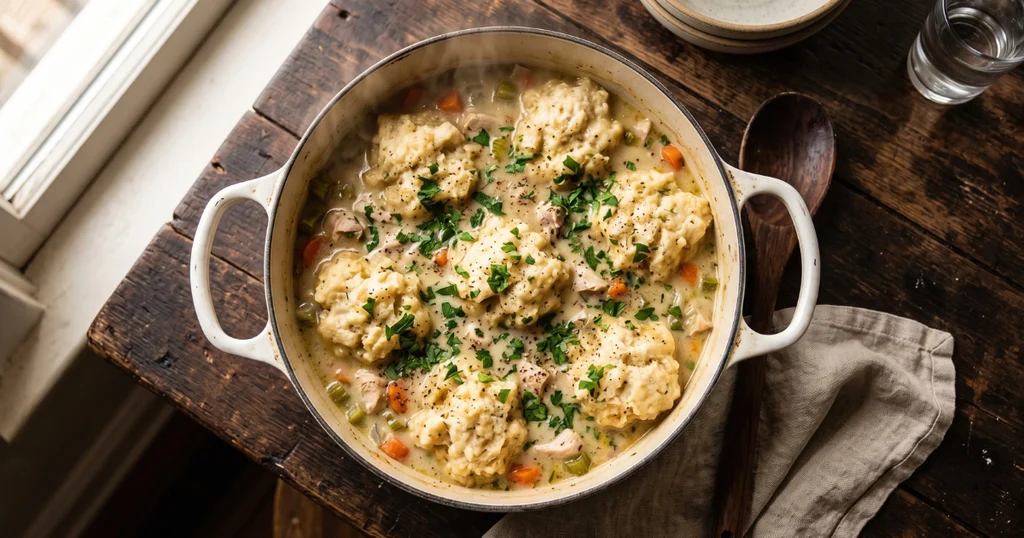
Most chicken and dumplings recipes fail in one of two places: the broth is thin, or the dumplings are dense. I solved the broth problem by building a roux before adding the stock — it sounds fancier than it is, but it’s just butter and flour cooked together for two minutes. The result is a broth with body, not soup with floating dough.
For the dumplings, the key is cold buttermilk and a light hand. I mix the batter just until it comes together — about 12 stirs — and I drop it into a gently simmering (not boiling) pot. Boiling causes dumplings to break apart before they set. Gentle steam does the heavy lifting. I also add fresh thyme and a small amount of baking powder to the dumpling batter, which gives them lift without making them cakey.
Ingredients
| Ingredient | Amount | Why It’s There / Substitute |
|---|---|---|
| Bone-in, skin-on chicken thighs | 2 lbs (about 4–5 pieces) | Richer flavor than breast; sub boneless thighs or rotisserie chicken |
| Yellow onion, diced | 1 large | Sweetness and base flavor |
| Carrots, diced | 3 medium | Classic aromatics; add color and slight sweetness |
| Celery stalks, diced | 3 stalks | Essential for authentic flavor |
| Garlic cloves, minced | 4 cloves | Depth; sub ½ tsp garlic powder |
| Unsalted butter | 5 tbsp | Sauté fat + roux base; sub olive oil (flavor will differ) |
| All-purpose flour | ⅓ cup + 1 cup (for dumplings) | Roux thickener + dumpling structure |
| Chicken broth | 6 cups | The base of the stew; use low-sodium to control salt |
| Heavy cream | ½ cup | Creaminess and richness; sub whole milk for lighter version |
| Fresh thyme | 1 tbsp (or 1 tsp dried) | Earthy, savory note in both stew and dumplings |
| Bay leaves | 2 leaves | Background depth; remove before serving |
| Salt and black pepper | To taste | Season in layers throughout cooking |
| Baking powder | 2 tsp | Lift in dumplings — don’t skip this |
| Baking soda | ¼ tsp | Works with buttermilk for extra tenderness |
| Cold buttermilk | ¾ cup | Moisture and tang in dumplings; sub milk + 1 tsp lemon juice |
| Fresh parsley, chopped | 2 tbsp | Brightness at the end; garnish |
Step-by-Step Instructions
Phase 1: Cook the Chicken
Sear the Thighs
Pat the chicken thighs dry with paper towels and season generously on both sides with salt and pepper. Heat 2 tablespoons of butter in a large Dutch oven or heavy-bottomed pot over medium-high heat. Once the butter foams, add the chicken skin-side down. Don’t move it for 4–5 minutes — you want a deep golden-brown sear. Flip and cook another 3 minutes.
Remove the chicken to a plate. It won’t be fully cooked yet; that’s fine. You’re building flavor in the pot, not finishing the chicken.
Build the Base
Reduce heat to medium. Add the remaining 3 tablespoons of butter to the same pot — don’t clean it; those browned bits are flavor. Add the onion, carrots, and celery. Cook, stirring occasionally, for 6–7 minutes until the onion is translucent and soft. Add the garlic and fresh thyme and cook for 1 more minute until fragrant.
Sprinkle ⅓ cup of all-purpose flour over the vegetables and stir constantly for 2 minutes. The mixture will look pasty and thick — that’s exactly right. This roux is what gives your chicken and dumplings recipe its signature thick broth.
Simmer the Stew
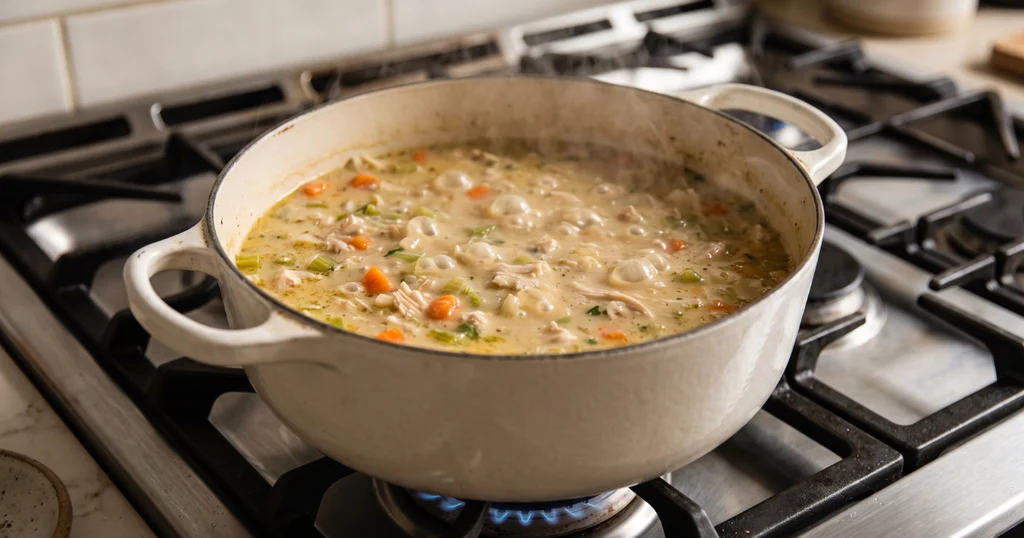
Slowly pour in the chicken broth, stirring as you go to prevent lumps. Add the bay leaves and nestle the seared chicken thighs back into the pot. Bring to a gentle boil, then reduce heat to low, cover, and simmer for 30 minutes.
After 30 minutes, remove the chicken to a cutting board. It will be fully cooked and the meat will pull away from the bone easily. Remove and discard the skin and bones, then shred or roughly chop the meat into bite-sized pieces. Stir the shredded chicken back into the pot along with the heavy cream. Taste and adjust salt and pepper. Remove the bay leaves.
Phase 2: Make the Dumplings
Mix the Batter
In a medium bowl, whisk together 1 cup all-purpose flour, 2 teaspoons baking powder, ¼ teaspoon baking soda, ½ teaspoon salt, and a pinch of black pepper. If you want herbed dumplings (and I always do), add ½ teaspoon dried thyme or 1 teaspoon fresh thyme to the dry mix.
Pour in ¾ cup cold buttermilk and stir with a fork just until combined — you’ll count about 12–15 stirs. There should still be small lumps in the batter. Overmixing is the number one reason dumplings turn out dense and rubbery. Stop before you think you need to.
Drop and Steam
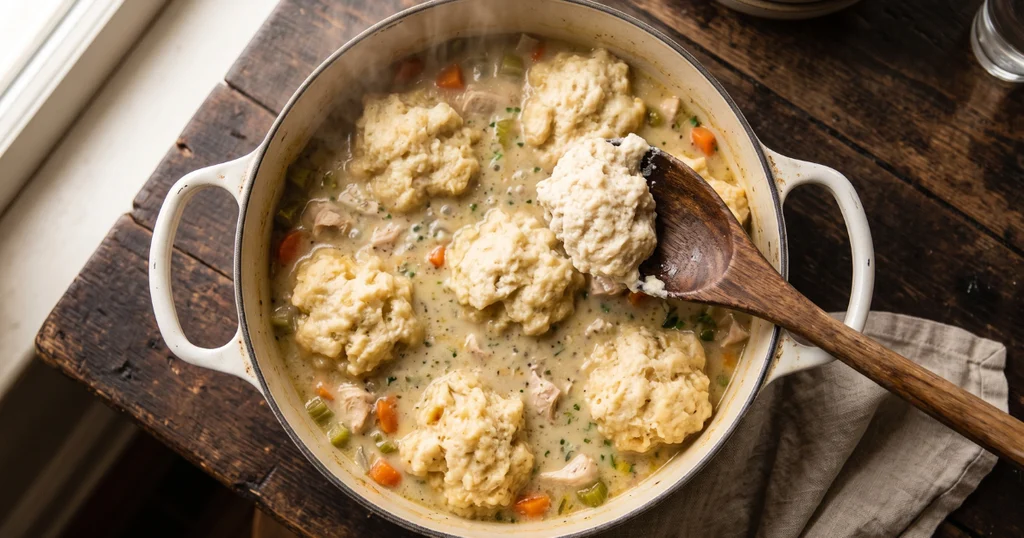
Bring the stew back to a very gentle simmer — you want to see small bubbles at the surface, not a rolling boil. Drop the dumpling batter by heaped tablespoons directly onto the surface of the simmering broth. Space them slightly apart; they’ll puff and expand as they cook. You should get about 12–14 dumplings.
Place the lid on the pot and cook for exactly 15 minutes without lifting the lid. I cannot stress this enough — steam is what cooks the tops of the dumplings, and lifting the lid releases it. Set a timer and walk away.
After 15 minutes, check one dumpling by inserting a toothpick or small knife into the center. It should come out clean and the dumpling should feel firm and springy, not wet. If it’s still doughy in the center, replace the lid and cook for 2–3 more minutes.
Phase 3: Finish and Serve
Scatter fresh chopped parsley over the top. Serve immediately, making sure everyone gets both broth and dumplings in each bowl. The stew thickens noticeably as it sits, so it’s best eaten right from the pot.
Pro Tips and Common Mistakes
Don’t skip the sear. I used to skip it on busy weeknights and the broth always tasted flat. Even 8 minutes of browning adds enormous depth to the final dish.
Cold buttermilk matters. Warm buttermilk activates the baking powder too early, before the dumplings hit the heat. Keep it in the fridge until the moment you mix.
Your simmer has to be gentle. My first disastrous batch was cooked at a full boil. The tops of the dumplings were blown apart before the insides set. Gentle, lazy bubbles — that’s the goal.
Don’t let the dumpling batter sit. Mix it, drop it immediately. Letting it rest in the bowl lets the leavening dissipate.
Season in layers. Salt the chicken before searing, season the vegetables while they cook, and taste the broth again before you add the dumplings. This chicken and dumplings recipe should never taste flat.
Don’t overcrowd the dumplings. If your pot is on the smaller side, cook the dumplings in two batches. Crowded dumplings steam unevenly and can fuse together.
Variations and Substitutions
Rotisserie chicken shortcut: Skip the searing and simmering steps. Use 3 cups of shredded rotisserie chicken and add it with the cream. You’ll still need to build the roux and cook the vegetables, but you’ll save about 40 minutes. It works beautifully for a weeknight chicken and dumplings recipe.
Rolled dumplings (Southern style): Instead of drop dumplings, roll the dough out to about ¼-inch thickness and cut into strips or squares. These cook slightly longer (18–20 minutes) and have a chewier, denser texture — closer to pasta than a biscuit. Some people prefer this style. I grew up on drop dumplings so that’s where my loyalty lies.
Herb variations: Swap thyme for rosemary, or add ½ teaspoon of smoked paprika to the stew for a slightly different flavor profile. Fresh dill in the dumplings is also excellent and unexpected.
Vegetable additions: Frozen peas stirred in at the very end (before you add dumplings) work well and add color. Some cooks add diced potatoes, but I find the thick broth makes potatoes redundant.
Gluten-free version: Use a 1:1 gluten-free all-purpose flour blend for both the roux and the dumplings. The texture of the dumplings will be slightly grainier, but still very good. Add an extra ¼ teaspoon of xanthan gum if your blend doesn’t already include it.
Dairy-free: Use olive oil instead of butter, unsweetened oat milk with a teaspoon of lemon juice in place of buttermilk, and full-fat coconut milk instead of heavy cream. The broth will taste different but is still rich and satisfying.
Storage, Reheating, and Make-Ahead Instructions
Refrigerator: Store leftovers in an airtight container for up to 3 days. The broth will thicken significantly in the fridge — this is normal. The dumplings also absorb liquid as they sit, so they’ll be a bit denser the next day, though still very tasty.
Freezing: I recommend freezing the stew base (chicken and broth) separately and making fresh dumplings when you reheat. Cooked dumplings don’t freeze well — they become waterlogged and gluey when thawed. The stew base freezes for up to 3 months.
Reheating: Reheat gently on the stovetop over medium-low heat, adding a splash of chicken broth or water to loosen the thickened stew. Avoid microwaving at high power — it makes the chicken rubbery and dumplings tough. Low and slow wins here. According to safe minimum internal temperature guidelines from the USDA, reheated poultry dishes should reach 165°F internally before serving.
Make-ahead tip: You can make the entire stew base — sear the chicken, build the broth, add the cream — up to 2 days ahead and refrigerate. When you’re ready to serve, bring it back to a simmer and make fresh dumplings. This is my go-to trick for hosting.
Serving Suggestions
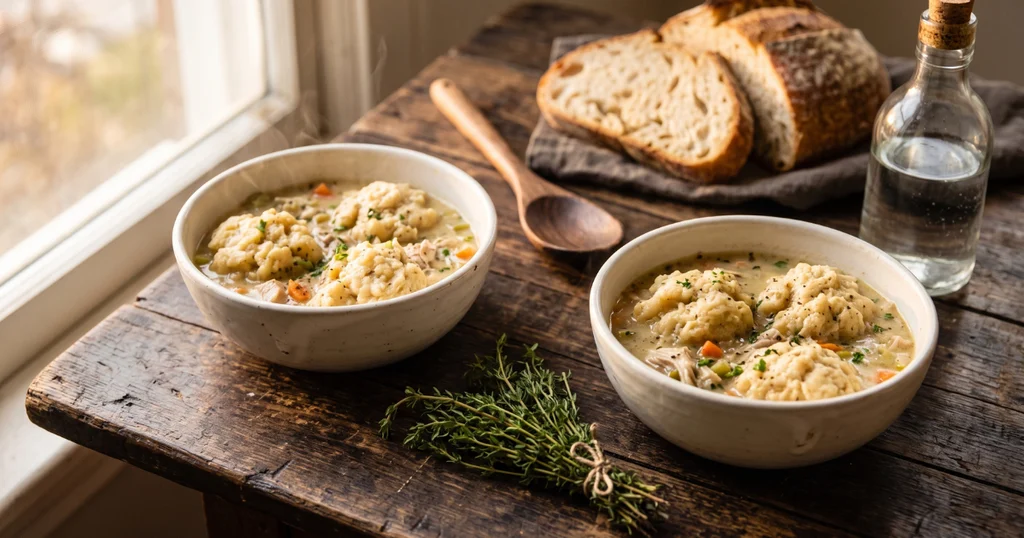
This chicken and dumplings recipe is a complete meal on its own, but if you want to round out the table, here’s what works well:
Simple green salad — something with acid, like a lemon vinaigrette, cuts through the richness of the broth beautifully.
Crusty bread — for mopping up the bottom of the bowl. A good sourdough or French baguette is all you need.
Roasted green beans or asparagus — a quick roast at 425°F for 15 minutes alongside the dumplings steaming adds color and a vegetable side without any extra fuss.
Sweet finish — after something this hearty, I like to keep dessert simple. A scoop of vanilla ice cream or a light fruit-based treat works well. If you’re looking for inspiration, check out some of the easy dessert recipes for something to round out the meal.
FAQ
Can I use chicken breasts instead of thighs?
Yes, but thighs genuinely produce a better chicken and dumplings recipe because of their higher fat content. If you use breasts, reduce the initial simmer time to 20 minutes and check the internal temperature — they overcook faster and can turn stringy. Bone-in breast will hold up better than boneless.
How long does chicken and dumplings last in the fridge?
Up to 3 days in an airtight container. After that, the dumplings get quite mushy and the flavor starts to dull. I’d rather make a half batch and eat it fresh than try to stretch leftovers too long.
What’s the difference between drop dumplings and rolled dumplings?
Drop dumplings are soft, biscuit-like, and pillowy — made from a wet batter scooped directly into the pot. Rolled dumplings are made from a firmer dough that you roll thin and cut into strips or squares; they’re chewier and cook up almost like flat noodles. Both are traditional depending on region, but most people associate the drop style with the thick, creamy version of this dish.
Why did my dumplings turn out gummy or dense?
Almost always this comes down to overmixing the batter, cooking at too high a heat, or lifting the lid during steaming. All three issues are common. Also check that your baking powder is fresh — if it’s been open for more than 6 months, it may be losing potency. According to The Kitchn, spent baking powder is one of the most overlooked reasons baked goods fail to rise.
Can I make chicken and dumplings in a slow cooker?
Yes, with modifications. Cook the stew base on low for 6–8 hours or high for 3–4. In the last 45 minutes, switch to high, drop in dumpling batter, and replace the lid. Don’t open the slow cooker during those 45 minutes. The dumplings won’t be quite as fluffy as stovetop, but they work. I still prefer the stovetop method for texture control.
Is chicken and dumplings healthy?
It depends on your portions and ingredients. The dish is protein-rich thanks to chicken and provides vegetables from the carrots, celery, and onion. Using whole milk instead of heavy cream and reducing the butter slightly makes it lighter without sacrificing too much. For detailed nutritional context on chicken-based dishes, Healthline covers chicken’s nutritional profile thoroughly.
Can I add herbs directly to the dumpling batter?
Absolutely, and I always do. Thyme, parsley, chives, and rosemary all work well. Add 1–2 teaspoons of fresh herbs (or ½–1 teaspoon dried) to your dry ingredients. Herbed dumplings taste significantly better than plain ones with this chicken and dumplings recipe.
Conclusion
This chicken and dumplings recipe is the one I come back to more than almost anything else in my cooking rotation. It’s not fussy, it doesn’t require special equipment, and it never fails to make people at the table genuinely happy. The sear, the roux, the cold buttermilk, the hands-off steaming time — those four things are your path to getting it right. Make it once, follow the steps, and you’ll have a recipe that stays in your family for years. I hope it becomes yours the way it became mine.
Written by Oussama Ij, home cook and food writer.