
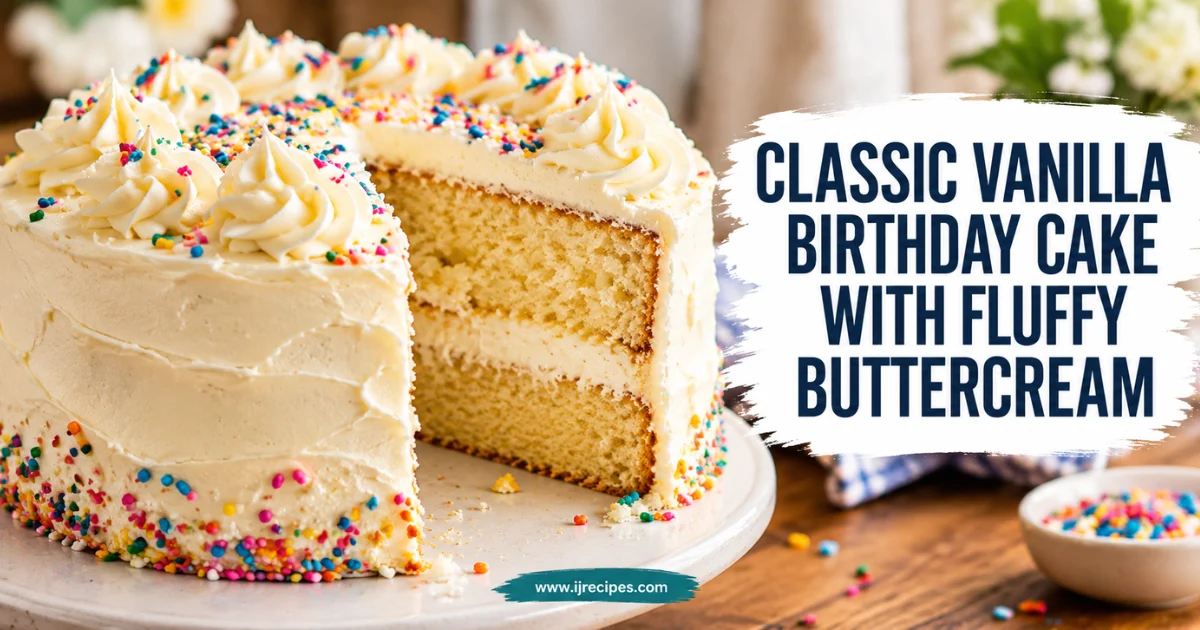
Classic Vanilla Birthday Cake with Fluffy Buttercream
Table of Contents
Last spring my niece asked for a birthday cake “like the bakery one, but yours.” I had two days, one oven, and a bad habit of overmixing batter. My first attempt came out with a dense, rubbery crumb and a dome you could have used as a bowl.
That flop sent me back to the kitchen for four more rounds. This birthday cake is the version that finally worked: two tall, tender layers with a soft, buttery crumb. The frosting is vanilla buttercream that spreads like a dream.
It uses everyday ingredients and a hand mixer. You can finish the whole thing in about 90 minutes, plus cooling time.
Why This Birthday Cake Recipe Works
Most homemade birthday cake fails in one of two places: the crumb turns dry, or the layers bake unevenly. This recipe fixes both.
Cake flour keeps the crumb soft, and the sour cream adds moisture that holds for days. I tried all-purpose flour in round three, and the cake was noticeably chewier.
Creaming the butter and sugar for a full four minutes builds the air that lifts the layers. Room-temperature eggs and milk matter just as much. Cold dairy curdled my batter in test two and left a greasy, coarse crumb.
The buttercream uses a small splash of cream and a pinch of salt. That keeps it from tasting like pure sugar, which is my main complaint with most birthday cake frosting.
Ingredients for Homemade Birthday Cake
This makes two 8-inch layers, enough for 12 generous slices.
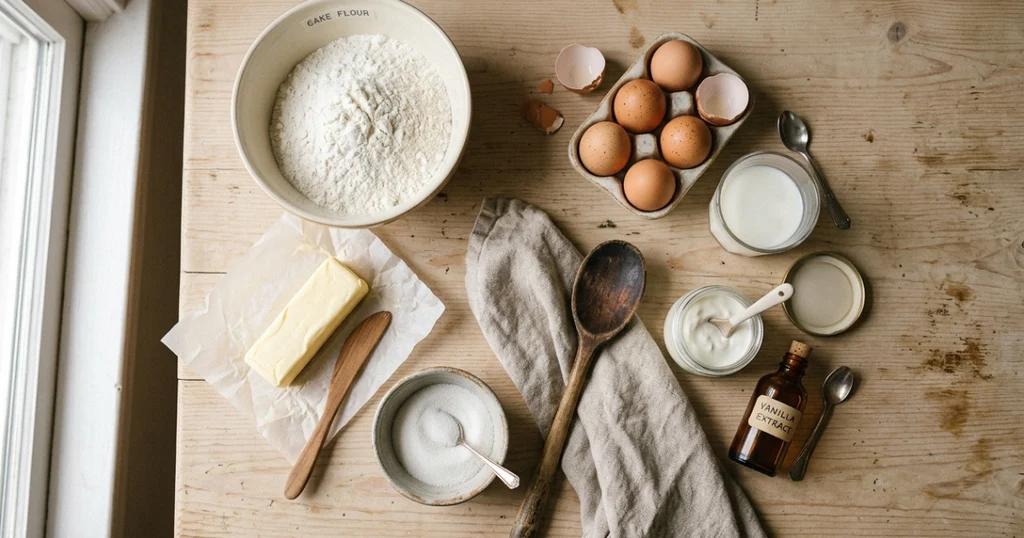
Cake Layers
| Ingredient | Amount | Why It’s There / Substitute |
|---|---|---|
| Cake flour | 2½ cups (280 g) | Soft crumb; use 2¼ cups all-purpose plus ¼ cup cornstarch |
| Baking powder | 2½ tsp | Lift; check that yours is fresh |
| Fine salt | ½ tsp | Balances sweetness |
| Unsalted butter, softened | ¾ cup (170 g) | Flavor and tenderness |
| Granulated sugar | 1½ cups (300 g) | Sweetness and structure |
| Large eggs, room temp | 3 | Binding; cold eggs break the batter |
| Vanilla extract | 2 tsp | Main flavor; use real, not imitation |
| Whole milk, room temp | 1 cup (240 ml) | Moisture; use oat milk if dairy-free |
| Sour cream | ¼ cup (60 g) | Keeps the cake moist; plain yogurt works |
Vanilla Buttercream
| Ingredient | Amount | Why It’s There / Substitute |
|---|---|---|
| Unsalted butter, softened | 1½ cups (340 g) | Base of the frosting |
| Powdered sugar, sifted | 4 cups (480 g) | Sweetness; sifting prevents lumps |
| Heavy cream | 3 tbsp | Smooths the texture; whole milk works |
| Vanilla extract | 2 tsp | Flavor |
| Fine salt | ¼ tsp | Cuts the sweetness |
Step-by-Step Instructions
Make the Cake Layers
Prep
- Heat the oven to 350°F (175°C). Grease two 8-inch round pans, line the bottoms with parchment, and grease the parchment.
- Whisk the flour, baking powder, and salt in a medium bowl. Set it aside.
Mix the Batter
- Beat the butter and sugar on medium-high for 4 minutes. It should look pale and fluffy, almost like whipped frosting.
- Add the eggs one at a time, beating 30 seconds after each. Mix in the vanilla and sour cream.
- Add the flour mixture in three parts, alternating with the milk. Start and end with the flour.
- Stop mixing the moment you see no dry streaks.
Note on Overmixing
This is where my first birthday cake went wrong. Extra beating after the flour goes in develops gluten, which makes the crumb tough. Use a spatula for the last few folds.
Bake
- Divide the batter evenly between the pans. I weigh them, and each should hold about 640 g.
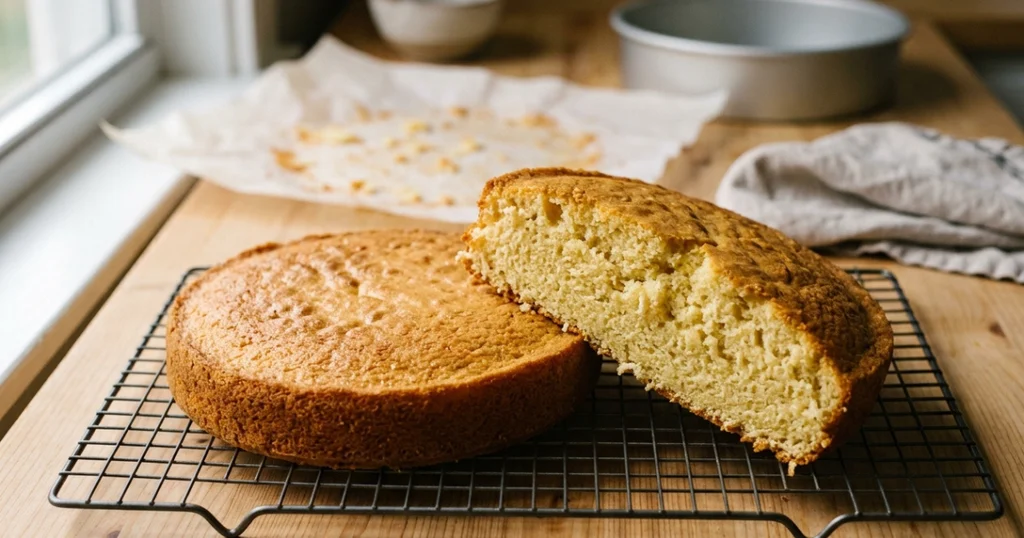
- Bake 28–32 minutes. A toothpick should come out with a few moist crumbs, and the tops should spring back lightly.
- Cool in the pans for 10 minutes, then turn the layers out onto a rack. Cool completely, at least 1 hour.
Make the Buttercream and Frost
Whip the Frosting
- Beat the butter alone for 3 minutes until very pale.
- Add the powdered sugar one cup at a time on low speed. Then add the cream, vanilla, and salt.
- Beat on medium-high for 2 minutes. It should hold a soft peak and spread without tearing the cake.
Assemble
- Level the layers with a serrated knife if they domed. Eat the scraps; they’re the baker’s reward.
- Put one layer on a plate and spread about 1 cup of frosting over it. Top with the second layer, bottom side up.
- Spread a thin crumb coat over the whole cake and chill 20 minutes. Then add the final layer of frosting.
Pro Tips and Common Mistakes
Measure flour by weight. Scooping with a cup packed in nearly 40 g extra in one of my tests, and that birthday cake came out dry. King Arthur Baking’s guide to measuring flour explains why: a packed cup can hold up to 160 grams, while a properly weighed cup is about 120.
Don’t open the oven before 25 minutes. My second attempt sank in the middle because I peeked at minute 15.
Chill the crumb coat. A cold, sealed cake takes the final frosting cleanly. Without that step, my crumbs ended up all through the white frosting.
Sift the powdered sugar. Lumps don’t beat out, and they show up as little white pebbles on a smooth birthday cake.
Check your baking powder. Drop a spoonful into hot water. If it doesn’t fizz hard, replace it.
Variations and Substitutions
- Chocolate frosting: Replace ½ cup of the powdered sugar with ½ cup cocoa powder and add 1 extra tablespoon of cream.
- Funfetti birthday cake: Fold ⅓ cup rainbow sprinkles into the batter at the end. Use jimmies, since nonpareils bleed.
- Lemon version: Add the zest of 2 lemons to the sugar and rub them together before creaming. Swap 1 tsp of the vanilla in the frosting for lemon juice.
- Sheet pan option: Pour the batter into a greased 9×13 pan and bake 30–35 minutes. It’s easier for a crowd.
- Cupcakes: This batter makes about 24. Bake 18–20 minutes at 350°F.
If you want a richer chocolate option, see cake recipe . For a lighter topping instead of buttercream, works well.
Storage, Reheating, and Make-Ahead
Room temperature: Leave the frosted birthday cake out for the party, under a cake dome. Refrigerate any leftovers within 2 hours, in line with the USDA’s leftover food safety guidance.
Refrigerator: Cover and refrigerate up to 4 days. Let slices sit out for 30 minutes before serving, because cold butter makes the crumb taste dense.
Make-ahead layers: Wrap cooled layers tightly in plastic and keep them at room temperature up to 1 day. They also freeze for up to 2 months. Thaw them overnight in the fridge.
Make-ahead frosting: Refrigerate up to 1 week. Let it soften, then re-whip for 2 minutes before using.
Freezing slices: Freeze individual slices on a tray until firm, then wrap them. They keep 6 weeks. Thaw in the fridge for 3 hours.
Serving Suggestions
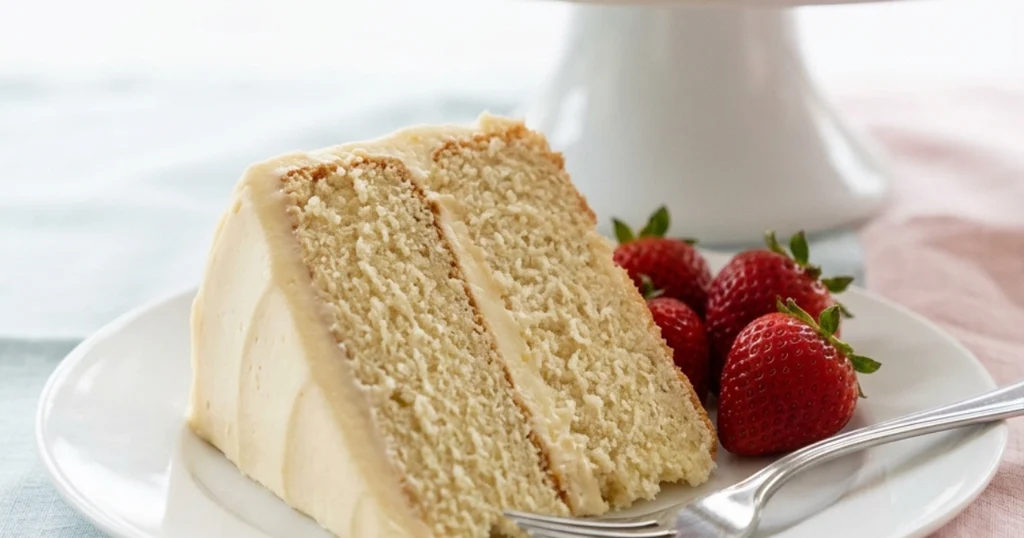
I serve this birthday cake at room temperature with a cold glass of milk. For a party, I pair it with fresh strawberries and a scoop of vanilla ice cream.
If you’re feeding a crowd, easy dessert recipes gives you a few lighter sides next to a rich cake. cookie recipes makes a good take-home treat for guests.
Cut with a long knife dipped in hot water and wiped dry between slices. The edges stay clean, even with thick buttercream.
Frequently Asked Questions
Can I make this birthday cake a day ahead?
Yes. Bake and cool the layers, wrap them tightly, and frost the day of the party. Or frost it fully and refrigerate overnight, then bring it to room temperature before serving.
How long does a homemade birthday cake last?
It keeps 2 days at room temperature and up to 5 in the refrigerator when covered. After that the crumb starts to dry out.
Can I use all-purpose flour instead of cake flour?
Yes. Replace each cup of cake flour with 1 cup all-purpose minus 2 tablespoons, then add 2 tablespoons of cornstarch per cup. The crumb will be slightly less tender, but still good.
What’s the difference between buttercream and cream cheese frosting?
Buttercream is butter and powdered sugar, so it’s sweeter and holds its shape better at room temperature. Cream cheese frosting is tangier and softer, and it needs refrigeration.
Why did my birthday cake sink in the middle?
The usual causes are opening the oven too early, expired baking powder, or underbaking. Check doneness with a toothpick, and wait until at least 25 minutes before opening the door.
Can I bake this birthday cake in a different pan size?
Yes. Use three 6-inch pans for a taller cake and bake 22–26 minutes. For a 9-inch pan, expect thinner layers and bake about 25 minutes.
Conclusion
This is the birthday cake I make now whenever someone asks for one. The layers stay tender for days, and the frosting is easy to spread. Four failed tries taught me that room-temperature ingredients and gentle mixing matter more than any fancy technique.
Bake the layers a day early if you can. You’ll have less pressure on party day, and the cake will taste just as good.
Written by Oussama Ijammaane, home cook and food writer.