
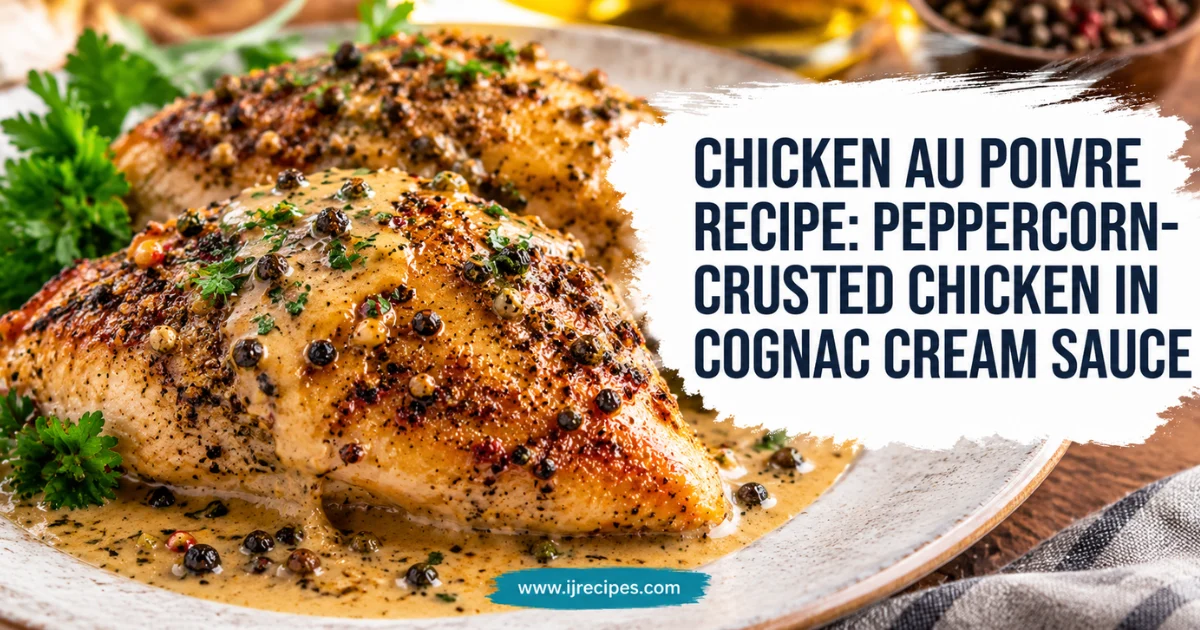
Chicken Au Poivre Recipe: Peppercorn-Crusted Chicken in Cognac Cream Sauce
Table of Contents
Last February, my husband asked for steak au poivre for our anniversary, and the butcher was closed. I had chicken breasts, a jar of whole peppercorns, and half a carton of cream. My first attempt at this chicken au poivre recipe went badly. I used pre-ground pepper, it scorched in the pan, and the sauce tasted like burnt dust.
I tried again the next night with coarsely cracked peppercorns and a gentler flame. The chicken came out with a fragrant, crackly crust, and the sauce coated a spoon within six minutes.
I’ve made this chicken au poivre a dozen times since, adjusting the pepper size and the resting time. This is the version I now serve to guests. It takes 35 minutes, one skillet, and no special equipment.
Why This Chicken Au Poivre Recipe Works
The classic French method was built for steak, and chicken breast is leaner and less forgiving. So I changed three things.
First, I pound the breasts to an even thickness. That way the crust doesn’t burn before the center is cooked.
Second, I crack the peppercorns by hand instead of grinding them. Coarse pieces toast and mellow in the fat, while fine powder turns bitter fast.
Third, I build the sauce in the same pan without washing it. The browned bits stuck to the bottom carry most of the flavor, and cognac lifts them right off.
Ingredients
| Ingredient | Amount | Why It’s There / Substitute |
|---|---|---|
| Boneless, skinless chicken breasts | 2 large (about 1.5 lb / 680 g) | Cut in half horizontally if very thick |
| Whole black peppercorns | 1½ tablespoons | The star; never use pre-ground |
| Kosher salt | 1 teaspoon | Season before the pepper goes on |
| Unsalted butter | 2 tablespoons | Browns the crust; use olive oil if needed |
| Neutral oil | 1 tablespoon | Stops the butter from burning |
| Shallot, finely minced | 1 large | Mild sweetness; substitute the white part of a scallion |
| Cognac or brandy | 3 tablespoons | Deglazes and adds depth; sub 2 tbsp apple juice plus 1 tsp vinegar |
| Chicken stock | ½ cup (120 ml) | Loosens the sauce; use low-sodium |
| Heavy cream | ¾ cup (180 ml) | Makes it silky; half-and-half runs thinner |
| Dijon mustard | 1 teaspoon | Adds tang and helps emulsify |
| Fresh thyme or parsley | 1 tablespoon | Brightness at the end; optional |
Step-by-Step Instructions
Cook the Chicken Au Poivre
Prep the Chicken and Pepper
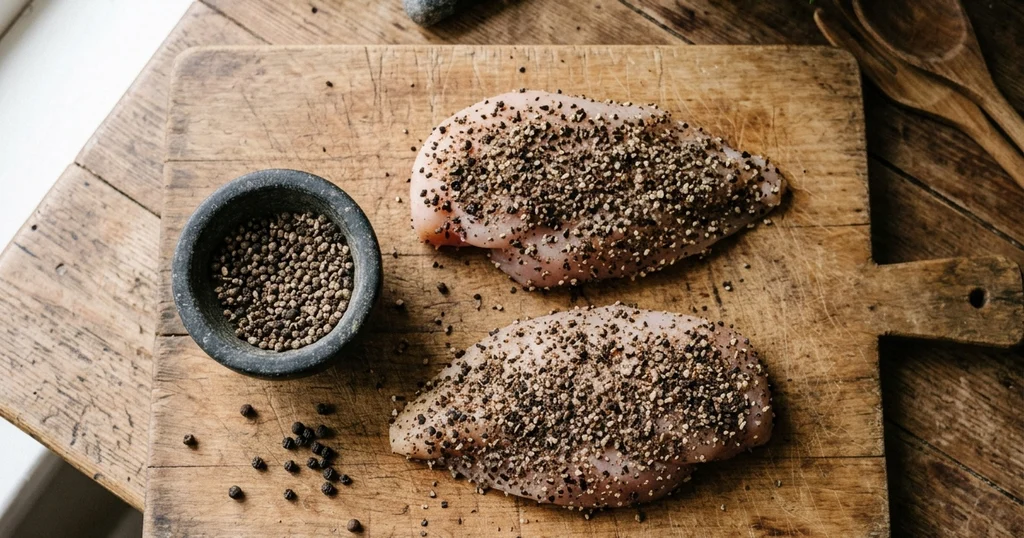
- Slice each breast in half horizontally so you have four thin cutlets, or pound them to about ¾ inch (2 cm). Pat them completely dry with paper towels. Wet chicken steams instead of searing.
- Crush the peppercorns with the bottom of a heavy pan or a mortar and pestle. You want pieces about the size of coarse sand, with a few larger bits mixed in.
- Salt the chicken on both sides. Press the crushed pepper firmly into each side so it sticks. It should look generously coated but not buried.
Sear
- Heat the oil and 1 tablespoon of the butter in a large skillet over medium heat. Wait until the butter foam settles, about 90 seconds.
- Add the chicken and cook 5 to 6 minutes without moving it. The underside should turn deep golden and the pepper should smell toasty, not acrid.
- Flip and cook another 4 to 5 minutes. Check that the thickest part reads 165°F (74°C) on an instant-read thermometer, then move the chicken to a plate and tent it loosely with foil.
Build the Sauce
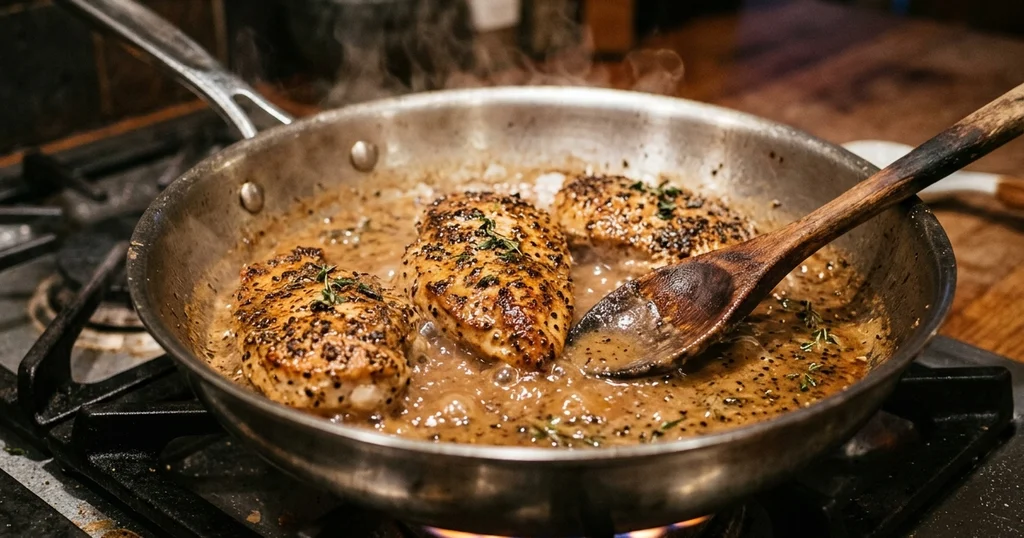
- Lower the heat slightly and add the remaining butter. Stir in the shallot and cook 1 to 2 minutes until soft and translucent.
- Take the pan off the burner before adding the cognac. This is important because alcohol can flame up. Return it to the heat and scrape up the browned bits for about 30 seconds.
- Pour in the stock and simmer 3 minutes until reduced by half. Stir in the cream and mustard and simmer gently for 4 to 5 minutes.
- The sauce is ready when it coats the back of a spoon and a finger drawn through it leaves a clean line. Return the chicken and its juices to the pan and spoon the sauce over it for one minute.
Pro Tips & Common Mistakes
Don’t use pre-ground pepper. That was my first mistake. It burns in hot fat and turns the whole dish harsh and bitter.
Don’t crowd the pan. Cook in two batches if your skillet is small. Crowding drops the temperature and the crust never forms.
Keep the cream at a gentle simmer. A hard boil can split the sauce and leave it greasy. If that happens, whisk in a tablespoon of cold cream off the heat.
Shake off loose pepper before searing. Pieces that aren’t pressed in fall into the pan and scorch. I learned this by smelling smoke at minute three.
Use a thermometer. Thin cutlets go from juicy to dry in about 90 seconds. Pulling them at 165°F (74°C) follows USDA safe temperature guidance and keeps the meat tender.
Taste the sauce before adding salt. Stock, mustard, and the seasoned chicken juices all bring salt already.
Variations & Substitutions
Green peppercorn version. Swap half the black pepper for brined green peppercorns, rinsed and lightly crushed. The flavor is fruitier and less sharp.
Mixed peppercorn crust. Use black, white, and pink peppercorns together. It looks beautiful, though pink peppercorns are sweeter and should make up no more than a quarter of the mix.
Alcohol-free. Skip the cognac and use extra stock with a teaspoon of red wine vinegar. The sauce is a little lighter, but it still works well.
Thighs instead of breasts. Boneless, skinless thighs cook in about 7 minutes per side and stay juicier. Take them to 175°F (79°C).
Lighter sauce. Replace half the cream with whole milk mixed with a teaspoon of cornstarch. It’s less rich but still creamy.
Storage, Reheating & Make-Ahead
Refrigerator. Store the chicken and sauce together in an airtight container for up to 3 days. Cool it within two hours of cooking.
Reheating. Warm it in a skillet over low heat with a splash of stock or cream, covered, for 6 to 8 minutes. The microwave works at 50% power but can make the sauce separate.
Freezer. I don’t recommend freezing it, because cream sauces turn grainy after thawing. You can freeze the seared chicken alone for up to 2 months and make a fresh sauce.
Make-ahead. Crush the peppercorns and slice the shallot up to a day in advance. Press the pepper onto the chicken no more than 30 minutes before cooking, or the salt will pull out moisture.
Serving Suggestions
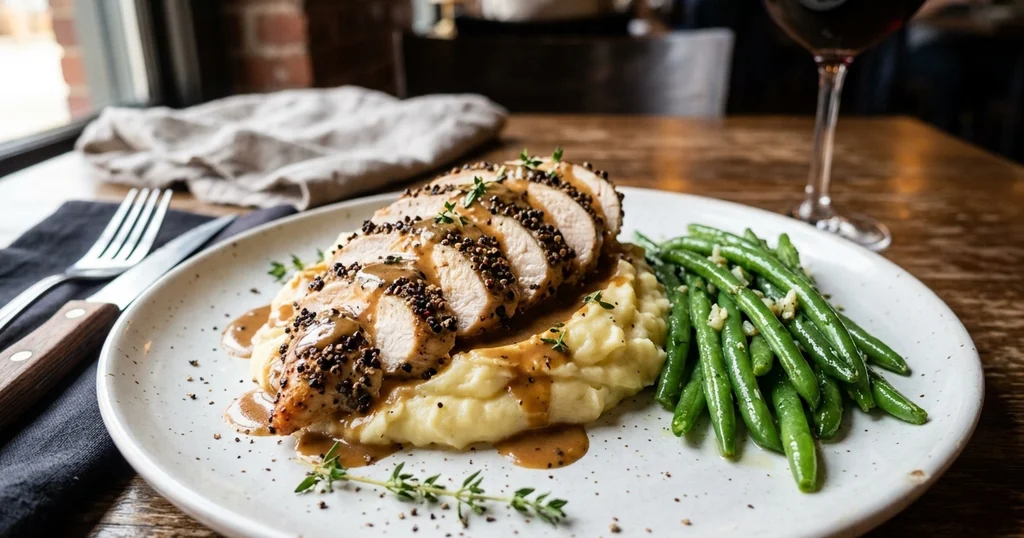
Mashed potatoes are my first choice because they soak up the sauce. Crispy roasted potatoes or thin fries also work, especially if you want a bistro-style plate.
For vegetables, I like steamed green beans tossed in butter or a sharp arugula salad with lemon. The acidity cuts through the cream.
A dry red like Pinot Noir or a crisp white Burgundy goes well with it. If you’re serving guests, warm the plates first so the sauce stays silky.
Frequently Asked Questions
Can I make chicken au poivre without cognac?
Yes. Use extra chicken stock plus a teaspoon of red wine vinegar or a splash of apple juice. You lose some depth, but the peppercorn flavor still shines.
What’s the difference between steak au poivre and a chicken au poivre recipe?
The technique is the same: a cracked pepper crust, a pan sauce, and a cognac deglaze. Chicken is leaner and cooks through, so it needs thinner cutlets and careful temperature checks to stay juicy.
How long does chicken au poivre last in the fridge?
Up to 3 days in a sealed container. Reheat it gently and add a splash of stock, since the sauce thickens as it chills.
Why is my peppercorn sauce bitter?
Usually the pepper burned. It happens with fine-ground pepper, a pan that’s too hot, or loose pepper left in the fat. Use coarse cracks and medium heat.
Can I use chicken thighs?
Yes, and many people prefer them. Cook boneless thighs to 175°F (79°C) for the best texture, and expect about 7 minutes per side.
Is chicken au poivre very spicy?
It’s peppery but not hot like chili. The cream and cooking time mellow the pepper, and it can turn very mild if you use less than a tablespoon. If you’d like to know more about the spice itself, Healthline explains black pepper’s active compound, piperine.
Final Thoughts
This chicken au poivre recipe is what I make when I want dinner to feel special without spending the whole evening cooking. The two things that matter most are crushing your own peppercorns and keeping the cream at a gentle simmer.
Get those right and you’ll have a crisp, aromatic crust with a glossy sauce, all from one pan. Make it once as written, then adjust the pepper to your taste on the second night.
Written by Oussama Ij , home cook and food writer.