
Easy Hotcake Recipe: Soft, Fluffy Hotcakes in 20 Minutes
Table of Contents
My kids ask for hotcakes almost every Saturday, and for a long time I dreaded it because my batter kept coming out either gummy in the middle or flat as a pancake mat. I finally sat down one Friday night and tested four versions back to back, and this easy hotcake recipe is the one that won every single time. It uses ingredients already in my pantry, takes about 20 minutes start to finish, and produces a stack that’s golden on the outside and pillowy inside.
The first time I made this batch, I overmixed the batter out of habit from making waffles, and the hotcakes came out tough and a little rubbery. The fix was simple: stop stirring the second the flour disappears, lumps and all. That one change turned this into the easy hotcake recipe my family actually requests by name.
I’ve since made this same batter on camping trips, in a tiny rental kitchen with no scale, and on mornings when I only had ten minutes before the school bus arrived. It holds up every time, which is exactly what I want from a recipe I’m going to lean on regularly. If you’ve been burned by dense, gummy hotcakes before, this version is built to fix that specific problem, not just give you another version of the same batter.
Why This Easy Hotcake Recipe Works
This recipe leans on a double dose of leavening — baking powder plus a small amount of baking soda — which gives the hotcakes real lift without an eggy or metallic aftertaste. Baking soda needs an acidic ingredient to activate, while baking powder already contains its own acid built in, so the two work together to give the batter an initial rise at room temperature and a second rise once it hits the hot griddle, according to Healthline’s breakdown of baking soda versus baking powder.
I also rest the batter for five minutes before cooking, which lets the flour fully hydrate. That short rest is the difference between hotcakes that are dense in the center and hotcakes that puff up evenly. Every step in this easy hotcake recipe exists because I tested skipping it and got a worse hotcake.
The other reason this recipe works is that it doesn’t ask for anything unusual. No buttermilk you have to buy specially, no resting the batter overnight, no separating eggs and whipping whites into stiff peaks. I tried a version with whipped egg whites once, hoping for extra height, and while the hotcakes did puff up a bit more, the added dishes and time weren’t worth it for a weekday breakfast. This easy hotcake recipe keeps the process simple enough that I can make it half-asleep and still get a good result.
Ingredients for Easy Hotcakes
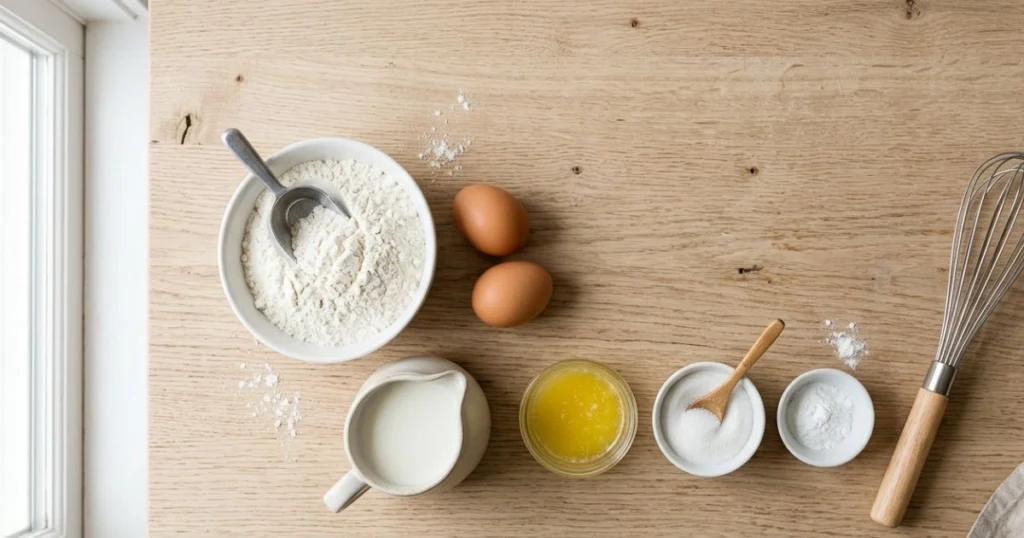
This table covers everything you need for one batch of about 10 medium hotcakes. Nothing here is exotic — it’s the kind of easy hotcake recipe you can make without a grocery run.
| Ingredient | Amount | Why It’s There / Substitute |
|---|---|---|
| All-purpose flour | 2 cups | The structure; swap 1:1 with a gluten-free blend if needed |
| Baking powder | 1 tablespoon | Main leavening agent for lift |
| Baking soda | ½ teaspoon | Boosts browning and adds a second rise |
| Salt | ½ teaspoon | Balances sweetness, sharpens flavor |
| Granulated sugar | 3 tablespoons | Light sweetness and better griddle browning |
| Whole milk | 1¾ cups | Hydrates the batter; buttermilk makes it tangier |
| Large eggs | 2 | Binds the batter and adds richness |
| Unsalted butter, melted | 4 tablespoons | Moisture and flavor; neutral oil works too |
| Vanilla extract | 1 teaspoon | Rounds out the flavor |
If you only have buttermilk on hand, use it in place of the milk and skip nothing else — it makes the hotcakes slightly tangier and even more tender.
Equipment You’ll Need
You don’t need anything fancy for this easy hotcake recipe. A large mixing bowl, a whisk, a spatula, and a nonstick skillet or electric griddle will get the job done. A ¼-cup measuring cup or a cookie scoop helps keep every hotcake close to the same size, so the whole batch cooks evenly and finishes around the same time.
Step-by-Step Instructions
Prep the Batter
- In a large bowl, whisk together the flour, baking powder, baking soda, salt, and sugar until there are no visible clumps of baking soda. This dry-ingredient step matters more than people think, since unevenly distributed baking soda leaves bitter spots in the finished hotcakes.
- In a separate bowl, whisk the milk, eggs, melted butter, and vanilla until smooth. Make sure the melted butter isn’t hot enough to scramble the eggs — let it cool for a minute first.
- Pour the wet mixture into the dry mixture. Stir with a spatula just until the flour disappears, about 10 to 15 strokes. The batter should look lumpy, not smooth — this is the single most important rule in any easy hotcake recipe.
- Let the batter rest for 5 minutes on the counter. You’ll notice small bubbles forming on the surface, which is the baking powder starting to work.
Cook the Hotcakes
- Heat a nonstick griddle or large skillet over medium-low heat for 3 to 4 minutes. Test it with a few drops of water — they should dance and evaporate within a couple of seconds.
- Lightly grease the surface with butter or a neutral oil. Wipe off any excess with a paper towel so they don’t fry in a puddle.
- Pour about ¼ cup of batter per hotcake onto the griddle, leaving space between each one. Don’t crowd the pan, or they’ll steam instead of forming a crisp edge.
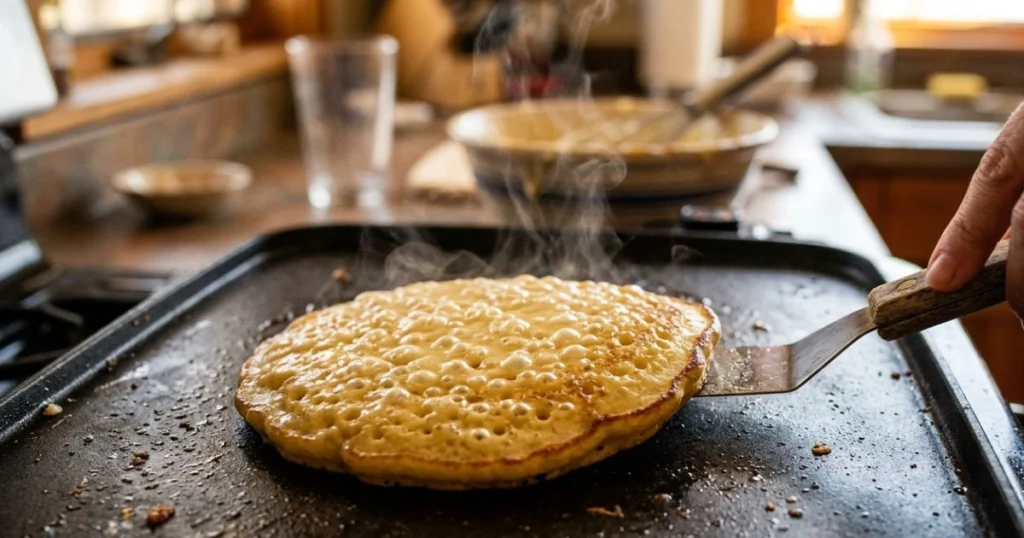
- Cook for 2 to 3 minutes, until bubbles form across the surface and the edges look matte instead of glossy. Flip once, firmly and quickly.
- Cook the second side for 1 to 2 minutes, until golden brown and cooked through. Press the center lightly — it should spring back instead of leaving a dent.
- Transfer finished hotcakes to a baking sheet in a 200°F oven if you’re cooking multiple batches, so the whole stack stays warm and none of them go cold before serving.
Pro Tips and Common Mistakes
Overmixing is the number one mistake. I’ve made this error more than once when rushing on a school morning, and the result is always the same: chewy, tough hotcakes instead of soft ones. Stir until just combined and walk away from the bowl.
Too-hot griddle burns the outside before the inside cooks. Medium-low is not a suggestion here. If your hotcakes are dark brown in under 90 seconds, turn the heat down for the next batch.
Skipping the rest time makes for flatter hotcakes. Five minutes feels like nothing, but it lets the flour hydrate and the leavening start working before the batter hits heat.
Measuring flour by scooping straight from the bag packs in extra flour and dries out the batter. Spoon the flour into your measuring cup and level it off with a knife instead.
Flipping too many times deflates the air bubbles you worked to build. One flip per hotcake, done with confidence, gives the best rise.
Using cold eggs and milk straight from the fridge slows down the batter and can make the melted butter seize into small clumps. Let your eggs and milk sit on the counter for 10 minutes before mixing, or warm the milk slightly in the microwave, so everything blends smoothly.
Pressing down on hotcakes with the spatula while they cook squeezes out the air bubbles that give them height. Let them cook undisturbed until they’re ready to flip on their own timeline.
Variations and Substitutions
- Buttermilk hotcakes: Swap the milk for buttermilk for a tangier flavor and extra-tender crumb. If you’re out, The Kitchn’s quick buttermilk substitute works well — stir milk with a spoonful of lemon juice or white vinegar and let it sit for a few minutes before using.
- Whole wheat hotcakes: Replace up to half the flour with whole wheat flour for a heartier, nuttier easy hotcake recipe that still stays fluffy.
- Blueberry hotcakes: Fold in ¾ cup fresh or frozen blueberries after mixing the batter, then cook as directed.
- Chocolate chip hotcakes: Sprinkle mini chocolate chips onto each hotcake right after pouring the batter, before the first flip. If chocolate is the goal, my Nestle chocolate chip cookie recipe uses the same classic pantry staples and is worth trying for dessert later that day.
- Dairy-free hotcakes: Use any unsweetened plant milk and swap the butter for a neutral oil like avocado or vegetable oil.
- Savory hotcakes: Cut the sugar to 1 tablespoon and stir in shredded cheddar and chopped scallions for a side dish instead of a breakfast sweet.
- Cinnamon spice hotcakes: Add ½ teaspoon ground cinnamon and a pinch of nutmeg to the dry ingredients for a warmer, fall-friendly version of this easy hotcake recipe.
- Mini hotcakes for kids: Use 2 tablespoons of batter per hotcake instead of ¼ cup. Smaller hotcakes cook faster and are easier for little hands to manage at the table.
Storage, Reheating, and Make-Ahead Tips
Refrigerator: Store leftovers in an airtight container for up to 3 days. Let them cool completely before stacking so they don’t turn soggy, and separate layers with parchment paper if you’re short on container space.
Freezer: Lay cooled hotcakes in a single layer on a baking sheet, freeze for an hour, then transfer to a freezer bag with the air pressed out. They’ll keep well for up to 2 months and reheat almost as well as fresh ones, which makes doubling a batch on the weekend an easy way to stock a few quick breakfasts for busy weekdays ahead.
Reheating: Warm refrigerated or frozen hotcakes in a toaster or a 350°F oven for 5 to 8 minutes. Microwaving works in a pinch but can leave them slightly rubbery.
Batter ahead of time: You can mix the dry ingredients the night before and store them in a sealed container on the counter. Whisk the wet ingredients fresh in the morning for the best texture. The USDA notes that leftover egg-based mixtures stay safe in the refrigerator for only a few days once combined, and the baking powder in this batter loses potency once it’s fully wet, so fresher is always better here.
Make-ahead batter: If you do want to mix the whole batter early, keep it covered in the fridge and use it within 24 hours for the best rise.
Serving Suggestions
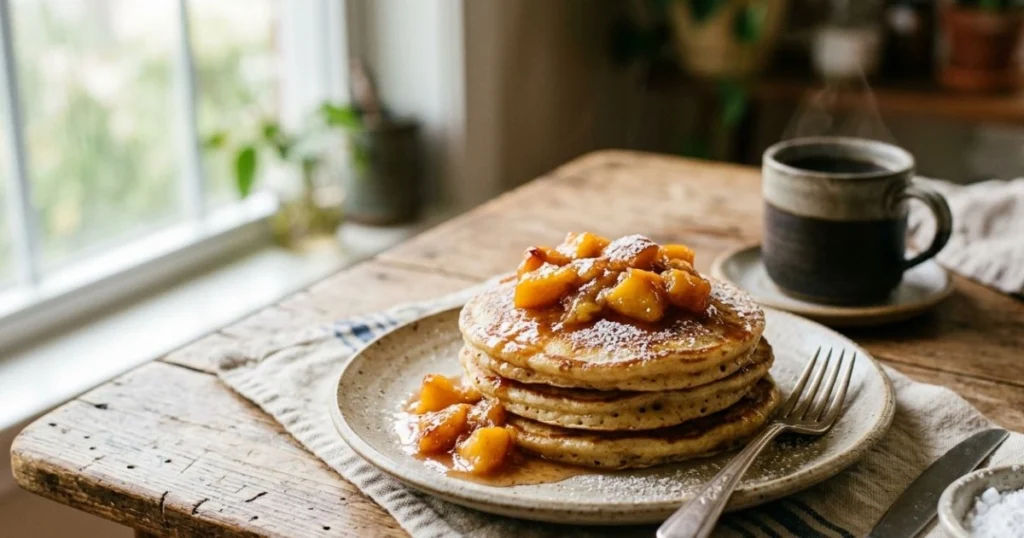
Classic maple syrup and a pat of butter never go out of style, but this easy hotcake recipe holds up well to more adventurous toppings too. Warm fruit compote is one of my favorites my peach pie filling recipe spooned over a warm stack turns an ordinary breakfast into something worth waking up for.
If you like to plan ahead, jars from my canning peach pie filling guide are perfect for stocking the pantry so you always have a fruit topping ready without extra prep on a busy morning.
For something lighter, a dollop of Greek yogurt with a drizzle of honey and a scattering of toasted nuts adds protein and crunch without much extra effort. Whipped cream and sliced strawberries turn the same batch into a weekend treat that feels closer to dessert.
A pat of cold butter melting into a warm stack right before serving is a small step people tend to skip, but it makes a real difference in flavor. If breakfast is turning into a bigger spread, bacon or breakfast sausage on the side rounds things out, and a pitcher of orange juice or hot coffee finishes the table without any extra cooking required.
Frequently Asked Questions
Can I make this easy hotcake recipe without eggs? Yes. Replace each egg with 3 tablespoons of unsweetened applesauce or a flax egg (1 tablespoon ground flaxseed mixed with 3 tablespoons water, rested for 5 minutes). The hotcakes will be slightly denser but still tender.
How long does hotcake batter last in the fridge? Mixed batter is best used within 24 hours. After that, the baking powder loses its lifting power and the hotcakes will turn out flatter.
What’s the difference between hotcakes and pancakes? Nothing meaningful — “hotcake” and “pancake” describe the same griddle-cooked batter cake, though hotcake is more common in certain regional and restaurant menus. This easy hotcake recipe works under either name.
Can I double this easy hotcake recipe for a crowd? Absolutely. Double every ingredient exactly and cook in batches, keeping finished hotcakes warm in a low oven so the whole stack is ready at the same time.
Why are my hotcakes flat instead of fluffy? The most common causes are expired baking powder, overmixed batter, or a griddle that’s too hot on the outside while the inside stays raw. Check your baking powder’s freshness by dropping a pinch into hot water — it should fizz immediately.
Can I use this batter for waffles instead? You can, though waffle irons typically want a slightly richer batter. Add an extra tablespoon of melted butter to prevent sticking if you go this route.
Do I need a special pan to make hotcakes? No. A nonstick skillet works just as well as a griddle. The key is even heat, not a specific pan shape.
Can I make this easy hotcake recipe gluten-free? Yes. A 1:1 gluten-free flour blend that includes xanthan gum works well here. The batter will be slightly thicker, so you may need an extra splash of milk to bring it back to pourable consistency.
Why does my first hotcake always turn out worse than the rest? The pan usually hasn’t fully come up to an even temperature yet. Treat the first hotcake as a test batch — it tells you whether to adjust the heat before you pour the rest of the batter.
Final Thoughts
This easy hotcake recipe earned its permanent spot in my Saturday rotation because it’s forgiving, quick, and consistent every single time I make it. Whether you top the stack with syrup, fresh fruit, or a spoonful of peach filling, the base recipe gives you soft, fluffy results without any guesswork. Once you’ve made it a couple of times, you’ll have the ratios memorized and won’t need the recipe card at all.
If your family is anything like mine, the real test isn’t how they look coming off the griddle — it’s whether the plate is empty five minutes later. This one passes that test every time, and I hope it earns a regular spot in your kitchen too.
Written by Jenna Reyes, home cook and food writer.