

Easy Swedish Recipes at Home: Classic Swedish Meatballs (Köttbullar)
Table of Contents
My son asked for “the IKEA meatballs” for his tenth birthday dinner instead of pizza, which is how I found myself searching for easy Swedish recipes at home in the first place — I’d never actually made Swedish meatballs from scratch before that. The week before his birthday, we drove out to IKEA, ordered a full plate of köttbullar as research, and I spent the next two weekends testing recipes at home until I landed on the version that’s now requested for every birthday since.
My first attempt used plain dry breadcrumbs stirred straight into the meat, and the meatballs came out dense and a little chalky, more like a hard dinner roll than something you’d want smothered in gravy. Once I switched to a proper panade — bread soaked in milk — and stopped overworking the meat with my hands, the texture turned soft and almost springy, much closer to what I remembered from that plate at IKEA. The gravy took two more tries to get silky instead of lumpy, but that’s a story for the tips section below.
Easy Swedish Recipes at Home: Why Köttbullar Is the One to Start With
This recipe works because nothing about it requires special equipment or a trip to a specialty grocery store. Ground beef, ground pork, a slice of bread, and a handful of pantry spices are the entire ingredient list for the meatballs themselves, and if you like cooking with ground meat, my meat recipes collection has plenty more where this came from.
The panade technique — soaking bread in milk before mixing it into the meat — is the same principle behind my easy Finnish recipes at home, where a similarly simple pantry trick kept a fish soup from turning thin and watery. The soaked starch coats the meat proteins and keeps them from tightening up as they cook, which is exactly what causes dense, tough meatballs in the first place. That’s really the whole idea behind easy Swedish recipes at home for me: a short ingredient list and one or two techniques that do most of the actual work.
There’s a fun bit of food history tied up in this dish, too. As the story goes, King Charles XII of Sweden picked up a taste for meatballs during several years spent in the Ottoman Empire in the early 1700s, and brought the idea home with him — Sweden’s own official country Twitter account has acknowledged as much. Whatever the exact origin, the gravy-and-lingonberry version we know today is distinctly Swedish, and a world away from the tomato-sauced meatballs most Americans grew up eating.
Ingredients for Swedish Meatballs
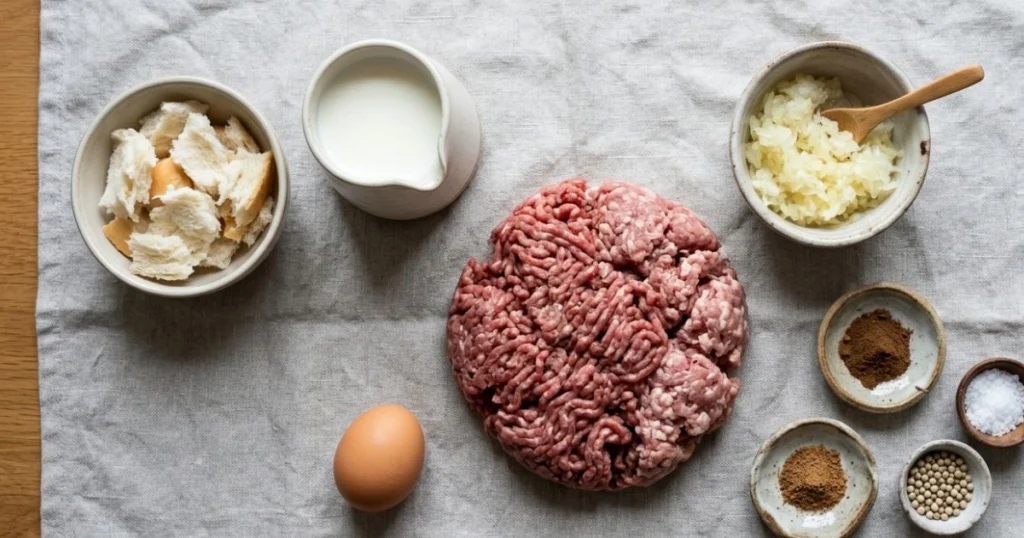
Here’s what goes into a batch that makes about 24 to 28 meatballs, enough for four people with leftovers.
For the meatballs:
- Fresh white sandwich bread, 2 slices, crusts removed and torn into small pieces — this is your panade base, and it’s what keeps the meatballs from turning dense. A torn baguette or plain white roll works just as well.
- Whole milk, ⅓ cup — soaks into the bread to form the panade. Substitute half-and-half for a slightly richer meatball.
- Ground beef (80/20), 1 pound — the higher fat content keeps the meatballs juicy as they brown. Leaner beef dries out faster in the pan.
- Ground pork, ½ pound — adds richness and a softer bite than beef alone gives. Substitute all beef if that’s what’s in your fridge, though the texture will be a touch firmer.
- Yellow onion, 1 small, finely grated — grating instead of dicing means it melts into the mixture rather than leaving crunchy bits. Substitute 2 teaspoons onion powder in a pinch.
- Egg, 1 large — binds the mixture together.
- Ground allspice, ½ teaspoon — the spice that makes these taste unmistakably Swedish rather than Italian. It’s actually a single spice with its own distinct flavor, not a blend, even though it tastes like a mix of cinnamon and clove.
- Ground nutmeg, ¼ teaspoon — works alongside the allspice for a warm, slightly sweet background note. Freshly grated is worth it if you have a whole nutmeg on hand.
- Salt and white pepper — white pepper is traditional here and keeps the meatballs free of visible black flecks, though black pepper works fine too.
For the gravy:
- Unsalted butter, 4 tablespoons, divided — for browning the meatballs and starting the roux.
- All-purpose flour, 3 tablespoons — thickens the gravy into that classic velvety texture.
- Beef stock, 2 cups — the backbone of the gravy. Substitute half beef and half chicken stock for a slightly lighter flavor.
- Heavy cream, ½ cup — stirred in near the end for richness. If you like cooking with cream, my cream recipes collection has more ideas built around it.
- Dijon mustard, 1 teaspoon — a small, traditional addition that adds tang without tasting like mustard. Substitute a splash of Worcestershire sauce if you’re out of Dijon.
How to Make Swedish Meatballs, Step by Step
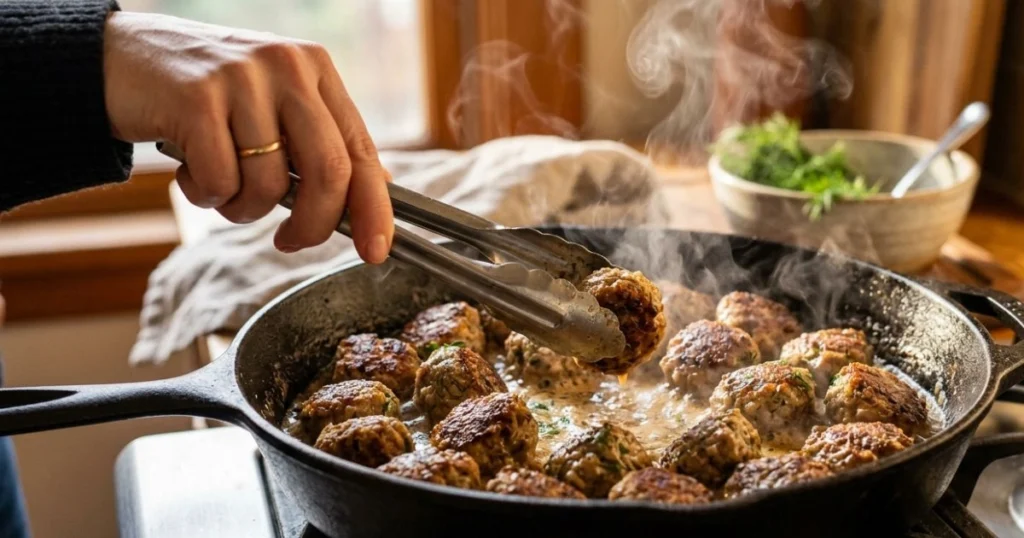
- Make the panade. Tear the bread into small pieces and put it in a small bowl with the milk. Let it sit for 5 minutes, until the bread has fully absorbed the milk and mashes easily into a soft paste with a fork.
- Mix the meatball mixture. In a large bowl, combine the panade, ground beef, ground pork, grated onion, egg, allspice, nutmeg, 1 teaspoon salt, and ½ teaspoon white pepper. Mix gently with your hands just until combined — stop as soon as you no longer see streaks of egg, since overworking the meat here is what makes meatballs tough later.
- Shape and chill. Roll the mixture into 1-inch balls, about 24 to 28 total, and set them on a plate. Refrigerate for at least 15 minutes; this firms up the fat so the meatballs hold their shape instead of flattening once they hit the hot pan.
- Brown the meatballs. Melt 2 tablespoons of butter in a large skillet over medium heat. Working in two batches so you don’t crowd the pan, brown the meatballs on all sides, about 6 to 8 minutes per batch, until deeply golden but not cooked through. Transfer to a plate.
- Build the roux. In the same skillet, melt the remaining 2 tablespoons of butter, scraping up the browned bits stuck to the bottom of the pan — that’s flavor you don’t want to lose. Whisk in the flour and cook for 1 minute, until it smells toasted rather than raw.
- Add the stock gradually. Pour in the beef stock a little at a time, whisking constantly so the roux doesn’t seize into lumps. Bring to a gentle simmer and cook for 5 to 6 minutes, until the gravy coats the back of a spoon.
- Finish the gravy. Turn the heat to low and stir in the cream and Dijon mustard. Taste and season with salt and pepper — this gravy usually needs more salt than you’d expect, especially with a low-sodium stock.
- Return the meatballs to finish cooking. Nestle the browned meatballs back into the gravy, cover, and simmer gently for 8 to 10 minutes. Ground meat mixtures like this one should reach a safe internal temperature of 160°F before serving, so check a couple of meatballs with an instant-read thermometer if you’re unsure.
- Serve. Spoon the meatballs and gravy over mashed potatoes or egg noodles, and serve right away while the gravy is still glossy and hot.
Pro Tips and Mistakes I’ve Actually Made
The panade wasn’t my only misstep on the way to getting this right. The first time I made the gravy, I dumped the cold beef stock into the roux all at once instead of adding it gradually, and it seized into a pan of butter-and-flour lumps that no amount of frantic whisking would smooth back out. I ended up straining the whole batch through a mesh sieve, which worked but added a dish I didn’t need to be washing at 6 p.m. on a Tuesday.
A few other things I’ve learned since then:
- Grate the onion, don’t dice it. Diced onion leaves noticeable crunchy bits in the finished meatball; grated onion disappears completely into the mixture.
- Don’t fully cook the meatballs in step 4. Browning them just builds color and flavor on the outside — they finish cooking gently in the gravy, which is what keeps them from drying out.
- Chill the shaped meatballs before frying. Skipping this step is the fastest way to end up with meatballs that flatten on one side in the hot pan.
- Salt in two stages. A little in the meat mixture, more in the gravy once the cream has gone in and the flavors have come together.
- Whisk the stock in slowly. It feels like a slow, fussy step, but pouring it in gradually is the difference between a smooth gravy and one you have to strain.
- Use a light hand with the meat. Mix just until the ingredients are combined; the more you knead it, the tougher the finished meatball gets.
Variations and Substitutions
- Turkey or chicken meatballs: substitute ground turkey or chicken for a lighter version; they cook slightly faster, so start checking for doneness a couple of minutes early.
- All-beef or all-pork: use 1½ pounds of just one meat if that’s what you have on hand. All-beef is a bit firmer; all-pork is softer and slightly sweeter.
- Gluten-free: use gluten-free bread for the panade and a 1:1 gluten-free flour blend in the roux.
- Oven-baked meatballs: bake the shaped meatballs at 400°F for 12 to 15 minutes instead of pan-frying, then transfer them straight into the finished gravy to simmer for the last few minutes.
- A little extra warmth: add a small pinch of ground cardamom along with the allspice and nutmeg for a more fragrant, old-fashioned flavor.
- Lighter gravy: swap the heavy cream for whole milk, and stir it in off the heat so it’s less likely to separate.
- Double batch for the freezer: this recipe doubles easily, and freezing half of it uncooked means a future dinner is basically already done for you.
Storage, Reheating, and Make-Ahead Tips
Cooked meatballs and gravy keep in an airtight container in the fridge for 3 to 4 days. The flavor actually improves slightly by the second day, once the spices have had more time to settle into the gravy.
Reheat gently on the stovetop over low heat, stirring occasionally, rather than in the microwave — the gravy is far less likely to separate that way. If it’s thickened too much in the fridge, a splash of stock or milk while reheating loosens it right back up.
To freeze, cool the meatballs and gravy completely, then store in a freezer-safe container for up to 3 months. Thaw overnight in the fridge before reheating on the stove; this dish holds up better in the freezer than most cream-based sauces because the roux helps stabilize it.
For a make-ahead shortcut, shape the raw meatballs up to 24 hours in advance and keep them covered in the fridge, or freeze them raw on a tray until solid, then transfer to a freezer bag for up to 3 months. Cooked straight from frozen, they just need a few extra minutes of browning time in step 4.
What to Serve With Swedish Meatballs
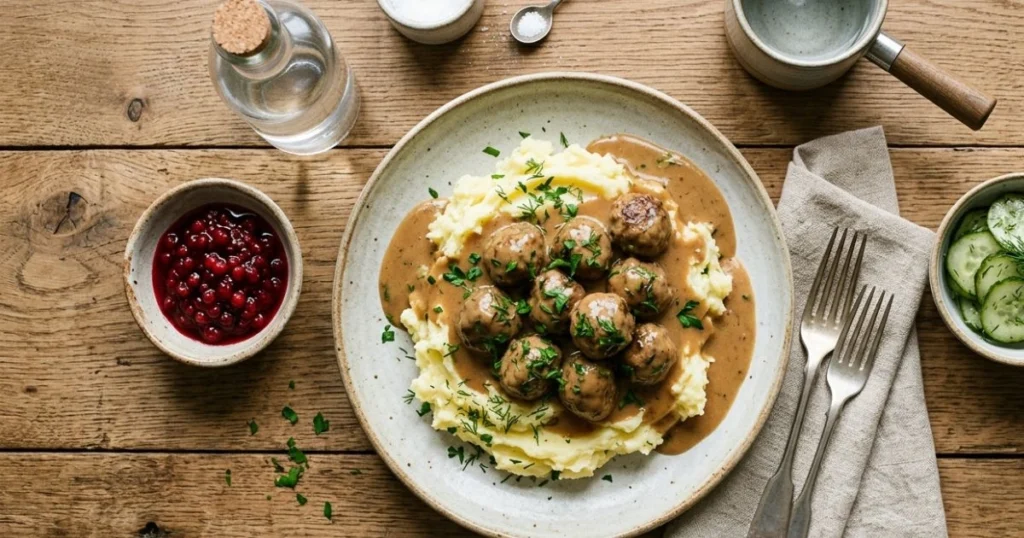
Mashed potatoes are the classic pairing, and they’re genuinely hard to improve on — the gravy pools into every crevice in a way that egg noodles or rice just don’t manage quite as well. Lingonberry jam on the side is traditional, too; its tartness cuts through the richness of the cream gravy in a way that’s honestly a little addictive once you get used to it.
A quick pickled cucumber salad (pressgurka in Swedish) adds crunch and acidity if you want a proper spread on the table. If you’re planning a full Swedish-style meal, my cake recipes collection has options that pair nicely with coffee afterward — a strong cup of coffee and something sweet is basically the whole idea behind a Swedish fika, and it’s a fitting way to close out this kind of dinner.
Frequently Asked Questions
Can I make Swedish meatballs ahead of time?
Yes. Shape the raw meatballs up to a day ahead and refrigerate them, or make the finished dish up to 2 days ahead and reheat gently before serving.
What’s the difference between Swedish meatballs and Italian meatballs?
Swedish meatballs are smaller, seasoned with allspice and nutmeg instead of oregano and basil, and served in a cream-based gravy rather than tomato sauce. Italian meatballs are also usually simmered directly in their sauce, while Swedish meatballs are browned first and then finished in a separate gravy.
How long do Swedish meatballs last in the fridge?
Three to four days in an airtight container. Reheat on the stovetop over low heat rather than in the microwave to keep the gravy from separating.
Can I freeze Swedish meatballs in the gravy?
Yes, and this dish actually freezes better than a lot of cream-based recipes, since the roux helps hold the sauce together. Cool completely, freeze for up to 3 months, and thaw overnight in the fridge before reheating.
What can I use instead of lingonberry jam?
Cranberry sauce is the closest substitute most people already have on hand, especially around the holidays. Red currant jelly also works well if you happen to have it.
Do I have to use both ground beef and ground pork?
No. All beef gives a firmer, more straightforward flavor, and all pork gives a softer, slightly sweeter one. The combination is traditional, but either meat works fine on its own.
Is Swedish meatball gravy the same as brown gravy?
It’s related but not identical. Both start with a butter-and-flour roux, but Swedish meatball gravy includes cream and often a touch of Dijon mustard, which gives it a lighter color and a slightly tangy finish that a standard brown gravy doesn’t have.
What’s the best way to know the meatballs are fully cooked?
Color alone isn’t reliable, since ground meat can brown on the outside before the center is fully cooked. An instant-read thermometer inserted into the center of a meatball is the only way to know for sure it’s reached a safe temperature.
Final Thoughts
This is the dinner that’s replaced pizza at every birthday in our house since that first test batch, and it comes together faster than I expected the first time I made it. If you’re building out your own list of easy Swedish recipes at home, this is the place to start — once the panade and gravy technique click, the rest of Swedish home cooking stops feeling unfamiliar. For more simple dinners in the meantime, my easy recipes collection is worth browsing.
Written by Erik Lindqvist, home cook and food writer.