

Hearty Beef Barley Soup Recipes You’ll Make All Winter
Table of Contents
The first time I made beef barley soup, I used the wrong cut of beef and ended up with something closer to rubber swimming in broth. It was a Tuesday in January, my kids were asking for something warm, and I thought I’d just wing it with whatever chuck I had in the freezer. The soup smelled incredible but the meat was tough, the barley was mushy, and nobody went back for seconds.
That failure sent me straight back to my kitchen for the next three weekends until I figured out exactly what makes these beef barley soup recipes actually work — the right cut, the right timing, and a few simple tricks I’m sharing with you here. Whether you want a slow cooker version, a stovetop classic, or something you can freeze for later, this guide covers it all.
Why Beef Barley Soup Recipes Works
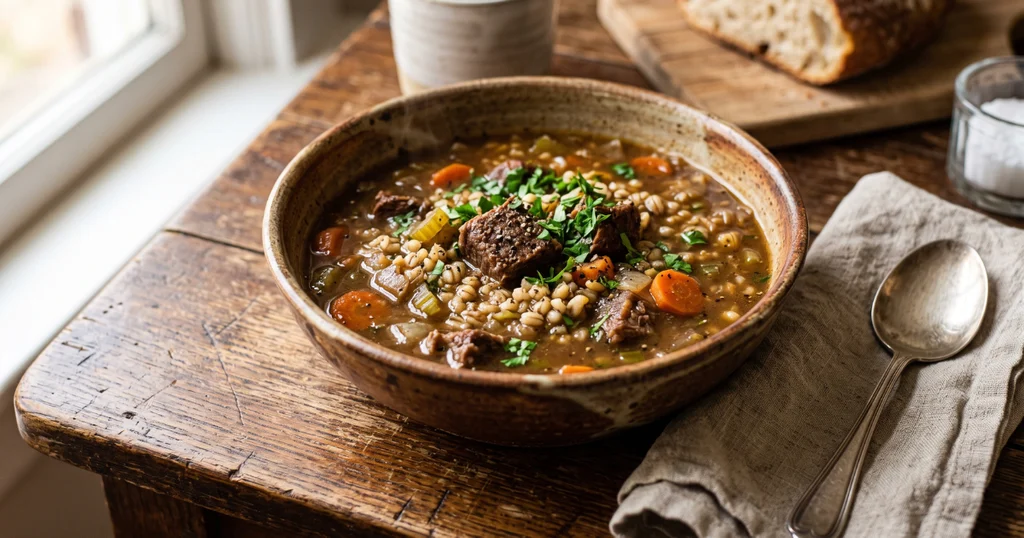
I tested four different versions of beef barley soup over the course of one cold month, adjusting the cut of beef, the ratio of barley to broth, and the vegetables each time. What I found is that the secret is twofold: searing the beef first (not skipping it, even when you’re tired) and adding the barley at the right time so it absorbs flavor without turning to paste. Chuck roast won the cut competition every time — it breaks down beautifully over low, slow heat and adds a richness to the broth that lean stewing beef just can’t replicate. Using homemade or good-quality store-bought beef stock doubles the depth without any extra work.
Ingredients
| Ingredient | Amount | Why It’s There / Substitute |
|---|---|---|
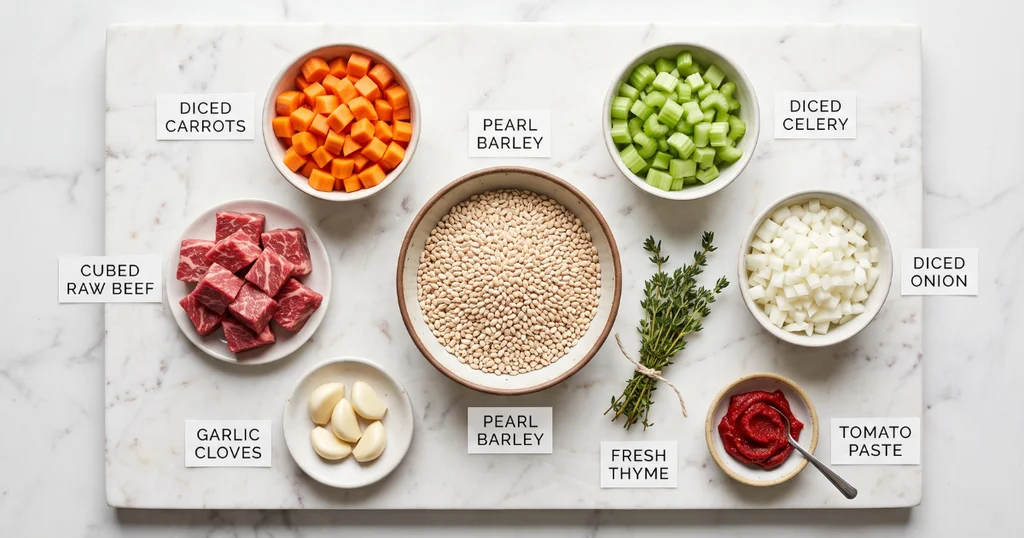
| Beef chuck roast, cut into 1-inch cubes | 1.5 lbs | Best for slow-cook tenderness; sub beef stew meat |
| Pearl barley | ¾ cup | Thickens soup and adds chew; sub hulled barley (add 20 min) |
| Beef broth (low-sodium) | 6 cups | Base of flavor; sub homemade bone broth for richer taste |
| Yellow onion, diced | 1 large | Sweetness and body; sub white onion |
| Carrots, sliced into rounds | 3 medium | Color, sweetness, texture; no good sub — just use them |
| Celery stalks, chopped | 3 stalks | Savory backbone; sub fennel for a slight anise note |
| Garlic cloves, minced | 4 cloves | Depth; sub 1 tsp garlic powder if needed |
| Tomato paste | 2 tbsp | Umami and color; sub 1 tbsp Worcestershire sauce |
| Olive oil | 2 tbsp | For searing; sub avocado oil |
| Dried thyme | 1 tsp | Earthy herb note; sub fresh thyme (1 tbsp) |
| Dried rosemary, crushed | ½ tsp | Pairs well with beef; sub dried oregano |
| Bay leaves | 2 | Background flavor; discard before serving |
| Salt and black pepper | To taste | Essential seasoning |
| Fresh parsley, chopped | 2 tbsp | Brightness at the end; sub fresh chives |
Step-by-Step Instructions
Classic Stovetop Beef Barley Soup
Phase 1: Prep and Sear the Beef
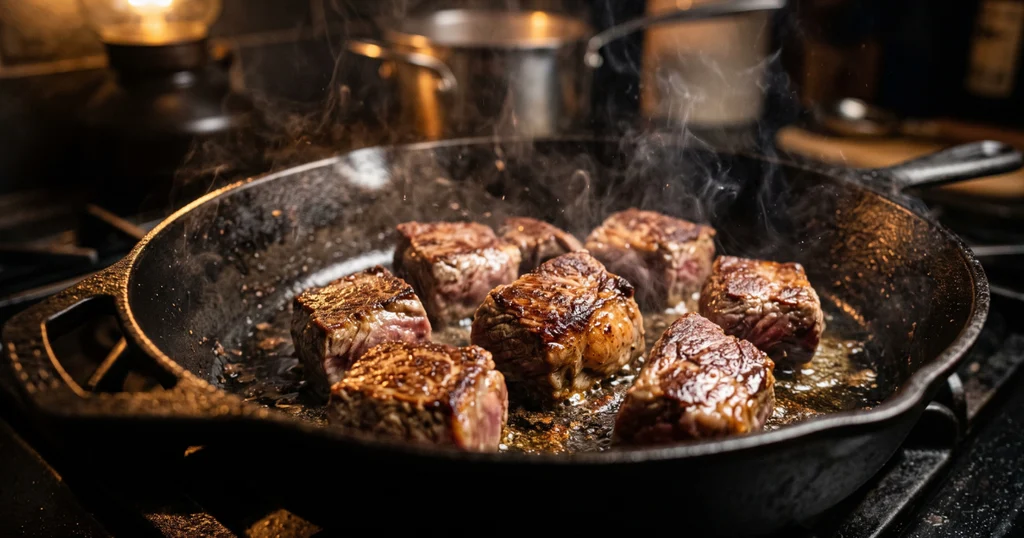
1. Pat your beef chunks completely dry with paper towels. This is non-negotiable — wet beef steams instead of sears, and you’ll lose that golden crust that adds so much flavor to the finished beef barley soup.
2. Season generously with salt and pepper on all sides.
3. Heat 2 tablespoons of olive oil in a large Dutch oven or heavy-bottomed pot over medium-high heat until it shimmers. Working in two batches, sear the beef for 2–3 minutes per side until deeply browned. Don’t crowd the pan or you’ll steam the meat. Transfer seared pieces to a plate and set aside.
Phase 2: Build the Base
4. Reduce heat to medium. Add the diced onion and celery to the same pot (don’t clean it — those brown bits are flavor). Cook for 4–5 minutes until softened, stirring occasionally.
5. Add the garlic and cook for 1 minute until fragrant.
6. Stir in the tomato paste and cook for 2 minutes, letting it darken slightly. This step removes the raw tinny taste and deepens the color of your beef barley soup.
7. Pour in the beef broth and use a wooden spoon to scrape up all the browned bits from the bottom of the pot.
Phase 3: Simmer and Add the Barley
8. Return the seared beef to the pot. Add the carrots, thyme, rosemary, and bay leaves. Bring to a boil, then reduce to a gentle simmer.
9. Cover and cook for 45 minutes. The beef should be starting to soften but not fully tender yet.
10. Add the pearl barley now — not before. Adding it too early is the single biggest mistake in beef barley soup; it over-absorbs the broth and turns mushy. Stir it in, cover, and simmer for another 30–35 minutes.
Phase 4: Finish and Serve
11. Check the barley — it should be tender but still have a slight chew. Remove the bay leaves.
12. Taste and adjust seasoning. I almost always add another pinch of salt and a crack of fresh pepper at this stage.
13. Ladle into bowls and top with fresh parsley. Serve immediately.
Slow Cooker Beef Barley Soup
This version is what I make on Sunday mornings before we head out for the day. It’s hands-off, deeply flavored, and the beef falls apart in a way that feels almost luxurious.
Phase 1: Sear First (Yes, Even for the Slow Cooker)
1. Follow the same searing steps above — dry, season, sear in batches. I know it feels like extra work but the flavor difference is real. Add seared beef to the slow cooker.
2. Sauté the onion, celery, and garlic in the same pan for 3 minutes, then transfer to the slow cooker.
Phase 2: Assemble and Cook
3. Add carrots, tomato paste, broth, thyme, rosemary, and bay leaves to the slow cooker. Stir to combine.
4. Cook on LOW for 7–8 hours or HIGH for 4–5 hours.
5. Add the pearl barley in the last 1.5 hours of cooking on LOW (or last 45 minutes on HIGH). This timing keeps it from turning into a starchy paste.
6. Remove bay leaves, adjust seasoning, garnish with parsley, and serve.
Instant Pot Beef Barley Soup
For nights when I need beef barley soup fast, the Instant Pot version delivers the same depth in about 45 minutes total.
Phase 1: Sauté in the Pot
1. Using the Sauté function, heat oil and sear the beef in batches. Remove and set aside.
2. Sauté onion, celery, and garlic for 3 minutes. Add tomato paste and stir for 1 minute.
3. Pour in ½ cup of broth and deglaze thoroughly — any stuck bits can trigger a burn warning.
Phase 2: Pressure Cook
4. Add remaining broth, seared beef, carrots, barley, thyme, rosemary, and bay leaves. Stir.
5. Lock the lid, set to Pressure Cook (High) for 25 minutes.
6. Allow natural release for 15 minutes, then carefully quick-release remaining pressure.
7. Remove bay leaves, season, and serve. The barley should be perfectly cooked tender with just a little bite.
Pro Tips and Common Mistakes
Don’t skip the sear. Every time I’ve tested beef barley soup without searing the meat first, the broth tastes flat. Those browned bits are the backbone of the dish.
Add barley at the right time. I made the mistake of adding barley at the beginning during my first attempt. By the time the beef was tender, the barley had dissolved into the broth. Add it only in the last 30–35 minutes on the stovetop.
Don’t use quick-cook barley. It turns mealy and disappears into the soup. Pearl barley holds its shape and gives you that satisfying chew that makes this a real meal.
Taste as you go. Beef broth brands vary wildly in saltiness. I always use low-sodium broth so I can control the seasoning myself.
Your soup will thicken as it sits. The barley keeps absorbing liquid even after you turn off the heat. If you’re reheating the next day, add ½ to 1 cup of water or broth to loosen it back up.
Variations and Substitutions
Mushroom version: Add 8 oz of sliced cremini or baby bella mushrooms when you sauté the onion. They deepen the umami in the broth significantly. This is my go-to fall variation.
Vegetable-heavy version: Double the carrots and celery and add 1 cup of diced parsnip. It makes the soup feel lighter while still being hearty.
Gluten-free version: Swap pearl barley for white rice or short-grain brown rice. Add rice in the last 20 minutes on the stovetop. The soup will taste slightly different but still deeply satisfying.
Herb swap: Swap dried thyme and rosemary for Italian seasoning (1.5 tsp) if that’s what you have. Works fine, though the flavor is slightly less rustic.
Bone broth upgrade: Using bone broth instead of regular beef broth takes the richness up a level. According to research on bone broth nutrition, it also adds collagen and trace minerals — a bonus for a cold-weather meal.
Storage, Reheating, and Make-Ahead Instructions
Refrigerator: Store cooled soup in an airtight container for up to 4 days. The barley continues to absorb broth, so the soup will be much thicker on day two — add liquid when reheating.
Freezer: Beef barley soup freezes well for up to 3 months. Freeze in individual portions for easy weeknight meals. One note: the barley texture changes slightly after freezing — still good, but softer.
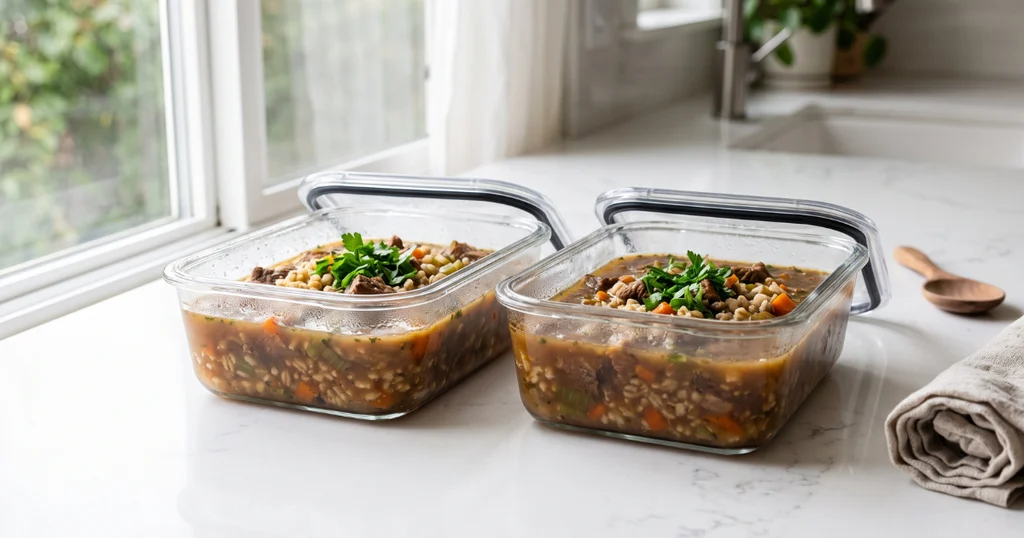
Reheating: Reheat on the stovetop over medium-low heat, adding ½–1 cup of broth or water. Stir often. Microwave works in a pinch — 2–3 minutes on high, stirring halfway through.
Make-ahead tip: You can make this soup up to 2 days in advance and refrigerate it. The flavors actually improve overnight. Just hold off on adding the parsley until serving.
Serving Suggestions
A bowl of beef barley soup is a full meal on its own, but here’s what I serve alongside it:
- Crusty bread or dinner rolls — for soaking up the broth. Non-negotiable in my house.
- Simple green salad — something crisp and acidic balances the richness of the soup.
- Grilled cheese on sourdough — a childhood pairing that never gets old.
- Roasted vegetables — if you want something lighter than bread.
For dessert after a cozy soup dinner, try these classic homemade cookie recipes from ijrecipes.com — they’re perfect with a warm mug of something after a hearty bowl.
Frequently Asked Questions
Can I use leftover roast beef instead of raw chuck?
Yes, but add it toward the end of cooking rather than simmering it from the start. Leftover cooked beef only needs 15–20 minutes in the soup — enough to warm through and absorb flavor without becoming dry and stringy.
How long does beef barley soup last in the fridge?
Up to 4 days in an airtight container. By day 3, the barley has absorbed most of the broth and the soup is almost stew-like in texture — which some people actually prefer. Add broth when reheating to bring it back to the right consistency.
Can I make beef barley soup in advance for a crowd?
Absolutely. This is one of the best soups for big-batch cooking. Make it a day ahead and refrigerate — the flavor deepens overnight. For serving, reheat in a large pot over medium-low heat and stir in extra broth as needed. Food safety guidelines from the USDA recommend reheating soups to 165°F before serving.
What’s the difference between pearl barley and hulled barley in soup?
Pearl barley has the outer bran layer removed, which makes it cook faster (about 30–35 minutes) and gives the soup a silkier texture. Hulled barley is a whole grain with more fiber and a nuttier flavor, but it takes about 50–60 minutes to become tender and needs to be added earlier in the cooking process. Both work well in beef barley soup — it’s a matter of preference and timing.
Can I make this beef barley soup without tomato paste?
Yes. Replace it with 1 tablespoon of Worcestershire sauce or just skip it entirely. The soup will be slightly less rich in color and have a touch less umami depth, but it’s still very good. You could also add a splash of soy sauce (about 1 teaspoon) to compensate.
Why is my beef barley soup bland?
Usually it comes down to underseasoning or not searing the beef. Taste the broth after the first 30 minutes of simmering — if it tastes thin, add a pinch more salt and a splash of Worcestershire. Also make sure you deglazed the pan properly after searing; those browned bits carry a lot of flavor.
Is beef barley soup healthy?
It’s genuinely one of the more nutritious one-pot meals you can make. Barley is high in fiber and has a low glycemic index, which helps with satiety. Lean beef provides protein and iron. According to Healthline, barley is one of the richest sources of beta-glucan fiber, which supports heart health and digestive regularity.
Conclusion
Beef barley soup recipes have earned their place as a cold-weather staple in my kitchen and once you nail the timing on the barley and don’t skip the sear, this becomes one of those meals you make on autopilot. It’s genuinely better the next day, freezes like a dream, and satisfies in a way that few soups do. Start with the stovetop version to get the feel for it, then branch into the slow cooker method once you’re comfortable. If you’re looking for more cozy meal inspiration, check out these hearty easy dinner recipes perfect for weeknight cooking.
Written by Oussama IJ, home cook and food writer.