
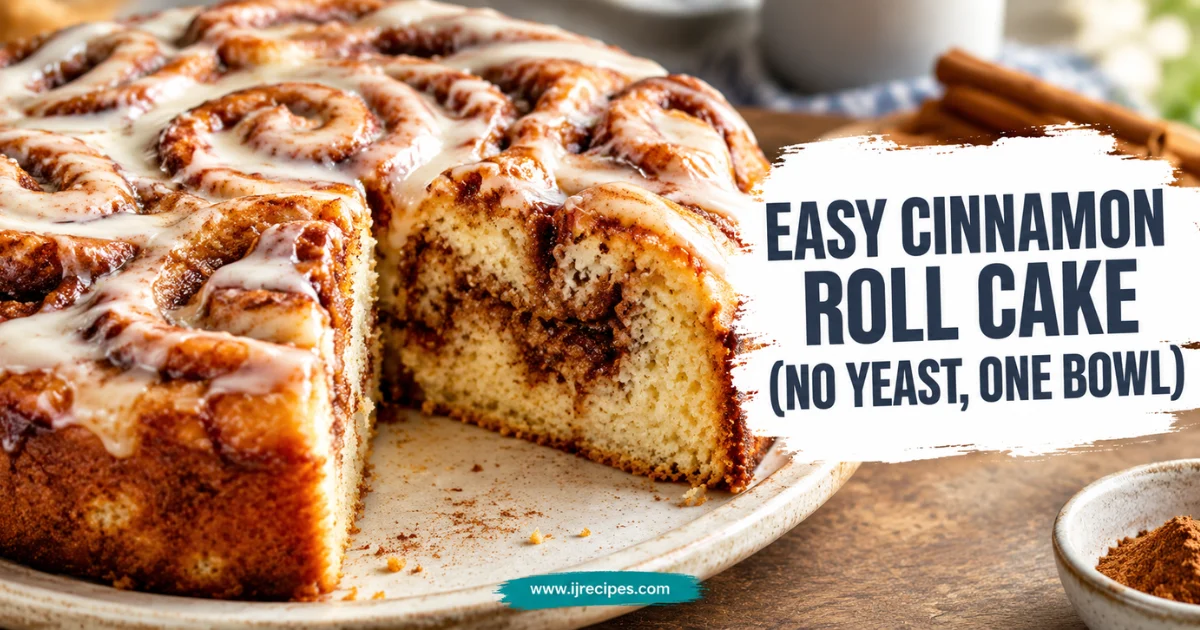
Easy Cinnamon Roll Cake (No Yeast, One Bowl)
Table of Contents
Last December, my sister-in-law asked me to bring something for a Sunday brunch, and I had exactly forty minutes before I needed to leave the house. I didn’t have time to proof yeast or roll dough, so I threw together a cinnamon roll cake instead — one bowl for the batter, a swirl of butter and cinnamon sugar, and a glaze whisked together while the oven preheated. It came out of the oven with that same gooey, spiced center everyone loves in an actual cinnamon roll, minus the hour of rising time. My husband ate two pieces standing at the counter before it even cooled, which is usually how I know a recipe is a keeper.
I’ve made this cinnamon roll cake probably a dozen times since then, tweaking the ratio of cinnamon filling to batter after my first attempt came out a little dry on top. Once I added an extra egg and cut back the baking time by five minutes, the texture turned soft and moist all the way through.
Why This Cinnamon Roll Cake Works
This cinnamon roll cake skips yeast entirely, so there’s no waiting around for dough to rise. The batter uses baking powder for lift, which means you go from mixing bowl to oven in about fifteen minutes.
The cinnamon-sugar swirl gets pressed into the batter rather than rolled, so every bite gets that ribboned pattern without any of the folding or shaping that a traditional roll demands. It’s the flavor of a bakery pastry with the effort of a snack cake.
This cinnamon roll cake works because it borrows the chemistry of a quick bread rather than a yeasted dough. Baking powder is a chemical leavener that reacts almost instantly with liquid and heat, which is why this comparison of baking powder and yeast notes that baking powder-based batters go from bowl to oven in minutes instead of hours
Ingredients
| Ingredient | Amount | Why It’s There / Substitute |
|---|---|---|
| All-purpose flour | 2 ¼ cups | Gives the cake structure; spoon and level, don’t scoop |
| Granulated sugar | ¾ cup | Sweetens the batter; light brown sugar works too |
| Baking powder | 2 ½ tsp | Lifts the cake without yeast |
| Salt | ½ tsp | Balances the sweetness |
| Milk | 1 cup | Whole milk is best; buttermilk adds tang |
| Eggs | 2 large | Binds the batter and adds richness |
| Unsalted butter, melted | ½ cup (for batter) | Keeps the crumb tender |
| Vanilla extract | 2 tsp | Rounds out the flavor |
| Brown sugar | 1 cup (for swirl) | Creates the gooey cinnamon ribbon |
| Ground cinnamon | 2 tbsp | The signature cinnamon roll flavor |
| Unsalted butter, melted | ⅓ cup (for swirl) | Thins the filling so it marbles into the cake |
| Powdered sugar | 1 ½ cups | Base of the glaze |
| Milk or cream | 3–4 tbsp | Thins the glaze to drizzling consistency |
| Cream cheese, softened | 2 oz (optional) | Adds tang, closer to a bakery-style glaze |
The cream cheese in the glaze is what pushes this cinnamon roll cake closer to an actual bakery cinnamon roll instead of a plain cinnamon cake. If you’ve worked with cream cheese frostings before on our carrot cake, you already know the texture you’re aiming for — smooth, pourable, and just tangy enough to cut the sweetness.
Step-by-Step Instructions
Prep the Pan and Oven
- Preheat your oven to 350°F (175°C) and grease a 9×13-inch baking pan. I use butter rather than spray because it browns the edges a little better.
- Line the bottom with parchment if you want cleaner slices later — not required, but it saves you from scraping the pan.
Mix the Cake Batter
- In a large bowl, whisk the flour, granulated sugar, baking powder, and salt together until no lumps remain.
- In a separate bowl, whisk the milk, eggs, melted butter, and vanilla.
- Pour the wet ingredients into the dry and stir just until combined. The batter should be thick but pourable — overmixing here is what made my first cinnamon roll cake dense, so stop as soon as the streaks of flour disappear.
- Pour about two-thirds of the batter into the prepared pan, spreading it evenly to the edges with a spatula.
Build the Cinnamon Swirl
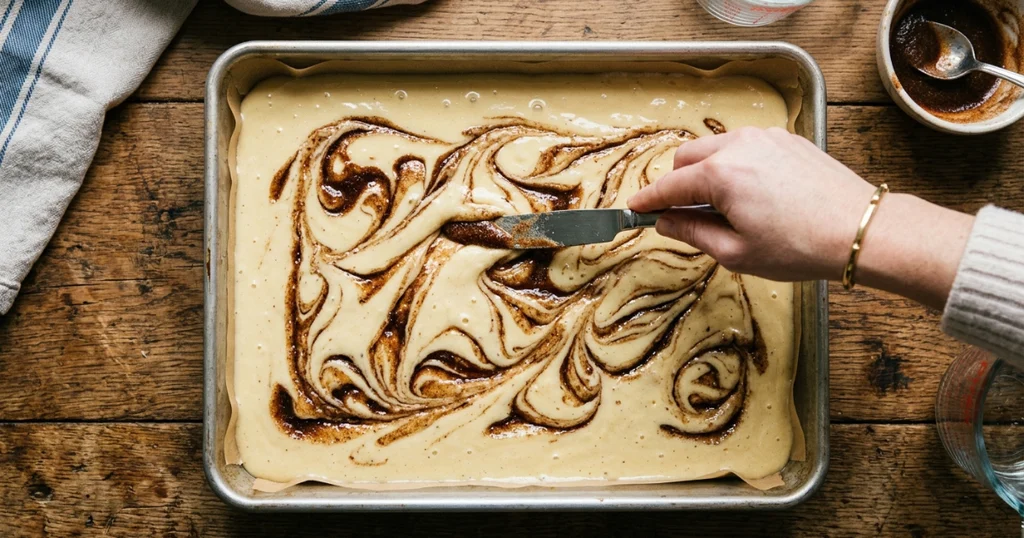
- In a small bowl, mix the brown sugar, cinnamon, and melted butter into a thick, spreadable paste.
- Drop spoonfuls of the cinnamon mixture over the batter in the pan, then use a butter knife to swirl it around — don’t stir it in completely, you want visible ribbons.
- Pour the remaining batter over the top in dollops, then swirl the knife through one more time so the layers marble together.
Bake and Cool
- Bake for 28–32 minutes, until the top is golden and a toothpick inserted in the center comes out mostly clean (a few moist crumbs from the swirl are fine).
- Let the cake cool in the pan for at least 15 minutes. Cutting into it too soon means the cinnamon swirl runs instead of setting into ribbons — I learned this the hard way the first time and ended up with a puddle instead of a pattern.
Make and Add the Glaze
- Whisk the powdered sugar with 3 tablespoons of milk; add the softened cream cheese if using, and whisk until smooth, adding more milk a teaspoon at a time until it drizzles off a spoon.
- Drizzle the glaze over the warm (not hot) cinnamon roll cake so it soaks slightly into the top without disappearing entirely.
Pro Tips & Common Mistakes
Don’t skip the swirl technique. The first time I made this cinnamon roll cake, I just dumped the cinnamon filling on top and spread it flat — it sank to the bottom and left the top layer plain. Swirling with a knife keeps it distributed through the crumb.
Measure flour correctly. Scooping flour directly with the measuring cup packs it down and can add up to ¼ cup extra, which dries out the cake. Spoon it into the cup instead.
Watch the bake time closely. Because this cinnamon roll cake has a dense cinnamon-sugar layer running through it, it can look underdone in the center when it’s actually finished — rely on the toothpick test near the edges of the swirl, not directly through the thickest ribbon.
Glaze while warm, not hot. Glazing a cake straight from the oven melts the glaze into a thin wash instead of a visible drizzle.
Variations & Substitutions
- Brown butter swirl: Browning the butter for the cinnamon filling adds a nutty depth that makes this cinnamon roll cake taste closer to a bakery version.
- Nutty version: Fold ½ cup chopped pecans or walnuts into the cinnamon-sugar mixture for crunch.
- Dairy-free: Swap milk for oat or almond milk and use a plant-based butter; the texture stays nearly identical.
- Mini cinnamon roll cakes: Divide the batter among a muffin tin, add a small spoonful of swirl to each, and bake for 16–18 minutes for individual portions.
- Extra gooey center: Add an additional ¼ cup brown sugar to the swirl mixture if you want a more pronounced caramel pocket in the middle.
Storage, Reheating & Make-Ahead
Store the cinnamon roll cake covered at room temperature for up to 2 days, or in the refrigerator for up to 5 days once glazed, since the cream cheese glaze doesn’t hold well unrefrigerated longer than that.
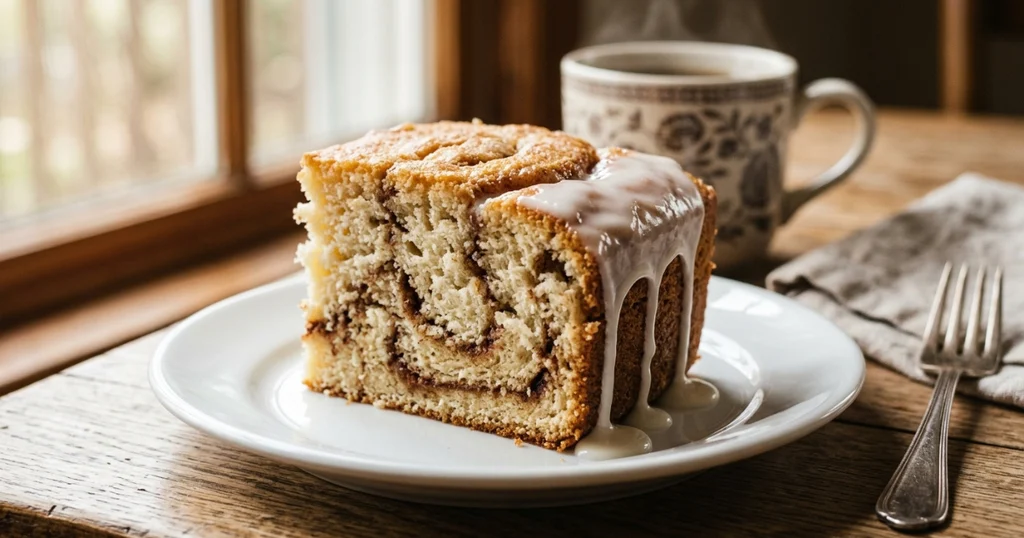
To reheat, microwave a slice for 10–15 seconds — just enough to soften the swirl without melting the glaze entirely.
You can make the cake a day ahead and glaze it right before serving; the texture actually improves slightly overnight as the cinnamon swirl settles into the crumb.
To freeze, wrap the unglazed cake tightly in plastic and foil for up to 2 months. Thaw at room temperature and add fresh glaze before serving.
Serving Suggestions
I usually serve this cinnamon roll cake warm with coffee, the same way you’d serve an actual cinnamon roll. It also works well alongside fresh fruit for a brunch spread, or with a scoop of vanilla ice cream if you’re serving it as dessert instead of breakfast.
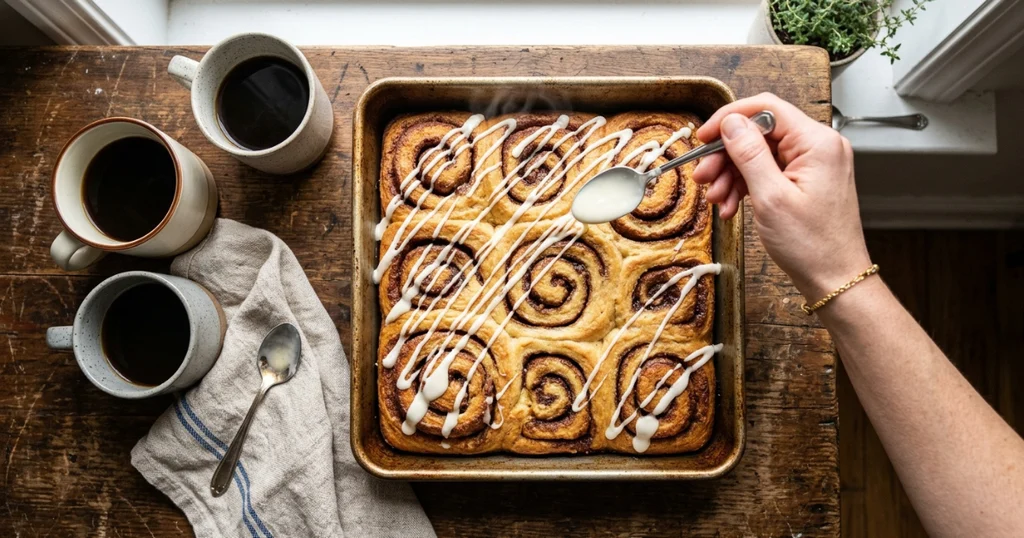
For a holiday brunch table, pair a few slices of this cinnamon roll cake with other baked items your guests can pick between.
Frequently Asked Questions
Can I make cinnamon roll cake without eggs?
Yes — replace each egg with ¼ cup unsweetened applesauce. The texture turns slightly denser but still holds together well.
How long does cinnamon roll cake last?
It keeps at room temperature for about 2 days covered, or up to 5 days refrigerated once glazed with cream cheese.
What’s the difference between cinnamon roll cake and a regular coffee cake?
Cinnamon roll cake has a thicker, more concentrated cinnamon-sugar swirl layered through the batter, plus a glaze that mimics an actual cinnamon roll, while coffee cake usually has a crumbly streusel topping instead.
Can I use a box cake mix for cinnamon roll cake?
Yes, a yellow or vanilla box mix works as a shortcut base — just add the cinnamon-sugar swirl and glaze on top as described above.
Why did my cinnamon roll cake sink in the middle?
This usually means the cake was underbaked or the pan was opened too early during baking, letting cold air collapse the rise. Bake the full time and check with a toothpick before removing it.
Can I double this cinnamon roll cake recipe for a crowd?
Yes — double all ingredients and bake in a larger sheet pan, adding about 5–8 extra minutes to the bake time.
Conclusion
This cinnamon roll cake has become my go-to when I want the flavor of a weekend bakery trip without the effort of yeasted dough. It’s forgiving enough for a rushed weeknight and impressive enough for a holiday table, and the swirl pattern makes it look far more complicated than it actually is. Once you’ve made it with the knife-swirl technique, you’ll probably reach for this over a traditional cinnamon roll recipe more often than not.
Written by Clara Gonzalez, home cook and food writer.