
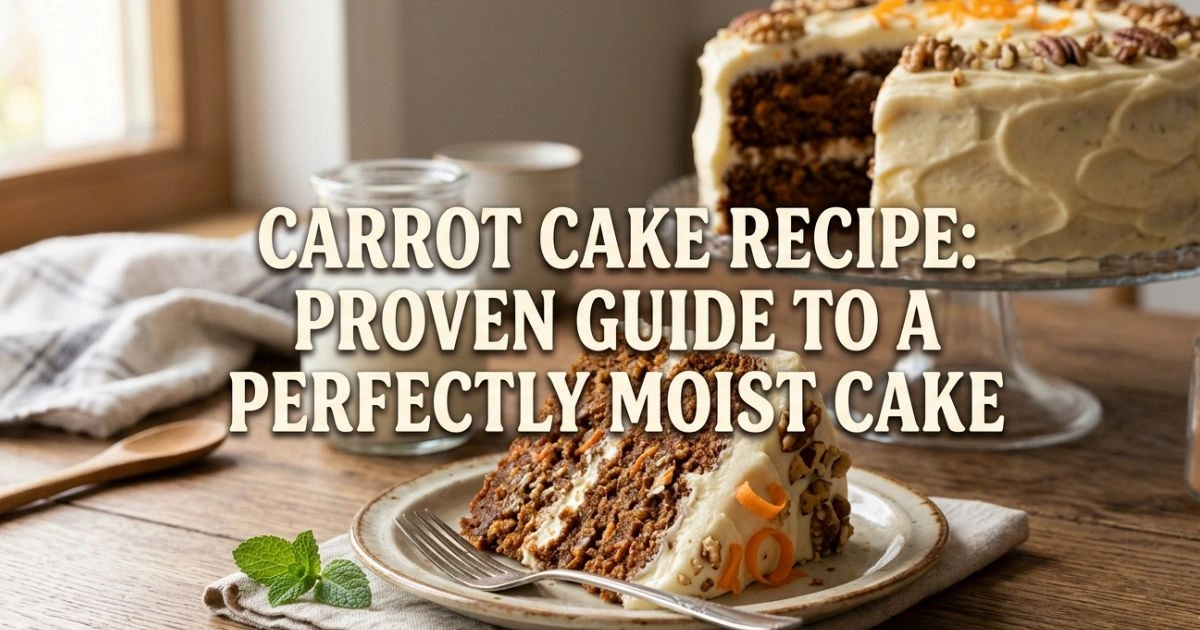
Carrot Cake Recipe: Proven Guide to a Perfectly Moist Cake
Table of Contents
There’s a special kind of stillness that fills the kitchen when a carrot cake emerges from the oven perfectly baked. Maybe you remember it from a grandmother’s house, where the windows fogged up from the heat and cinnamon hung in the air long after the cake had cooled. Or maybe you’ve only ever had the dry, crumbly version from a bakery case, the kind that needs three glasses of milk to get down. Either way, you’re here because you want something better.
You’re looking for a carrot cake recipe that stays perfectly moist without crumbling, tastes like a delicious dessert—not vegetables—and is simple enough for anyone to make. That’s exactly what you’re going to get. This guide walks you through every part of the process, from the ingredients you’ll need to the small techniques that separate a forgettable cake from one people ask you to make again.
By the end, you’ll understand not just the steps but the reasoning behind them, so you can troubleshoot on your own and adapt the recipe to whatever you’re craving.
Why This Carrot Cake Recipe Always Turns Out Moist
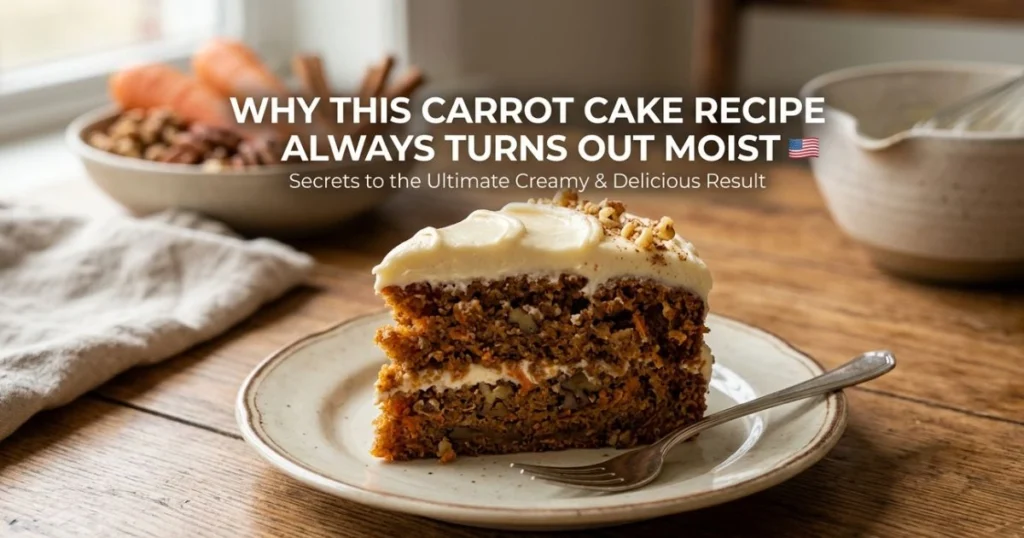
A lot of carrot cakes fail for the same handful of reasons, and once you understand them, you’ll never make those mistakes again.
First, the fat matters more than you’d think. Butter is solid at room temperature, which means it traps less moisture as the cake bakes. Oil, on the other hand, stays liquid, coating the flour proteins and keeping the crumb tender long after the cake has cooled. That’s why this recipe leans on vegetable oil instead of butter.
Second, the carrots themselves are doing more work than you realize. Fresh carrots are made up of roughly 88% water, according to USDA nutrient data, and as they bake, that water releases slowly into the batter. This is part of why freshly grated carrots outperform the pre-shredded bagged kind, which tend to be drier and tougher by the time they hit the store shelf.
Third, brown sugar isn’t just there for flavor. It’s hygroscopic, meaning it actively pulls in and holds onto moisture, which keeps your cake from drying out even a day or two after baking.
And finally, the most common mistake of all: overbaking. Carrot cake continues to set as it cools, so pulling it out the moment a toothpick comes out clean, rather than waiting for it to look “fully done,” makes a noticeable difference.
Keep these four principles in mind: oil over butter, fresh carrots, brown sugar, and careful timing. They’re the backbone of everything that follows.
Ingredients for the Perfect Carrot Cake
Before you start, gather everything you need so you’re not scrambling mid-recipe. Precision matters here, especially with the flour, so try to measure by spooning it into your measuring cup and leveling it off rather than scooping directly from the bag, which packs in extra flour and dries out the final result.
Cake Ingredients
| Ingredient | Quantity | Notes |
|---|---|---|
| All-purpose flour | 2 cups | Spoon and level for accuracy |
| Granulated sugar | 1 cup | |
| Brown sugar | 1/2 cup | Adds moisture and depth |
| Vegetable oil | 1 cup | Or substitute melted coconut oil |
| Eggs | 4 large | Room temperature |
| Grated carrots | 3 cups | Freshly grated, not pre-shredded |
| Baking powder | 2 tsp | |
| Baking soda | 1 tsp | |
| Ground cinnamon | 2 tsp | |
| Salt | 1/2 tsp | |
| Walnuts or raisins (optional) | 1 cup | Chopped if using walnuts |
Cream Cheese Frosting Ingredients
| Ingredient | Quantity | Notes |
|---|---|---|
| Cream cheese | 8 oz | Softened to room temperature |
| Unsalted butter | 1/2 cup | Softened |
| Powdered sugar | 3 cups | Sifted for a smoother texture |
| Vanilla extract | 1 tsp |
You’ll notice the cake ingredient list doesn’t ask for anything exotic. That’s intentional. A reliable carrot cake recipe shouldn’t require a specialty grocery run, and every item here is something you can find at a standard supermarket.
Step-by-Step Instructions for Carrot Cake
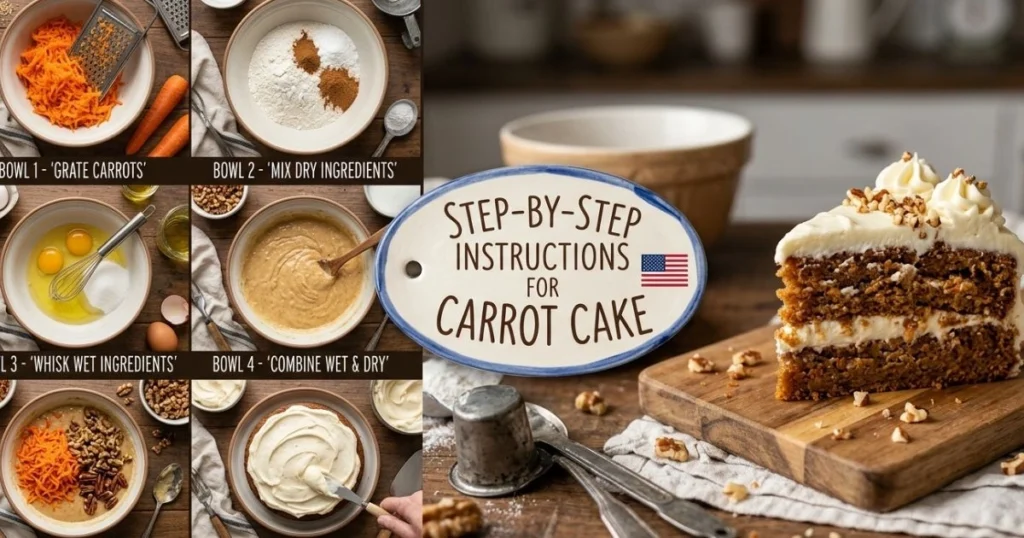
Once your ingredients are ready, the actual process moves quickly. Here’s how to put it together step by step.
Preparing the Batter
- Preheat your oven to 350°F (175°C) and grease two 9-inch round cake pans, lining the bottoms with parchment paper for easy release.
- In a large mixing bowl, combine the flour, baking powder, baking soda, cinnamon, and salt, then whisk until evenly blended. Set this dry mixture aside.
- In a separate bowl, whisk the eggs, granulated sugar, brown sugar, and oil until the mixture looks smooth and slightly lightened in color.
- Gently fold the dry ingredients into the wet ingredients until no dry streaks remain. Overmixing at this stage activates the gluten in the flour, which can leave you with a denser, chewier cake instead of a tender one.
- Gently fold in the grated carrots and any walnuts or raisins you’re using, distributing them evenly throughout the batter.
Baking Tips for Even, Moist Layers
Getting the bake right is where a lot of home cooks lose the cake they were so carefully building. Before you begin, keep the following points in mind:
- Divide the batter evenly between your two prepared pans so both layers bake at the same rate.
- Bake at 350°F for 28 to 32 minutes, checking at the 28-minute mark with a toothpick inserted into the center.
- Pull the cakes out when the toothpick comes out with just a few moist crumbs clinging to it, not completely dry. They’ll continue to firm up as they cool.
- Allow the cake layers to cool in their pans for about 10 minutes, then carefully transfer them to a wire rack to finish cooling. Taking them out too soon can cause them to crack or fall apart, while leaving them in the pans for too long may trap steam and leave the bottoms damp.
- Ensure the cakes have cooled completely before applying the frosting. Frosting a warm cake will cause the cream cheese mixture to melt and slide right off.
Making the Cream Cheese Frosting
- Beat the softened cream cheese and butter together until completely smooth, with no lumps remaining.
- Add the powdered sugar gradually, about a cup at a time, mixing on low speed to avoid a sugar cloud in your kitchen.
- Once everything is well combined, mix in the vanilla extract and continue beating on medium speed for about 1 minute, until the frosting becomes light, fluffy, and easy to spread.
- If the frosting feels too soft to work with, refrigerate it for 15 minutes before using.
Once your layers are cool and your frosting is ready, spread a generous layer between the two cakes, then cover the top and sides. Some people like to leave the sides exposed for a rustic, “naked cake” look, which also happens to be a forgiving option if your frosting technique isn’t perfectly smooth.
Tips for the Best Carrot Cake Texture
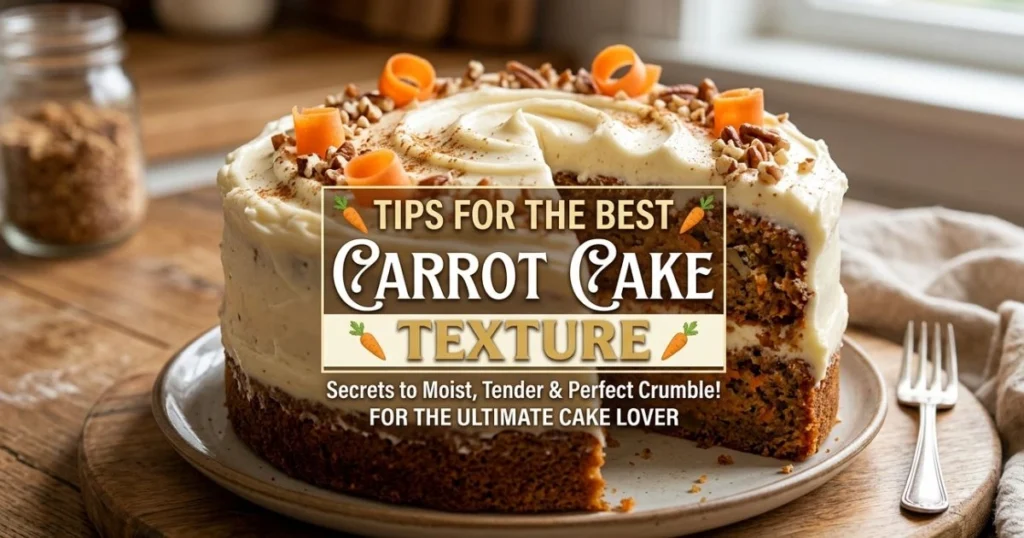
If you’ve ever had a carrot cake that felt heavy, gummy, or oddly dense, it likely came down to one of these factors. Keep this checklist nearby the next time you bake:
- Use fresh, firm carrots and grate them yourself rather than buying pre-shredded bags, which tend to be dry and woody.
- Avoid overmixing the batter once the flour goes in — a few visible streaks are fine and will work themselves out in the oven.
- Bring your eggs to room temperature before starting. Cold eggs don’t incorporate as smoothly into the oil-sugar mixture and can leave your batter slightly uneven.
- Measure your flour by weight if you have a kitchen scale, or use the spoon-and-level method if you don’t. Too much flour is the single most common cause of a dry carrot cake.
- Resist the urge to leave the cake in “just a few more minutes” for extra browning. Carry-over cooking will finish the job after it leaves the oven.
Carrot Cake Variations to Try
Once you’ve nailed the base recipe, it’s worth experimenting with variations that fit your dietary needs or the occasion you’re baking for.
Gluten-Free Carrot Cake
Swap the all-purpose flour for a 1:1 gluten-free baking blend that contains xanthan gum, which helps mimic the structure regular flour provides. You may notice a slightly denser crumb, so consider adding an extra tablespoon of oil to compensate for the moisture difference.
Vegan Carrot Cake
Replace the eggs with a flax egg substitute (one tablespoon of ground flaxseed mixed with three tablespoons of water per egg, left to sit for five minutes) and use a Use dairy-free cream cheese and a plant-based butter substitute for the frosting. The texture remains surprisingly similar to the classic version.
Carrot Cake Cupcakes
Divide the batter into a lined muffin tin instead of cake pans and reduce the bake time to 18 to 20 minutes. This version is ideal for parties or portion control, and the cream cheese frosting pipes beautifully onto individual cupcakes.
Each of these variations keeps the core technique intact — it’s really just the format and a few substitutions that change.
How to Store and Keep Carrot Cake Moist
A great carrot cake recipe doesn’t end the moment it comes out of the oven. How you store it determines whether it still tastes fresh on day three.
Room Temperature vs. Refrigeration
Because this cake is topped with cream cheese frosting, it should be refrigerated rather than left out on the counter for more than a couple of hours. The dairy in the frosting can spoil at room temperature, especially in a warm kitchen.
Freezing Carrot Cake
Carrot cake actually freezes exceptionally well, frosted or unfrosted.
- Unfrosted layers: Wrap each layer tightly in plastic wrap, then again in foil, and freeze for up to three months.
- Frosted cake: Freeze the assembled cake uncovered for about an hour first so the frosting firms up, then wrap it carefully to avoid smudging, and store for up to two months.
- Thawing: Move the wrapped cake to the refrigerator overnight before serving, rather than thawing at room temperature, which can cause condensation to form on the frosting.
Storage Duration Quick Reference
- Refrigerated, frosted cake: up to 5 days
- Frozen, unfrosted layers: up to 3 months
- Frozen, frosted cake: up to 2 months
Frequently Asked Questions About Carrot Cake Recipe
What makes a carrot cake recipe moist?
The combination of oil instead of butter, freshly grated carrots, and brown sugar is what keeps a carrot cake recipe moist. Oil stays liquid at room temperature and coats the flour, while carrots release water slowly during baking. Brown sugar adds an extra layer of moisture retention thanks to its hygroscopic properties.
Can I make this carrot cake recipe ahead of time?
Yes. You can bake the cake layers up to two days in advance and store them tightly wrapped at room temperature, or freeze them for longer storage. The cream cheese frosting can also be made a day ahead and refrigerated, just bring it to room temperature and re-whip briefly before using.
Do I need nuts or raisins in carrot cake?
No, they’re entirely optional. Walnuts add crunch and raisins add a chewy sweetness, but the cake holds together perfectly well without either. If you’re baking for someone with a nut allergy, simply leave them out.
Why Does My Carrot Cake Sink in the Center?
This typically occurs for one of three reasons: the oven door was opened too soon while baking, or the baking powder or baking soda was no longer fresh and had lost its effectiveness. or the cake was underbaked and pulled out before the center had fully set. Always test with a toothpick at the lower end of the suggested bake time before assuming it’s done.
Can I use a box mix and still get a moist carrot cake?
You can, though the texture and flavor won’t match a from-scratch version. If you’re working with a box mix, you can still improve moisture by swapping the called-for water for buttermilk, adding an extra egg, and folding in freshly grated carrots even if the mix already includes dehydrated ones.
Conclusion
A great carrot cake recipe isn’t about luck or a secret ingredient nobody else knows about. It comes down to a handful of deliberate choices: oil instead of butter, fresh carrots instead of the bagged kind, careful mixing, and pulling the cake out of the oven at exactly the right moment. Once you understand why each step matters, you stop following the recipe blindly and start actually controlling the outcome.
This is the kind of cake that turns into a request, the one people start asking you to bring before you’ve even offered. Bake it once using this method, and you’ll likely find yourself reaching for it any time you need something both impressive and genuinely comforting.
If you give this recipe a try, let me know how it turns out for you, what variation you used, or what your kitchen smelled like while it baked. And if it becomes your new go-to, share it with someone who’s still settling for the dry, bakery-case version. They deserve better, and now you know exactly how to give it to them.