
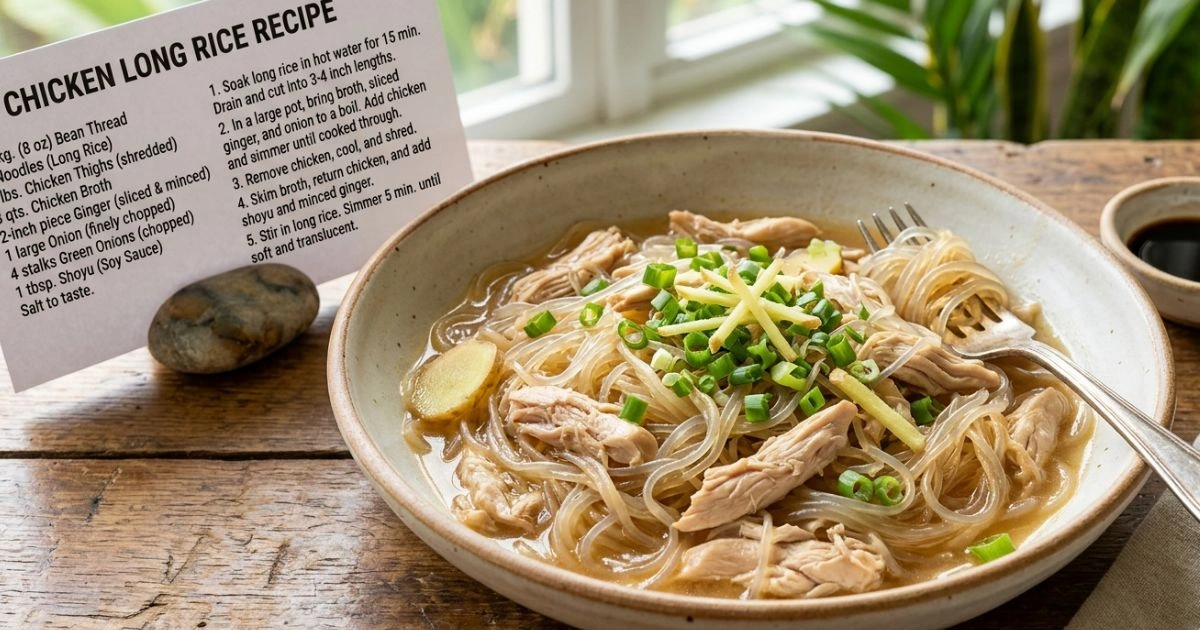
Chicken long rice recipe: Authentic Hawaiian Comfort Dish
Table of Contents
There are some meals that do more than just fill you up. They reach something deeper — a memory, a feeling, a place you’ve been or a place you wish you could go. Chicken long rice is exactly that kind of dish.
Maybe you’ve sat at a Hawaiian lūʻau, watching the sun melt into the Pacific, and someone placed a warm bowl in front of you without ceremony. No fancy presentation. No complicated sauce. Just golden broth, silky noodles, and tender chicken that practically dissolved on your tongue. And somehow, in that moment, everything felt right.
That’s what chicken long rice does. It’s not trying to impress you — it just quietly does its job, and its job is to make you feel at home, wherever you are. Today, you’re going to learn how to bring that exact feeling into your own kitchen, step by step, with all the tips, history, and know-how you need to do it right.
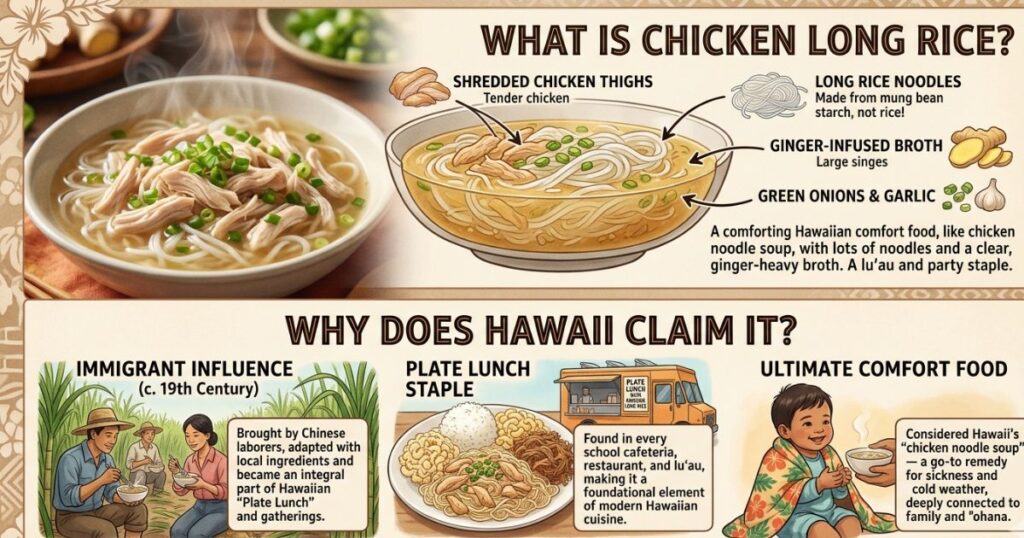
What Is Chicken Long Rice — And Why Does Hawaii Claim It?
The Surprising History Behind This Hawaiian Staple
Here’s something that might catch you off guard: chicken long rice isn’t originally Hawaiian. It arrived in the Hawaiian Islands in the mid-1800s, carried over by Chinese immigrants who came to work on the sugar plantations. They brought with them a simple, nourishing dish — chicken simmered with ginger and glass noodles — that was easy to make, filling, and built for hard-working people.
Over generations, Hawaiian families absorbed this dish into their own culture the way Hawaii absorbs everything — with openness, warmth, and a certain creative looseness. They adapted it slightly, passed it down through kitchens, and eventually it became a permanent fixture at lūʻau tables across all the islands.
Today, if you attend any traditional Hawaiian gathering — a birthday, a funeral, a community lūʻau — there’s a very good chance you’ll find chicken long rice somewhere in the mix. It has earned its place not because it’s exotic or complex, but because it’s honest food that brings people together.
So Why Is It Called “Long Rice”?
If you’ve never made this dish before, the name might confuse you. There’s no actual rice in chicken long rice. The name refers to the bean thread noodles — long, thin, transparent strands made from mung bean starch. They’re also sold under the names glass noodles, cellophane noodles, or vermicelli noodles depending on where you shop.
Once cooked, these noodles become soft, slightly gelatinous, and almost translucent. They soak up broth like little flavor sponges, which is exactly why they work so beautifully in this recipe. You’ll find them in most Asian grocery stores or online, usually sold in small bundles.
Ingredients for Authentic Chicken Long Rice Recipe
Everything You Need — Laid Out Simply
Before you do anything else, gather your ingredients. One of the things that makes this dish so approachable is that the ingredient list is short, affordable, and easy to find.
| Ingredient | Quantity | Notes |
|---|---|---|
| Bone-in chicken thighs | 2 lbs | Skin-on gives richer broth |
| Bean thread noodles | 4 oz (2 bundles) | Soak 30 min before cooking |
| Fresh ginger | 2-inch knob, sliced | Don’t skip this — it’s the soul of the dish |
| Garlic cloves | 4 cloves, minced | Adds warmth and depth |
| Chicken broth | 6 cups | Low-sodium lets you control salt |
| Water | 2 cups | Combined with broth |
| Green onions | 4 stalks, chopped | For garnish and brightness |
| Soy sauce | 2 tablespoons | Use tamari for gluten-free |
| Sesame oil | 1 teaspoon | Added at the end, not during cooking |
| Salt and black pepper | To taste | Season as you go |
Optional Additions Worth Considering
You don’t need to add anything beyond the list above to make a fantastic bowl of chicken long rice. But if you want to build on the base recipe, these additions work beautifully:
- Shiitake mushrooms — dried or fresh, they add an earthy, savory note that deepens the broth
- Bok choy or baby spinach — stir it in at the end for color, nutrients, and a gentle vegetal flavor
- Fish sauce — swap a teaspoon of this in place of some soy sauce for a more Pacific-leaning taste
- Fresh chili or chili flakes — a small amount adds a background warmth without overpowering the ginger
How to Make Chicken Long Rice — Step-by-Step
Step 1: Soak Your Noodles First
This step is easy to forget, but it matters. Before you do anything else, place your bean thread noodles in a large bowl and cover them with cold water. Let them soak for at least 30 minutes. They’ll soften and become pliable, which means they’ll cook quickly and evenly once they hit the hot broth.
Don’t soak them for more than 45 minutes or they’ll start to get mushy before they even reach the pot. While the noodles soak, you can prep everything else.
If you prefer shorter noodles in your bowl — and many people do, since long glass noodles can be tricky to eat — grab a pair of kitchen scissors and snip the bundles into roughly 4-inch sections before soaking.
Step 2: Build Your Broth Base
Pour your chicken broth and water into a large, heavy-bottomed pot and bring it to a rolling boil over medium-high heat. Once it’s boiling, add your sliced ginger and minced garlic.
Here’s a small but impactful tip: before you add the ginger slices, press each one firmly with the flat side of your knife. This cracks the fibers open and releases far more aromatic oils than a whole slice would. Your kitchen will smell incredible within minutes.
Add your chicken thighs to the pot, submerging them fully in the liquid. Bring everything back to a boil, then immediately reduce the heat to a gentle simmer. You’ll notice some foam rising to the top in the first few minutes — skim this off with a spoon. That foam is just protein releasing from the chicken, and removing it keeps your broth clear and clean-tasting.
Let the chicken simmer uncovered for 25 to 30 minutes.
Step 3: Pull Out and Shred the Chicken
Once the chicken is fully cooked through, remove it from the pot with tongs and set it on a cutting board. Let it rest for about five to eight minutes — this makes shredding much easier and keeps the moisture locked inside the meat.
Use two forks to pull the meat away from the bone in long, satisfying shreds. Discard the skin and bones, or save the bones if you want to make stock another time. Return all the shredded chicken back to the simmering pot.
Step 4: Add the Noodles
Drain your soaked noodles and add them directly to the simmering broth. Stir gently so everything is submerged and evenly distributed. The noodles will finish cooking in about 5 to 8 minutes — you’ll know they’re done when they turn fully translucent and have a soft, silky texture.
Add your soy sauce now and taste the broth. Adjust salt and pepper until it tastes balanced to you. The broth should be savory, ginger-forward, and deeply comforting — not overly salty, not bland.
Step 5: Finish and Serve
Remove the pot from heat. Drizzle your sesame oil over the top — this finishing touch adds a nutty, fragrant layer that ties everything together. Ladle the soup into deep bowls and top generously with fresh chopped green onions.
Serve immediately. The broth is just as important as the noodles and chicken, so make sure each bowl gets a good amount of it.
Pro Tips for the Best Chicken Long Rice You’ve Ever Made
Getting the Broth Right
The broth is everything in this dish. Here’s how to make yours exceptional:
- Always use bone-in chicken — the collagen and marrow from the bones give the broth body and richness that boneless chicken simply can’t replicate
- Simmer, never boil — a hard boil makes the broth cloudy and can toughen the chicken; keep it at a lazy, bubbling simmer the entire time
- For extra depth, add 3 to 4 whole black peppercorns and one small dried shiitake mushroom to the broth at the beginning — remove before serving
- Taste your broth at every stage and season gradually; it’s easier to add salt than to fix an over-seasoned pot
Noodle Tips You’ll Be Glad You Know
- Never boil the noodles directly — add them to a simmering (not boiling) broth
- Stir them gently once or twice while they cook to prevent clumping
- If you’re making the dish ahead of time, keep the noodles separate from the broth and combine only when reheating — this prevents them from absorbing all the liquid overnight
Storage and Make-Ahead Guide
| Method | Duration | Best Practice |
|---|---|---|
| Refrigerator | 3 to 4 days | Store broth and noodles separately if possible |
| Freezer | Up to 2 months | Freeze broth and chicken only; add fresh noodles when reheating |
| Reheating | Stovetop only | Add a splash of broth and warm gently over medium-low heat |
Nutrition Breakdown — What’s in Your Bowl
Chicken long rice is one of those comfort dishes that doesn’t ask too much of you nutritionally. It’s naturally gluten-free (when you use tamari), dairy-free, and relatively light compared to most Western comfort foods.
| Nutrient | Per Serving (approx.) |
|---|---|
| Calories | ~320 kcal |
| Protein | 28g |
| Carbohydrates | 32g |
| Fat | 9g |
| Sodium | 780mg |
| Fiber | 0.5g |
These values are estimates based on the standard recipe and will vary depending on your specific ingredients and portions.
The dish is high in lean protein, easy to digest, and gentle on the stomach — making it an excellent choice when you’re recovering from illness, feeding someone who isn’t feeling well, or simply craving something nourishing without the heaviness.
How to Serve Chicken Long Rice the Hawaiian Way
Build a Lūʻau Spread at Home
If you want the full Hawaiian experience on your table, pair your chicken long rice with some of these traditional accompaniments:
- Poi — the traditional Hawaiian paste made from cooked taro root, mild and slightly tangy
- Lomi Lomi Salmon — a refreshing mix of cured salmon, fresh tomatoes, and crisp green onions
- Hawaiian Macaroni Salad — creamy, simple, and absolutely essential at any plate lunch
- Steamed white rice — for those who want an extra layer of comfort
- Haupia — a firm, sweet coconut milk dessert that’s the perfect way to end the meal
What to Drink With It
- POG juice (Passion-Orange-Guava) — the quintessential Hawaiian drink
- Fresh ginger tea — a natural complement to the ginger in the broth
- Light lager — clean and refreshing alongside the savory soup
Variations on the Classic Chicken Long Rice Recipe
Slow Cooker Chicken Long Rice
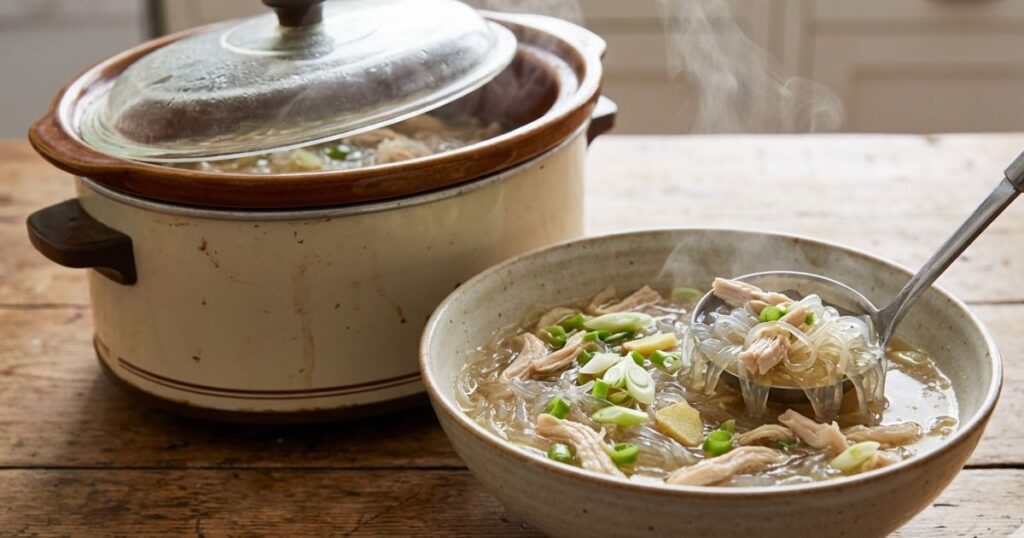
If you want to come home to a ready meal, the slow cooker version delivers beautifully:
- Add chicken, ginger, garlic, broth, and water to the slow cooker
- Cook on LOW for 6–8 hours or on HIGH for 3–4 hours.
- Remove the chicken, shred it, then place it back into the pot.
- Add drained, soaked noodles and cook on HIGH for another 20 minutes
- Finish with soy sauce, sesame oil, and green onions
Instant Pot Version
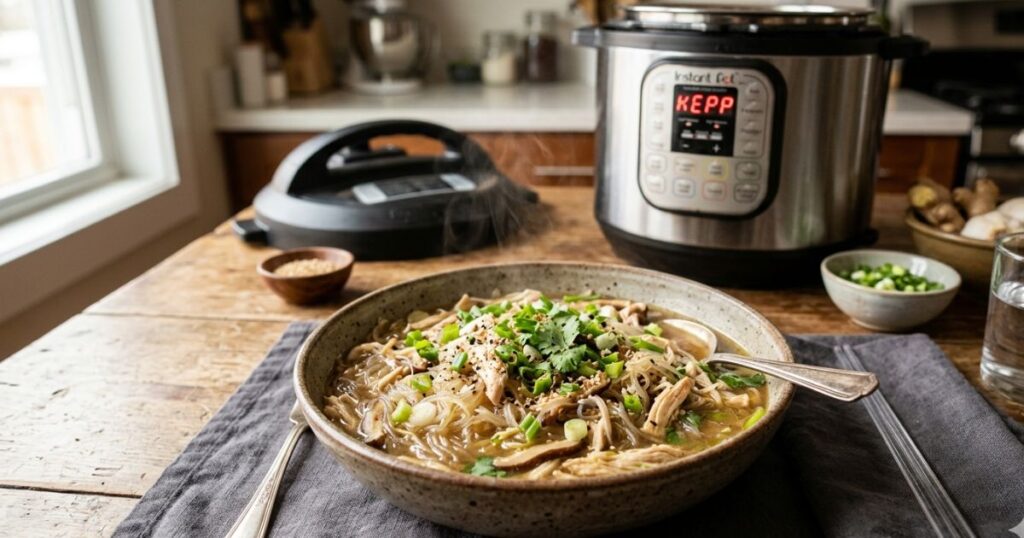
Short on time? The Instant Pot cuts the process down considerably:
- Use the Sauté function to briefly cook ginger and garlic in a small amount of oil
- Add chicken and broth, seal the lid
- Pressure cook on HIGH for 15 minutes, then quick release
- Shred the chicken, return to pot, add noodles and simmer on Sauté for 5 minutes
- Season and serve
Vegan Adaptation
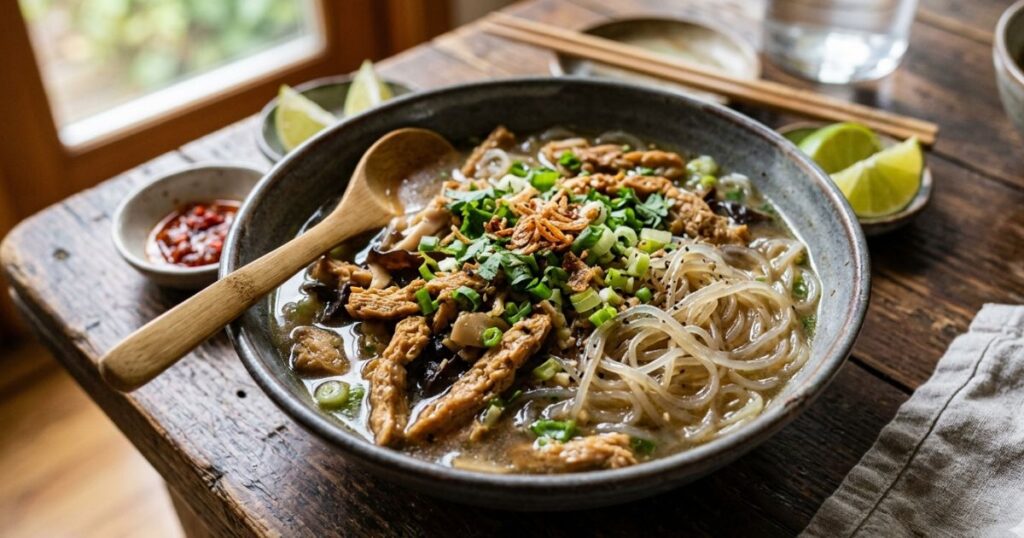
You can absolutely make a plant-based version without losing the dish’s soul:
- Replace chicken with firm tofu, king oyster mushrooms, or jackfruit
- Use a rich vegetable or mushroom broth as your base
- Keep all other elements the same — the ginger-forward broth is just as warming
- Add edamame for a protein boost
The Cultural Heart of Chicken Long Rice
Eating chicken long rice is like experiencing a taste of Hawaiian history. The dish is a living example of what makes Hawaiian culture so remarkable — its ability to receive other cultures with generosity, blend their traditions into something new, and call it its own with pride.
The Chinese laborers who brought this dish to Hawaii’s shores likely never imagined it would one day be served at every major lūʻau across the islands. But that’s the nature of food — it travels, it adapts, and it endures.
For Hawaiian families, this dish often carries deep personal meaning. It’s the food your tutu (grandmother) made when you were sick. It’s what appeared on the table at every big celebration, nestled between the kalua pork and the macaroni salad. It’s the dish that tastes like belonging.
When you make chicken long rice in your own kitchen, you’re not just following a recipe. You’re participating in a story that spans oceans and generations.
Frequently Asked Questions About Chicken Long Rice Recipe
What is chicken long rice made of? Chicken long rice is made from bone-in chicken, bean thread noodles (glass noodles), ginger, garlic, chicken broth, soy sauce, sesame oil, and green onions. The ingredients are simple, but together they create a deeply comforting dish with real depth of flavor.
What type of noodles go in a chicken long rice recipe? The noodles are bean thread noodles, made from mung bean starch. They’re also known as glass noodles or cellophane noodles. When cooked, they turn soft and translucent, soaking up the ginger-rich broth beautifully.
Is chicken long rice gluten-free? Yes, the dish is naturally gluten-free as long as you use tamari or coconut aminos instead of regular soy sauce. All other core ingredients are naturally free of gluten.
Can I make chicken long rice ahead of time? Absolutely, and it actually improves overnight as the flavors meld. Store the broth and shredded chicken in one container, and the cooked noodles in another. Combine when you reheat to prevent the noodles from soaking up all the broth.
How is chicken long rice different from regular chicken noodle soup? The main differences are the noodle type — glass noodles versus wheat noodles — and the flavor base. Chicken long rice leans heavily on fresh ginger, which gives it a distinctly warm, aromatic quality. It also comes from a different culinary tradition, rooted in Chinese and Hawaiian cooking rather than European-American cuisine.
What does chicken long rice taste like? It tastes like warmth. The broth is clean, savory, and fragrant with ginger. The noodles are silky and light. The chicken is tender. It’s comfort food that doesn’t feel heavy — satisfying without weighing you down.
Can I freeze chicken long rice? Freeze the broth and chicken together, but leave the noodles out. Glass noodles don’t hold up well to freezing — they become mushy when thawed. Simply add freshly soaked noodles the next time you reheat the dish.
Conclusion — Your Turn to Cook With Aloha
Chicken long rice is proof that the most powerful food doesn’t need to be complicated. It needs to be honest. It needs good ingredients, a little patience, and the intention to nourish the people sitting at your table.
Now you have everything — the history, the technique, the tips, the variations. You know why ginger matters, why bone-in chicken makes the broth sing, and why this dish has earned its place at Hawaiian tables for over a century.
So do yourself a favor: this week, soak those noodles, simmer that broth, and let your kitchen fill with the smell of ginger and aloha. Taste it as you go. Adjust it to your liking. Make it yours.
And when you sit down with that bowl in your hands, take a moment before the first spoonful. Because this is more than dinner — it’s a tradition, a story, and an invitation to share something real.
If this recipe brought a little aloha into your home, share it with someone who needs a warm bowl today. Drop your questions, tweaks, or cooking stories in the comments — your version of this dish is worth hearing about.