
Chicken Parmesan Recipe: Ultimate Guide to Crispy Perfection
Table of Contents
There’s a particular kind of quiet that falls over a kitchen table when someone takes their first bite of a really good Chicken Parmesan. You know the one — fork cuts through that golden, crackling crust, sinks into juicy chicken, and comes up trailing melted mozzarella and bright marinara. Maybe it reminds you of a Sunday dinner at your grandmother’s house, or that one Italian-American restaurant your family swore by, the one with the red checkered tablecloths and the bread basket that never seemed to empty.
You’ve probably tried to recreate that feeling at home before. Maybe it worked. Maybe the breading slid right off, or the coating turned soggy the second the sauce touched it, or the chicken came out dry and chalky instead of tender. If that’s happened to you, you’re not alone, and it’s not because you did anything wrong — it’s because Chicken Parmesan has a few small but critical techniques that nobody tells you about until you’ve already ruined a dinner or two.
By the time you finish reading this guide, you’ll know exactly how to build a Chicken Parmesan with a crust that stays crisp even under a blanket of sauce and cheese, chicken that stays juicy all the way through, and flavor that tastes like it came from a restaurant kitchen instead of your own. Let’s get into it.
What Is Chicken Parmesan?
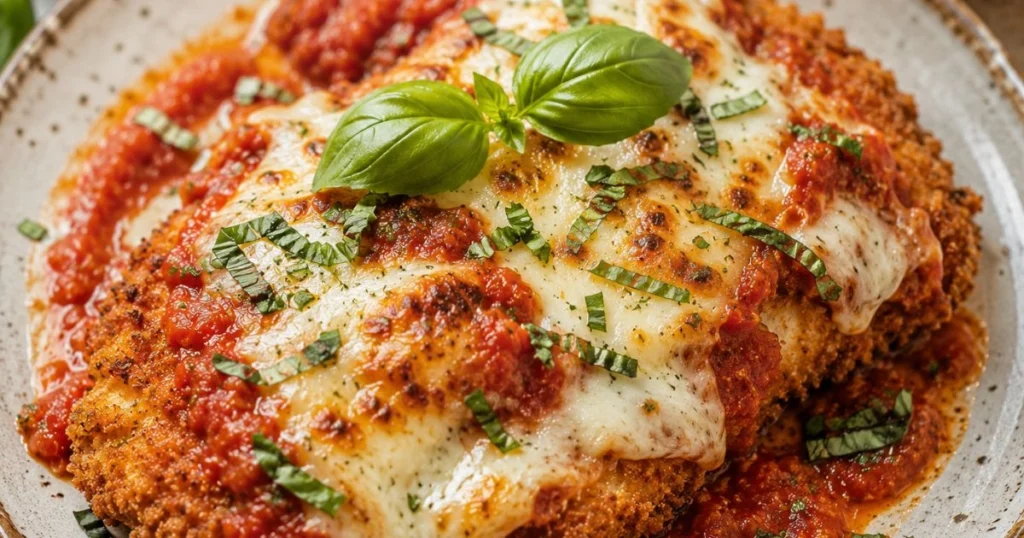
Chicken Parmesan, sometimes called Chicken Parmigiana, is a breaded chicken cutlet that’s fried until golden, topped with marinara sauce and melted cheese, and usually finished in the oven. It’s one of the most beloved comfort foods in American kitchens, but here’s something that might surprise you: it’s not actually a traditional Italian dish.
The recipe traces its roots back to Southern Italy, where a dish called melanzane alla parmigiana — eggplant layered with cheese and tomato sauce — was a staple. When Italian immigrants arrived in the United States in the late 19th and early 20th centuries, chicken was more affordable and accessible than it had been back home, so cooks began swapping eggplant for chicken cutlets. The result became a distinctly Italian-American creation, and it’s now a fixture on red-sauce restaurant menus across the country.
Knowing this bit of history isn’t just trivia. It explains why the dish leans so heavily on a few key elements: a well-seasoned breaded cutlet, a simple but flavorful tomato sauce, and good melting cheese. Master those three components, and you’ve mastered the dish.
For more background on the dish’s roots, Wikipedia’s overview of Italian-American cuisine is a solid resource if you want to dig deeper.
Why This Recipe Works
Plenty of Chicken Parmesan recipes promise crispy results and then leave you with something soggy and sad. This version is built around a handful of techniques that home cooks consistently get wrong — and once you understand why they matter, you’ll never go back to your old method.
Tested Tips for Guaranteed Crispiness
If you want that crunch to survive contact with marinara sauce, these details matter more than you might think:
- Pound your chicken to an even thickness. Chicken breasts are naturally thicker on one end than the other. If you skip this step, the thin end overcooks while the thick end stays underdone. Aim for roughly half an inch throughout.
- Use the double-dredge technique. Coating your chicken in flour, egg, and breadcrumbs — then repeating the egg and breadcrumb steps a second time — creates a noticeably thicker, crunchier crust that holds up far better under sauce.
- Allow the breaded chicken to rest for 10–15 minutes before frying. This allows the coating to adhere properly, so it doesn’t slide off into the oil.
- Choose panko over standard breadcrumbs. Panko’s larger, airier flakes fry up crispier and stay crunchier longer than fine breadcrumbs.
Common Mistakes to Avoid
Even careful cooks fall into a few predictable traps with this dish:
- Soggy breading. Usually caused by skipping the resting step or not frying at a high enough temperature.
- Overcrowding the pan. Too many cutlets at once drops the oil temperature, which leads to greasy, limp breading instead of a crisp one.
- Drowning the crust in sauce. Ladling sauce over the entire cutlet, edge to edge, guarantees a soggy bite. You want sauce in the center, leaving the crispy edges exposed.
If you ever want to switch things up with a different sauce base, this Cajun pasta sauce recipe makes a flavorful alternative for saucy chicken dinners.
Chicken Parmesan Ingredients
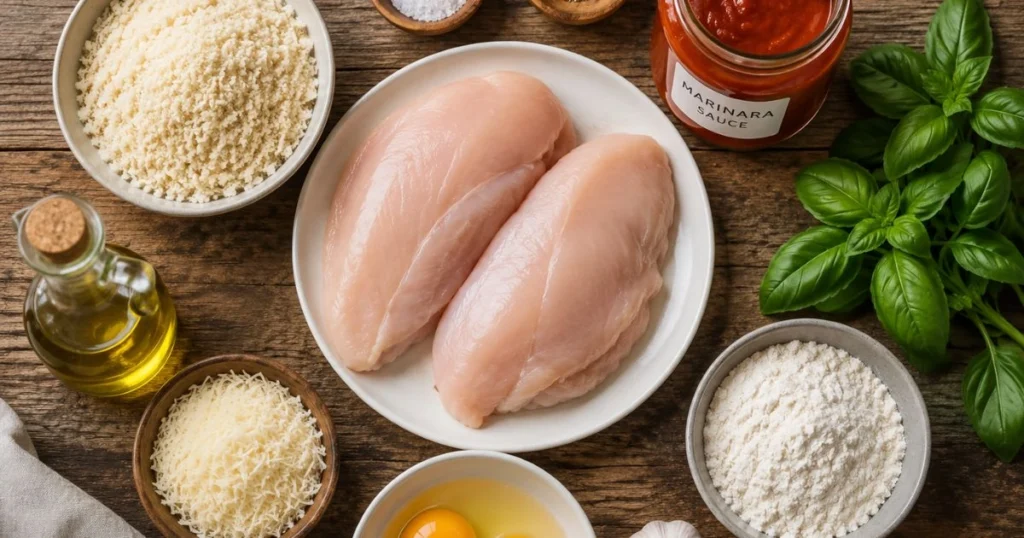
Before you start cooking, it helps to have everything measured and ready to go. Here’s exactly what you’ll need.
Main Ingredients
| Ingredient | Quantity | Notes |
|---|---|---|
| Chicken breasts | 2 large | Butterflied and pounded thin |
| All-purpose flour | 1 cup | For the first dredge |
| Eggs | 2 | Beaten, for the egg wash |
| Panko breadcrumbs | 1.5 cups | Creates the crispiest texture |
| Parmesan cheese | 1/2 cup | Grated, mixed into the breadcrumbs |
| Marinara sauce | 2 cups | Homemade or a high-quality store-bought jar |
| Mozzarella cheese | 1 cup | Shredded, or fresh mozzarella sliced |
| Olive oil | 1/2 cup | For pan-frying |
| Salt and pepper | To taste | Season every layer |
| Fresh basil | Optional | For garnish and a fresh finish |
Ingredient Substitutions
Cooking for someone with dietary restrictions, or just working with what’s in your pantry? Here are some reliable swaps:
| Original Ingredient | Substitute | Why It Works |
|---|---|---|
| All-purpose flour | Gluten-free flour blend | Maintains the dredge texture without gluten |
| Panko breadcrumbs | Gluten-free panko or crushed rice crackers | Keeps the crunch factor for gluten-free diets |
| Mozzarella cheese | Dairy-free mozzarella shreds | Melts similarly for dairy-free eaters |
| Chicken breast | Chicken thighs | Slightly higher fat content, very forgiving for beginners |
| Frying in oil | Baking or air-frying | Lower-fat option, still achieves a crisp crust |
How to Make Chicken Parmesan: Step-by-Step
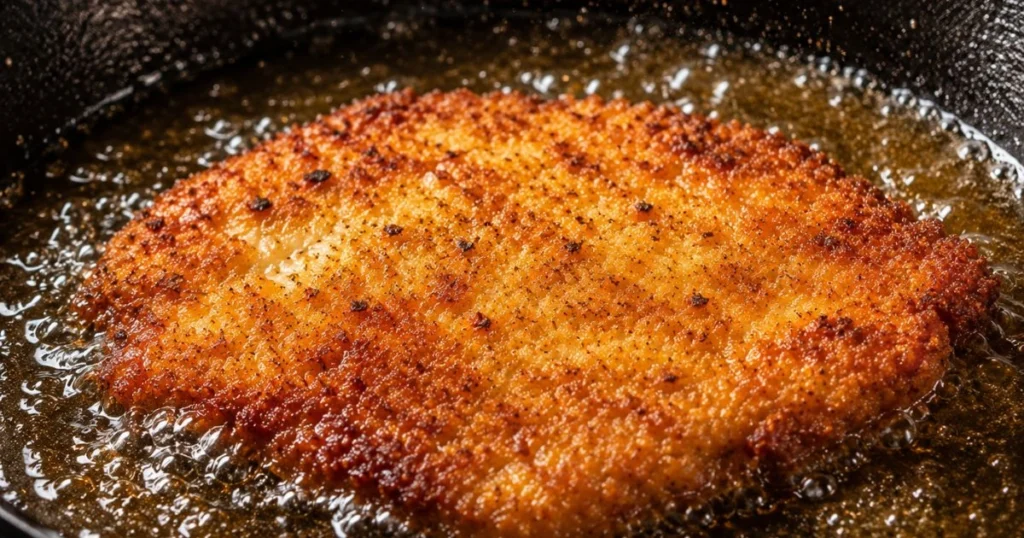
Now that your ingredients are ready, here’s exactly how to bring it all together.
Step 1: Prep the Chicken
Slice each chicken breast horizontally to create two thinner cutlets, or place it between two sheets of plastic wrap and pound it to an even half-inch thickness. Season both sides generously with salt and pepper.
Step 2: Set Up Your Breading Station
Arrange three shallow dishes in a row:
- Flour in the first dish
- Beaten eggs in the second dish
- Panko breadcrumbs mixed with grated Parmesan in the third dish
Dredge each cutlet in flour, shaking off the excess, then dip into the egg, then press firmly into the breadcrumb mixture. For extra crunch, repeat the egg and breadcrumb steps a second time. Let the breaded cutlets rest on a wire rack for 10 to 15 minutes.
Step 3: Fry Until Golden
Heat the olive oil in a large skillet over medium-high heat until it begins to shimmer. Fry each cutlet for 3 to 4 minutes per side, until deeply golden brown. Don’t overcrowd the pan — work in batches if needed. Transfer the fried cutlets to a paper-towel-lined plate to drain excess oil.
Step 4: Layer the Sauce and Cheese
Preheat your oven to 425°F. Spread a thin coating of marinara sauce across the bottom of a baking dish. Place the fried cutlets on top, then spoon a modest amount of sauce over the center of each one — leaving the crispy edges exposed. Top with shredded mozzarella and a little extra Parmesan.
Step 5: Bake to Finish
Bake for 15 to 20 minutes, until the cheese is melted, bubbly, and just beginning to brown. Let the dish rest for 5 minutes before serving, garnished with fresh basil if you’d like.
Best Side Dishes to Serve with Chicken Parmesan
A great Chicken Parmesan deserves equally great company on the plate. Here are some classic and reliable pairings:
- Spaghetti aglio e olio — a simple garlic-and-olive-oil pasta that won’t compete with the richness of the main dish
- Garlic bread — perfect for soaking up any extra marinara sauce
- Caesar salad — the crisp lettuce and tangy dressing balance out the heaviness of the fried chicken
- Roasted vegetables — broccolini, zucchini, or asparagus add color and lighten the overall meal
Storage, Reheating, and Freezing Tips
Cooked more than you can finish in one meal? Here’s how to keep leftovers tasting their best.
How to Store Leftovers
Let the chicken cool completely, then store it in an airtight container in the refrigerator for up to 3 days.
Best Way to Reheat
Skip the microwave if you can — it traps steam and turns your crispy crust soggy almost instantly. Instead:
- Preheat your oven to 375°F
- Arrange the chicken on a wire rack positioned over a baking sheet.
- Heat for 12 to 15 minutes, until warmed through and the crust has re-crisped
Can You Freeze Chicken Parmesan?
Yes, and it freezes surprisingly well. Freeze the fried (but unsauced) cutlets in a single layer on a baking sheet, then transfer them to a freezer bag once solid. They’ll keep for up to 3 months. When you’re ready to eat, bake from frozen at 400°F for about 20 minutes, then add sauce and cheese for the final few minutes of baking.
Nutritional Information
Here’s an approximate breakdown per serving, based on a standard recipe yielding four servings:
| Nutrient | Amount Per Serving |
|---|---|
| Calories | 480-520 kcal |
| Protein | 38g |
| Total Fat | 24g |
| Carbohydrates | 28g |
| Fiber | 3g |
| Sodium | 680mg |
These figures will vary depending on your specific ingredients and portion sizes. For a precise breakdown based on your exact recipe, the USDA FoodData Central database can give you tailored, verified numbers.
Variations on Classic Chicken Parmesan
Once you’ve nailed the original, it’s worth experimenting with a few variations to suit your taste or dietary needs:
- Air fryer Chicken Parmesan — coat your cutlets as usual, then air fry at 400°F for 10 to 12 minutes, flipping halfway, for a lighter version with nearly the same crunch
- Baked, no-fry version — skip the pan-frying entirely and bake breaded cutlets on a wire rack at 425°F until golden, about 20 minutes
- Low-carb or keto version — swap the flour and breadcrumbs for almond flour and crushed pork rinds
- Spicy Parmesan — mix red pepper flakes into your breadcrumb mixture and use a spicy arrabbiata sauce instead of standard marinara
- Eggplant Parmesan swap — for a vegetarian take that honors the dish’s origins, use sliced eggplant instead of chicken
Frequently Asked Questions About Chicken Parmesan
What is the difference between Chicken Parmesan and Chicken Parmigiana?
Nothing, really — they’re the same dish. “Chicken Parmigiana” is simply the more traditional name, while “Chicken Parmesan” became the common term in American English over time.
Can You Make Chicken Parmesan Ahead of Time?
Yes. You can bread the chicken up to a day in advance and keep it covered in the refrigerator until you’re ready to fry. You can also fully cook the dish, refrigerate it, and reheat it in the oven when needed, though it’s best enjoyed fresh for maximum crispiness.
What’s the best cheese for Chicken Parmesan?
A combination of mozzarella and Parmesan is the classic choice. Mozzarella provides that stretchy, melty texture, while Parmesan adds a sharp, salty depth of flavor.
How do I keep Chicken Parmesan crispy under the sauce?
Apply sauce only to the center of each cutlet rather than covering it edge to edge, and serve the dish soon after baking. The longer it sits under sauce, the more moisture seeps into the crust.
Is Chicken Parmesan gluten-free?
Traditional recipes are not gluten-free, since they rely on flour and breadcrumbs. However, you can easily make a gluten-free Chicken Parmesan by substituting gluten-free flour and gluten-free panko or crushed rice crackers.
Conclusion
Chicken Parmesan has a way of turning an ordinary weeknight into something that feels a little more special — that’s part of why it’s stuck around in kitchens and restaurants for generations. With the techniques in this guide, you now have everything you need to make a version that stays crispy, tastes deeply satisfying, and might just become the dish your own family requests on repeat.
Give this recipe a try this week, and don’t be afraid to make it your own with one of the variations above. If you make it, I’d love to hear how it turned out — drop a comment with your results, snap a photo for your next family dinner, or share this recipe with someone who needs a little comfort food in their life. Looking for more comfort-food inspiration? Explore our complete recipe collection for even more crowd-pleasing dinner ideas.