

Easy Finnish Recipes at Home: Creamy Lohikeitto Salmon Soup
Table of Contents
Last October, my husband’s coworker Saara had us over for dinner and set a pot of pale golden soup on the table that smelled like butter, dill, and the sea all at once. One spoonful in, I was already asking how she’d made it. That soup — lohikeitto, Finnish salmon soup — sent me looking for easy Finnish recipes at home, and it’s the one I’ve made more than any other since.
It uses about eight ingredients, most of which were already in my kitchen, and comes together in under 45 minutes start to finish. My first attempt was decent but thin, and a little grainy on top — I’d let it keep at a low boil after stirring in the cream, which I now know is the one thing you cannot do. Once I slowed down and fixed the timing, it turned into the soup my family asks for on the first genuinely cold night of the year, every single time.
Easy Finnish Recipes at Home: Why Lohikeitto Is the One to Start With
This recipe works because it doesn’t ask much of you. There’s no roux to whisk and no stock to make from scratch, though homemade stock is lovely if you have it on hand. The whole soup rides on a handful of pantry staples plus one good piece of salmon.
The technique that matters — building the potato-and-broth base first, then adding the fish at the very last minute so it barely cooks — is the same principle that made my easy Peruvian recipes at home so forgiving for readers last year. That’s really the whole idea behind easy Finnish recipes at home for me: ingredients you probably already have, and a technique that actually matters more than the ingredient list does. Lohikeitto also reheats well for next-day lunch, which is more than I can say for most cream-based soups.
It’s not a recent invention, either. Versions of it show up in Finnish cookbooks from the 1800s, back when it was cooked simply with fish and water in the lakeside and coastal households where most Finns lived. The cream that defines it today became more common later, as dairy farming spread and cream got easier to come by. I think that layered, practical history is part of why the dish still feels so unfussy — it was shaped by home cooks working with what they actually had, not handed down from a restaurant kitchen with technique attached for its own sake.
Ingredients for Finnish Salmon Soup
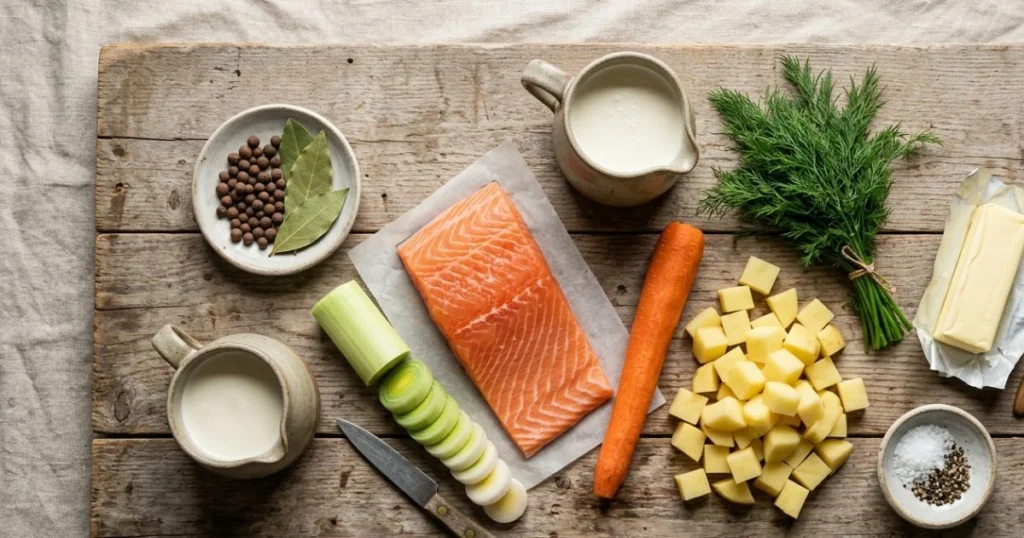
- Salmon fillet, 1.5 lb (700g), skinned and cut into 1-inch chunks — the whole point of the dish. Wild or farmed both work, and a slightly fattier farmed fillet actually holds up a little better to the gentle poaching.
- Butter, 3 tablespoons, divided — for sautéing the vegetables and finishing the soup. Finnish cooks aren’t shy with butter, and it makes a real difference here. Substitute a neutral oil if needed, though you’ll lose some flavor.
- Leek, 1 large, white and light green parts, sliced — the traditional aromatic base. Substitute 1 medium yellow onion if leeks aren’t available.
- Carrot, 1 large, peeled and cut into thin rounds — not every family includes it, but it’s common in home versions and adds a little natural sweetness and color to the broth. Leave it out for a more minimal, old-fashioned bowl.
- Yukon Gold potatoes, 4 medium, peeled and cut into ¾-inch cubes — they hold their shape and turn slightly creamy as they simmer. Substitute red or white boiling potatoes; skip russets, which fall apart.
- Fish or vegetable stock, 6 cups (1.4L) — the backbone of the broth. Substitute low-sodium chicken stock in a pinch, or water with a fish bouillon cube stirred in.
- Whole allspice berries, 5 to 6 — a small, distinctive Finnish note that’s easy to skip and worth keeping. Substitute ¼ teaspoon ground allspice added with the stock.
- Bay leaves, 2
- Heavy cream, 1 cup (240ml) — stirred in at the very end, this is what turns broth into lohikeitto. Substitute whole milk for a lighter soup, knowing it’s more prone to separating. If you love cooking with cream, my cream recipes collection has more ideas built around it.
- Fresh dill, ½ cup chopped, plus more for serving — Finnish cooking leans on dill the way Italian cooking leans on basil. Substitute 2 teaspoons dried dill, though the flavor is noticeably milder.
- Salt and freshly ground black pepper — season in stages, not all at once.
How to Make Finnish Salmon Soup, Step by Step
- Prep everything before you turn on the stove. Cut the salmon into rough 1-inch chunks and keep it cold until the last few minutes of cooking. Slice the leek, thinly slice the carrot if you’re using one, and cut the potatoes into even ¾-inch cubes — uneven pieces are the fastest way to end up with some potatoes mushy and others still firm.
- Build the base. Melt 2 tablespoons of butter in a heavy soup pot over medium heat. Add the leek and cook, stirring occasionally, for about 5 minutes, until it softens and turns translucent without browning.
- Add the broth and simmer the vegetables. Pour in the stock, then add the potatoes, carrot, allspice berries, and bay leaves. Bring to a boil, then drop the heat immediately to a steady simmer. Cook uncovered for 12 to 15 minutes, until a potato cube gives easily when you poke it with a fork but hasn’t started to break apart at the edges.
- Add the salmon. Slide the salmon chunks into the simmering broth. This is the step people rush, and it’s the one that matters most: keep the heat at a gentle simmer, not a boil, and cook for 5 to 6 minutes, until the salmon turns from translucent pink to solid opaque and flakes easily when nudged with a spoon.
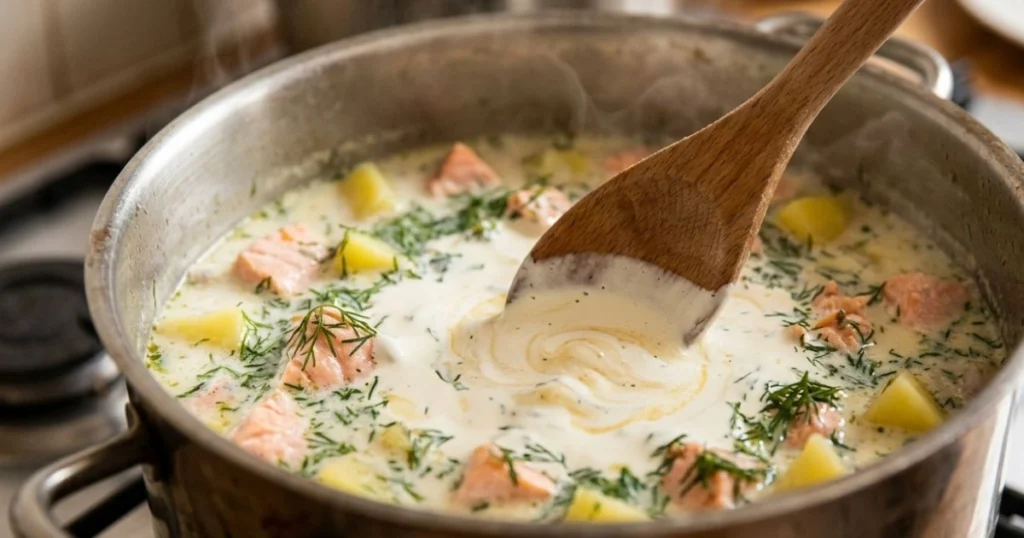
- Lower the heat before the cream goes in. Turn the burner down to low, so the surface is barely moving. Stir in the cream along with most of the chopped dill. Warm it through gently for 2 to 3 minutes — you’re heating the cream, not cooking it any further, and it should never come close to a simmer again.
- Finish and season. Fish out the bay leaves and allspice berries with a slotted spoon (or tie them in a small cheesecloth pouch beforehand to skip this step entirely). Stir in the remaining tablespoon of butter, taste, and season with salt and pepper — this soup usually needs more salt than you’d expect, especially with an unsalted stock.
- Serve immediately. Ladle into bowls and scatter the reserved fresh dill over the top. Lohikeitto is best the moment it’s made, while the salmon is still tender and the broth is fully hot.
Pro Tips and Mistakes I’ve Actually Made
The biggest mistake, and the one I made on my first try, was letting the pot keep at a low boil after the cream went in because I was distracted with something else on the stove. By the time I ladled it out, the texture had gone from silky to faintly grainy, with tiny flecks of separated fat on the surface. It still tasted fine, but the smoothness was gone for good — there’s no fixing a curdled cream soup once it’s happened.
A few other things I’ve learned the hard way:
- Cut the potatoes the same size. Even a little variation means some cubes turn mushy while others stay firm, and you can’t fix that after the fact.
- Pull the salmon a beat early. It keeps cooking in the hot broth even off the heat, so if it looks perfectly done in the pot, it’s probably about to be overdone in the bowl.
- Salt in two stages. A little with the stock, more at the very end, once the cream has been added and the flavors have come together.
- Want it thicker? Mash one or two of the cooked potato cubes against the side of the pot before you add the cream. It thickens the broth without any flour.
- Pat the salmon dry before it goes in. Wet fish straight out of the fridge cools the broth down faster than you’d expect, which throws off the timing in step 4.
- Hold back some of the dill. Dill loses its brightness the longer it sits in hot broth. I stir in about two-thirds early and save the rest for right before serving, so the finished bowl still tastes fresh.
Variations and Substitutions
- Smoked salmon: stir in a handful of cold-smoked salmon right at the end for a deeper, smokier note without any additional cooking.
- Different fish: arctic char or trout work just as well as salmon and show up in regional versions of this soup.
- Rye topping: torn dark rye bread, lightly toasted in butter, makes a genuinely good crunchy topping if you want some texture contrast.
- Lighter version: swap the heavy cream for whole milk. It’s a lighter soup, but keep the heat even lower than usual, since milk separates more easily than cream.
- Vegetarian version: use vegetable stock, skip the salmon, and stir in sautéed mushrooms — a mix of king oyster and cremini works well — right before the cream goes in. It’s not traditional, but it’s a genuinely good soup on its own terms.
- A little heat: a pinch of white pepper or a small pat of chili butter stirred in at the end wakes the whole thing up.
- Water instead of stock: some Finnish home cooks skip stock entirely and build the broth on plain water, letting the salmon and vegetables do all the flavoring themselves. It’s leaner and a bit more old-fashioned, and worth trying if you want to taste the fish more directly.
Storage, Reheating, and Make-Ahead Tips
Lohikeitto keeps in an airtight container in the fridge for 3 to 4 days. The flavor is honestly a little better on day two, once the dill and allspice have had time to settle into the broth.
You can make the base ahead: cook the broth, potatoes, allspice, and bay leaves up to 2 days in advance and refrigerate, then add the salmon and cream fresh when you’re ready to finish and serve.
I don’t recommend freezing this soup once the cream is in it. Dairy-based soups tend to separate and turn grainy after thawing, no matter how gently you reheat them. If you want to freeze ahead, freeze just the potato-and-broth base without the cream or fish, then finish it fresh on the day you plan to eat it.
When you do reheat leftovers, USDA food safety guidance calls for bringing soups back to a full boil, or checking that they’ve reached 165°F with a food thermometer — which is technically at odds with keeping cream smooth. In practice, I split the difference: reheat gently over medium-low heat, stirring the whole time so it heats evenly, and make sure it’s fully hot and steaming throughout rather than just warm at the edges, instead of bringing it to a rolling boil.
What to Serve With Finnish Salmon Soup
A thick slice of dark rye bread with salted butter is the classic pairing, and it’s genuinely hard to improve on — it’s the pairing you’ll see on nearly every table in Finland when this soup shows up, and it’s not optional in my house either. A simple side salad with a sharp vinaigrette cuts through the richness of the cream nicely. That’s really what I love about cooking easy Finnish recipes at home — good bread, good butter, and not much else is required.
If you’re planning a full meal around this soup, save room for dessert — my cake recipes collection has plenty of options that pair well with a strong cup of coffee afterward, which is very much in the spirit of a Finnish table.
Frequently Asked Questions
Can I use frozen salmon for this recipe?
Yes. Thaw it fully in the refrigerator overnight first, and pat it dry before adding it to the pot so you don’t add extra water to the broth.
What’s the difference between Finnish salmon soup and clam chowder?
Lohikeitto is lighter and brothier than a typical New England chowder, with no flour-based roux thickening it. The body comes from the potatoes and cream alone, and dill rather than bacon or salt pork carries most of the flavor.
How long does Finnish salmon soup last in the fridge?
Three to four days in an airtight container. Reheat gently on the stovetop rather than in the microwave, which tends to heat unevenly and can cause the cream to separate.
Can I freeze creamy salmon soup?
Not well, once the cream is already stirred in. Freeze the broth-and-potato base on its own instead, and add fresh cream and salmon when you reheat and finish it.
What can I use instead of allspice berries?
Ground allspice works, at about ¼ teaspoon in place of 5 to 6 whole berries. A couple of whole cloves are a reasonable substitute in a pinch, though the flavor is sharper.
Do I need to use fish stock, or is water okay?
Water is actually the older, more traditional base — plenty of Finnish home cooks build this soup on plain water and let the salmon and vegetables provide the flavor. Stock gives you a deeper, more layered broth, but it’s a preference, not a rule.
What’s the best type of salmon to use?
A center-cut fillet is your best bet, since the pieces cook at the same rate. Thin tail-end fillets tend to overcook before the thicker chunks are fully done, so cut around that thinner section if that’s what you have.
Is Finnish salmon soup healthy?
It’s rich, but salmon itself is genuinely nutritious — it’s a strong source of protein and omega-3 fatty acids, which are linked to heart and brain health, and the American Heart Association recommends around two servings of fatty fish a week, which this soup makes an easy habit to keep.
Final Thoughts
This is the kind of soup that makes you look like you tried harder than you did, and it’s earned a permanent spot in my fall and winter rotation. If you’re building out your own list of easy Finnish recipes at home, start here — once you’ve got the timing down, everything else about Finnish home cooking starts to feel a lot less unfamiliar. For more no-fuss dinners in the meantime, my easy recipes collection is a good place to keep browsing.
Written by Anna Koskinen, home cook and food writer.