
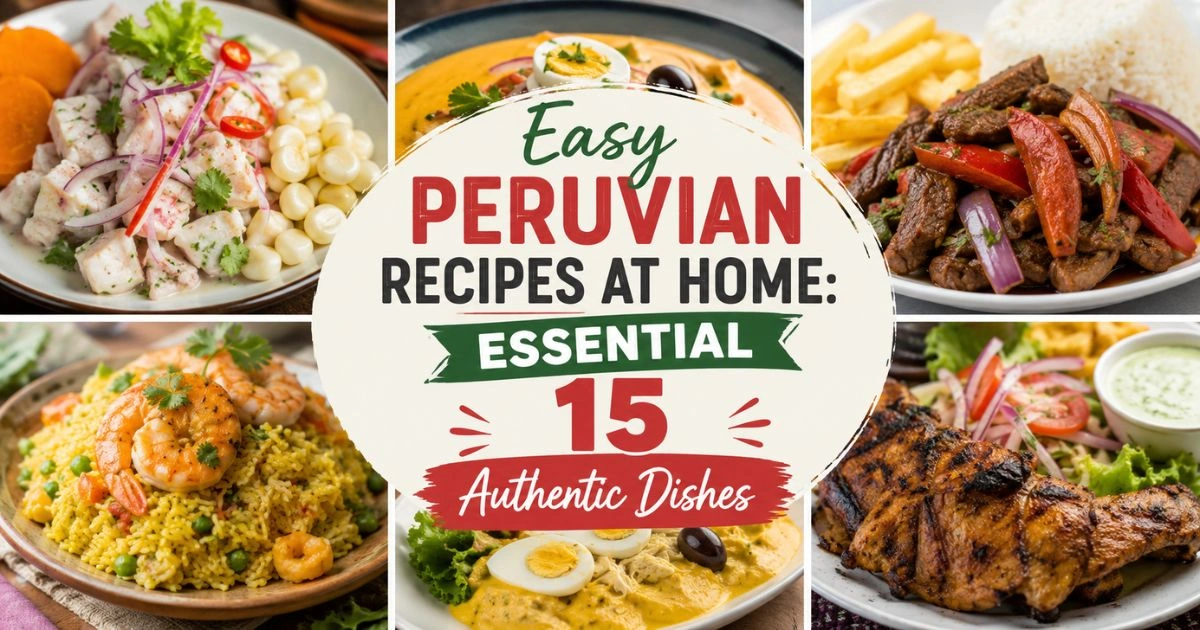
Easy Peruvian Recipes at Home: Essential 15 Authentic Dishes
Table of Contents
My mother-in-law visited for eight days last spring, and by day five I’d cycled through every “safe” dinner I knew how to make. I dug out a stained notebook her sister had mailed us years ago, full of easy Peruvian recipes at home written in fading pencil.
That night I made ceviche for the first time, and I nearly ruined it. I left the fish in lime juice for almost an hour instead of fifteen minutes, and it came out chalky and tight instead of tender. My mother-in-law ate it anyway and asked, gently, if I’d made it before.
That mistake sent me on a deep dive.. Over the following months I cooked through this exact list more than once, taking notes on what actually worked with regular grocery-store ingredients and a regular home kitchen. By the end of the visit, she asked to photocopy the notebook for herself.
Why This Easy Peruvian Recipes at Home Collection Works
I picked these fifteen dishes for one practical reason: most of them lean on the same six or seven pantry staples. Buy aji amarillo paste and a bag of Peruvian purple corn once, and you’re set up to make half this list without another special trip.
Peruvian cooking also forgives timing better than a lot of cuisines I’ve tried. A stew like seco de res actually tastes better the next day, and most of these recipes come together in one pan or one pot.
Aji amarillo alone does triple duty in this list — it’s the backbone of the ceviche marinade, the huancaína sauce, and the aji de gallina base. Learn to work with one chili paste well, and a third of this menu is already covered.
What You’ll Need to Stock a Peruvian Pantry
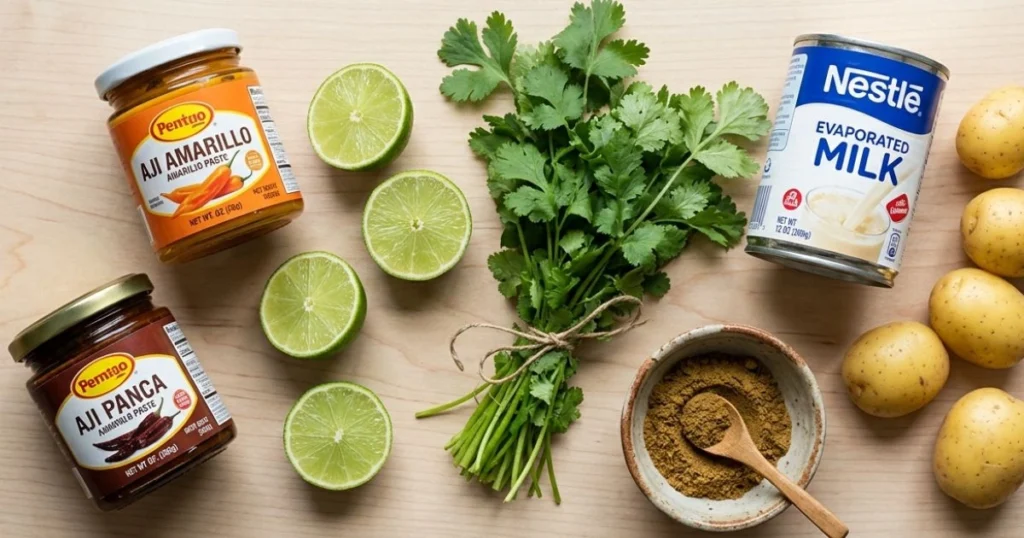
A handful of ingredients show up again and again below. Buy these once, and you can make most of the fifteen dishes without another grocery run.
- Aji amarillo paste – the backbone flavor of Peruvian cooking, a fruity, medium-hot yellow chili paste. Find it jarred in the international aisle; if you can’t, blend a yellow habanero with lime juice as a rough stand-in.
- Aji panca paste – smokier and milder, used in seco de res and anticuchos. Smoked paprika and a spoonful of tomato paste make a great substitute in a pinch.
- Fresh lime juice – bottled juice turns bitter fast and won’t properly “cook” ceviche the way fresh limes do.
- Cilantro – both a garnish and a blended-in flavor base for aji de gallina and seco de res.
- Queso fresco or feta – feta is the easiest U.S. substitute for the crumbly cheese in causa and papa a la huancaína.
- Evaporated milk – the shortcut that makes huancaína sauce and suspiro a la limeña silky without needing cream.
- Yellow potatoes – Yukon Golds are the closest U.S. match to Peru’s papa amarilla.
- Ground cumin – shows up in nearly every marinade on this list, from anticuchos to pollo a la brasa.
- Red onion – sliced thin, it’s the base of salsa criolla and a key ceviche ingredient; soak it in cold water for 5 minutes to soften the bite.
The 15 Authentic Peruvian Dishes to Cook at Home
Here’s the full lineup, roughly in the order I’d work through it if I were starting from zero.
1. Ceviche Clásico
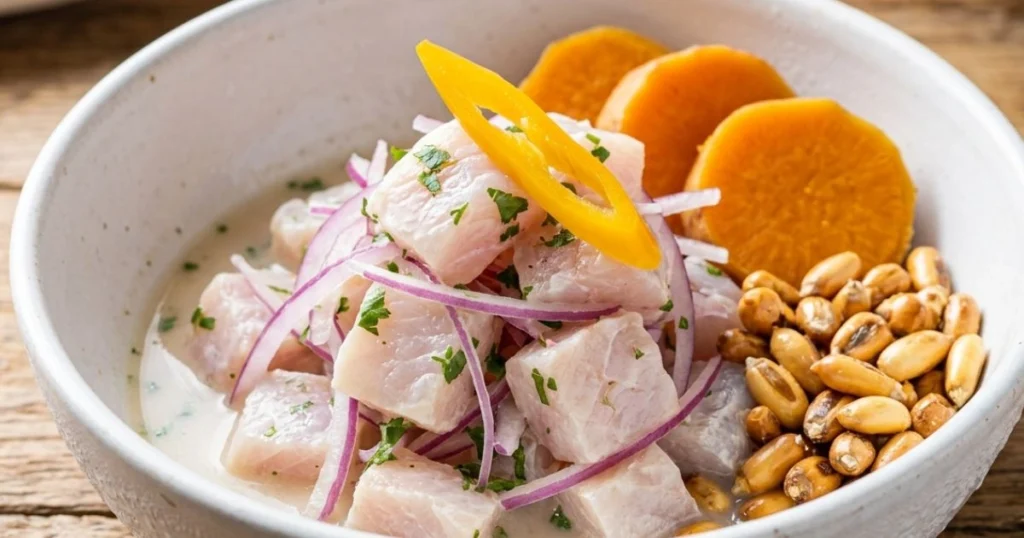
Raw white fish — I use halibut or sea bass — cubed and marinated in fresh lime juice, red onion, cilantro, and aji amarillo for exactly 10 to 15 minutes, not longer, or the texture turns rubbery. Serve with sweet potato and toasted corn on the side, the way it’s plated in Lima.
Because this dish relies on raw fish, buy it labeled sushi-grade or previously frozen, and consider skipping it if you’re pregnant or immunocompromised. Citrus firms up the texture, but it doesn’t replace the safety margin that cooking provides.
2. Lomo Saltado
Peru’s answer to stir-fry: strips of sirloin seared fast and hot with red onion, tomato, and soy sauce, then tossed with french fries right at the end so they stay crisp. Serve over white rice.
The trick is not crowding the pan. The first time I doubled this recipe in one skillet, the beef steamed in its own liquid instead of searing and came out gray. Cook it in two batches instead.
3. Papa a la Huancaína
Boiled yellow potato slices blanketed in a cold, creamy sauce of aji amarillo, evaporated milk, queso fresco, and crushed crackers blended smooth. It’s usually a starter, but I’ve served it as a light lunch topped with a fried egg.
4. Aji de Gallina
Shredded chicken in a thick, nutty sauce built from aji amarillo, walnuts or pecans, milk-soaked bread, and parmesan. If poaching and shredding chicken isn’t something you do often, this shredding method gets you tender, easy-to-pull meat every time.
5. Causa Limeña
A cold, layered “cake” of mashed yellow potato seasoned with lime and aji amarillo, stacked around a chicken or tuna salad center. No oven and no stovetop once the potatoes are boiled, which makes it one of the easiest make-ahead dishes on this list. Top it with sliced avocado, hard-boiled egg, and black olives for the classic Lima presentation.
6. Anticuchos
Traditionally grilled beef heart marinated in aji panca, garlic, and cumin, though I make mine with sirloin tips for guests who’d rather skip the organ meat. Thread onto skewers and grill 3 to 4 minutes per side. For more grilled and pan-seared ideas beyond this one, ijrecipes.com’s meat recipes collection is worth a browse.
7. Arroz con Pollo
Chicken thighs braised with rice, cilantro, stock, peas, and carrots — Peru’s cilantro-green take on the classic. It’s a one-pot dinner, about 40 minutes start to finish, and the leftovers reheat well. A squeeze of fresh lime and a spoonful of aji sauce at the table wakes the whole plate back up.
8. Pollo a la Brasa
Home-oven, rotisserie-style chicken marinated overnight in soy sauce, aji panca, garlic, and cumin, then roasted until the skin blisters. Check doneness with a thermometer — the USDA’s minimum safe temperature for poultry is 165°F at the thickest part of the thigh.
9. Rocoto Relleno
Peppers stuffed with a savory beef, olive, and hard-boiled egg filling, baked under melted cheese. Traditional rocoto peppers run very hot; I use poblano or bell peppers instead for a milder, easier weeknight version. Parboiling whichever pepper you choose for 2 to 3 minutes first also cuts down on any lingering bitterness.
10. Tacu Tacu
A crisp-edged patty made from leftover rice and beans, pan-fried together and usually topped with a fried egg and a piece of steak. This is the dish that finally taught me to cook extra rice on purpose. Fried sweet plantains on the side round the plate out the way you’d get it at a Lima lunch counter.
11. Chupe de Camarones
A shrimp and potato chowder built on a base of aji panca and milk, finished with a poached egg on top. It’s closer to a 30-minute soup than a project, and it’s my go-to on a cold night. Frozen, peeled shrimp work fine here and shave off the only fussy step, which is peeling and deveining.
12. Seco de Res
Beef simmered low and slow in a bright cilantro-and-beer sauce with potatoes. This is the stew that finally convinced my mother-in-law I’d figured out Peruvian cooking, and it tastes even better reheated the next day.
13. Tamales Peruanos
Corn masa studded with olives, peanuts, and pork or chicken, wrapped in banana leaves or corn husks and steamed for about an hour. It’s a weekend project, but one that freezes beautifully for later. You’ll know they’re done when the masa pulls cleanly away from the husk instead of sticking to it.
14. Picarones
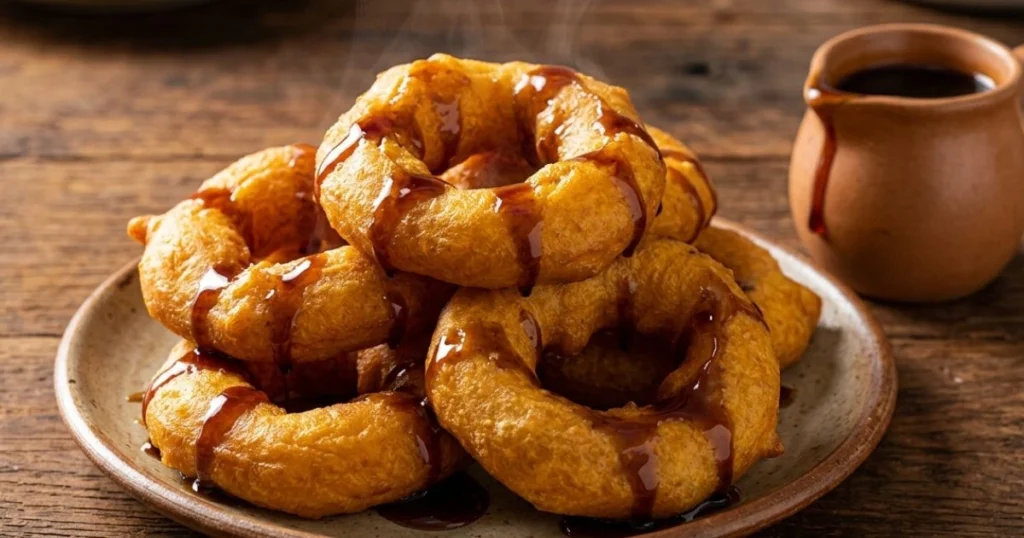
Ring-shaped fritters made from squash and sweet potato dough, deep-fried until puffed and golden, then drizzled with spiced syrup. For more fried and baked sweets to pair with this one, ijrecipes.com’s dessert recipes section has plenty of company.
15. Suspiro a la Limeña
A two-layer dessert: dulce de leche made from evaporated and condensed milk on the bottom, topped with a port-wine meringue. If you gravitate toward cream-based desserts, this is the richest thing on the entire list.
Pro Tips & Common Mistakes
Marinate ceviche for minutes, not hours. I already mentioned my own mistake above, but it’s worth repeating: past the 15-minute mark, the acid keeps tightening the fish’s proteins until the texture turns tough and chalky instead of silky.
Don’t swap chili powder for aji amarillo paste. I tried it once when I was out of paste, and the sauce for aji de gallina came out flat and one-note instead of fruity and bright. The paste carries a fermented, slightly sweet flavor that dry powder just doesn’t have.
Toast or rehydrate dried aji panca before blending it. Skipping this step leaves a faint bitterness in seco de res and anticuchos marinade that’s easy to avoid with five extra minutes.
Use cold, day-old rice for tacu tacu. Fresh rice is too wet, and the patty falls apart in the pan instead of holding together and crisping.
Don’t over-blend huancaína sauce. I ran mine in the blender for a full two minutes once, thinking longer meant smoother, and the crackers broke down so much the sauce turned gluey instead of pourable. Thirty seconds is usually plenty.
Deseed and devein rocoto or substitute peppers before stuffing. I once served rocoto relleno at a dinner party without warning anyone, and half the table needed a glass of milk. Poblanos are a much friendlier default for guests you don’t know well.
Variations & Substitutions
Protein swaps: Use cooked shrimp instead of raw fish for an Ecuadorian-style ceviche if you’d rather skip raw seafood entirely. Swap chicken thigh for beef heart or sirloin in anticuchos with no change to the marinade.
Plant-based options: Mushrooms or hearts of palm work well in place of chicken or tuna in causa’s filling. For aji de gallina, sautéed mushrooms or jackfruit can stand in for the shredded chicken; the walnut sauce itself is already vegetarian.
No aji amarillo: Look for it canned or jarred at a Latin grocery store, or order it online — it keeps in the fridge for months once opened. In a real pinch, a yellow bell pepper blended with a diced habanero gets you close.
Dairy-free: Full-fat coconut milk can replace evaporated milk in huancaína sauce and aji de gallina, though it does shift the flavor toward coconut rather than a neutral creaminess.
Cooking for kids or spice-sensitive eaters: Deseed and devein the aji peppers before blending, and cut the amount called for by half. You’ll lose some heat but keep the fruity, savory base that makes these sauces worth making in the first place.
Gluten-free: Nearly everything on this list is naturally gluten-free except papa a la huancaína, which typically uses crackers as a thickener — swap in gluten-free crackers or a boiled potato instead.
Storage, Reheating & Make-Ahead
Ceviche is best eaten within 30 to 45 minutes of dressing the fish. You can chop the fish, onion, and cilantro ahead of time and refrigerate them separately, but don’t combine everything until just before serving.
Stews like seco de res, aji de gallina, and chupe de camarones keep for 3 to 4 days in the fridge in an airtight container, and freeze well for up to 3 months.
Lomo saltado is best fresh, since the fries turn soggy overnight. The beef and sauce alone keep for 3 days; reheat gently and add a fresh batch of fries.
Causa holds up well covered in the fridge for up to 2 days, which makes it one of the better make-ahead options for a party.
Don’t freeze ceviche. The texture that citrus creates doesn’t survive freezing and thawing, and you’ll end up with mush instead of the firm, opaque bite you’re after.
Tamales freeze well for 2 to 3 months; steam them again straight from frozen to reheat. For any leftovers, USDA guidance on reheating leftovers recommends bringing food back to 165°F before eating.
Serving Suggestions
Round out any of these dishes with white rice, salsa criolla (thin-sliced pickled red onion), or a side of boiled corn. A small bowl of aji sauce on the table lets everyone adjust their own heat level.
For drinks, chicha morada — a spiced purple corn drink — pairs well with the whole menu, and a pisco sour is the classic choice for adults. Both balance the richness of dishes like aji de gallina or chupe de camarones nicely.
For a full spread, try papa a la huancaína or causa as a starter, seco de res or aji de gallina as the main, and picarones or suspiro a la limeña for dessert. If you’d rather keep things simple on a weeknight, arroz con pollo or lomo saltado with a quick side salad covers dinner in under an hour — and if that pace suits you, ijrecipes.com’s easy recipes collection has more along the same lines.
FAQ
Can I make Peruvian ceviche without raw fish? Yes. Ecuadorian-style ceviche briefly poaches the fish or shrimp before chilling it in the marinade, which is a good option if you’d rather avoid raw seafood altogether.
How long does aji de gallina last in the fridge? Three to four days in an airtight container. The sauce actually thickens and deepens in flavor by the second day.
What’s the difference between aji amarillo and aji panca? Aji amarillo is fresh, fruity, bright yellow-orange, and medium-hot. Aji panca is dried, dark red, smoky, and noticeably milder. Many savory dishes use one or both together.
Can I substitute chicken for beef heart in anticuchos? Yes — chicken thigh or sirloin both work well. Marinate for at least 2 hours, and shave a couple of minutes off the grill time since chicken cooks faster than beef heart.
Is Peruvian food very spicy? Most everyday dishes are more flavorful than fiery, since aji pastes bring fruitiness and body along with their heat. Rocoto relleno is the main exception worth a heads-up.
What’s a good first Peruvian dish to try at home? Papa a la huancaína or lomo saltado. Both use accessible ingredients, come together in under 45 minutes, and don’t need any special equipment.
Can I make any of these ahead for a dinner party? Causa, tamales, and seco de res are the three best make-ahead choices. All three hold their texture and flavor well, and seco de res genuinely improves after a day in the fridge.
Conclusion
None of these fifteen dishes are complicated once aji amarillo paste is sitting in your fridge and you’ve got twenty minutes to spare. That stained notebook is still on my counter, spattered with more sauce every month.
Start with lomo saltado or papa a la huancaína if you’re new to this list, then work your way down. By the time you reach suspiro a la limeña, easy Peruvian recipes at home won’t feel like a novelty anymore — they’ll just be dinner, and probably one you’re asked to make again.
Written by Clara Gonzalez, home cook and food writer.