
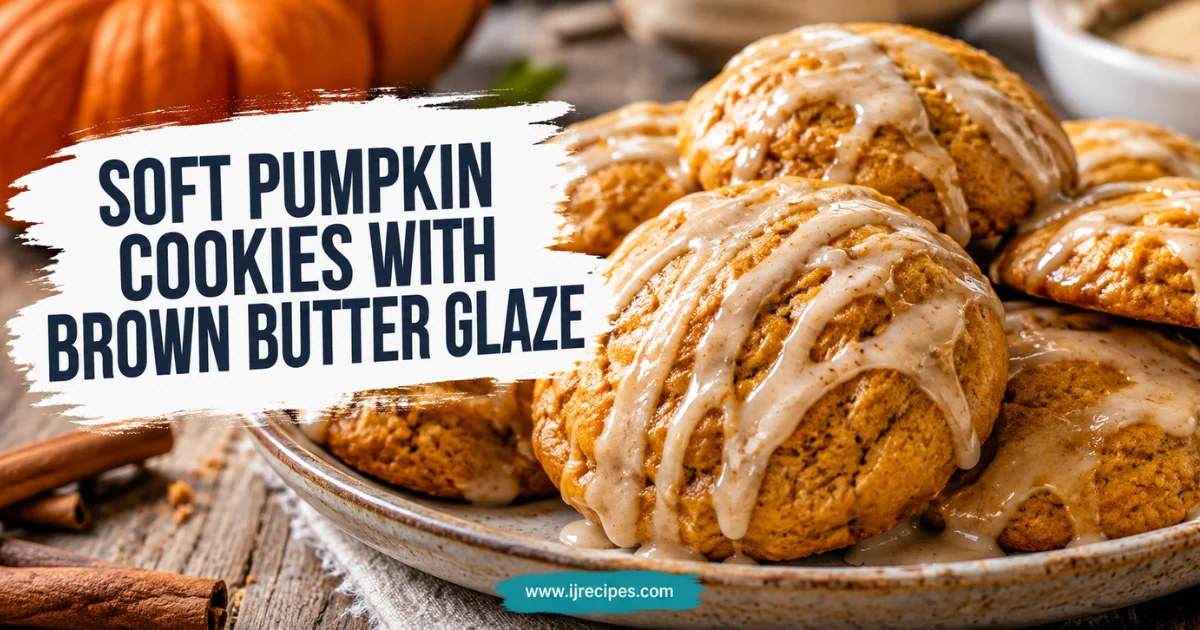
Soft Pumpkin Cookies with Brown Butter Glaze
Table of Contents
The first time I made pumpkin cookies that I actually wanted to eat again, it was a rainy Tuesday in October and my sister had texted me asking for “something fall-ish.” I’d tried a few pumpkin cookies recipes before, and they always came out weirdly cakey — more like a muffin top than anything that belonged in a cookie tin. I’d over-creamed the butter, used too much pumpkin, and basically just gotten sad little pucks of orange sponge. This version is different, and I can prove it: the first batch I made using this method disappeared in under 20 minutes at my sister’s house.
The key was blotting the canned pumpkin, balancing the fat correctly, and adding a brown butter glaze that hardens slightly at the edges. These pumpkin cookies are soft in the middle, slightly chewy at the edge, and taste like autumn in a single bite.
Why This Recipe Works
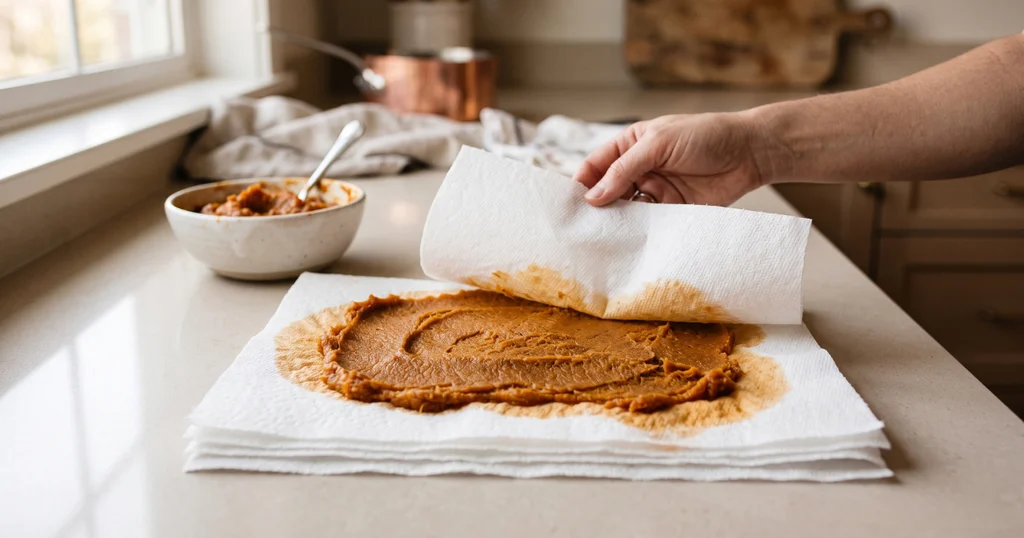
Most pumpkin cookies recipes use an entire can of pumpkin, and that’s usually the problem. Canned pumpkin puree is extremely wet — nearly 90% water — so dumping a full cup into your dough turns cookies into little cakes. I blot my pumpkin puree with paper towels until it loses about 2 tablespoons of moisture. That small step changes the texture completely.
I also use melted butter instead of creamed butter here. Creaming adds air, which gives lift — exactly what you don’t want in a cookie that already has baking soda and egg yolk. Melted butter keeps everything dense and chewy. Combined with a full tablespoon of pumpkin pie spice and a two-to-one ratio of brown sugar to white sugar, these pumpkin cookies have deep flavor without any blandness. The brown butter glaze on top adds a nutty, almost caramel finish that sets the whole thing apart.
Ingredients
| Ingredient | Amount | Why It’s There / Substitute |
|---|---|---|
| Canned pumpkin puree (not pie filling) | ¾ cup, blotted | Moisture and flavor; blotting removes excess water |
| Unsalted butter, melted | ½ cup (1 stick) | Creates chewy texture; salted butter works, reduce added salt by half |
| Brown sugar, packed | ¾ cup | Deep caramel flavor; light or dark both work |
| Granulated white sugar | ¼ cup | Balances sweetness; don’t skip — affects spread |
| 1 egg yolk (no white) | 1 yolk | Richness without too much lift; no substitute |
| Vanilla extract | 1 tsp | Depth of flavor; vanilla paste is even better |
| All-purpose flour | 2 cups | Structure; 1:1 gluten-free flour blend works here |
| Baking soda | 1 tsp | Lift and slight spread; don’t substitute baking powder |
| Fine sea salt | ½ tsp | Enhances all flavors; kosher salt works at same amount |
| Pumpkin pie spice | 1 tbsp | Warm spice blend; see variations for DIY blend |
| Cinnamon (additional) | ½ tsp | Extra warmth; Ceylon cinnamon preferred |
| Brown Butter Glaze | ||
| Unsalted butter | 4 tbsp | Browned for nutty flavor; salted butter also works |
| Powdered sugar, sifted | 1 cup | Glaze base; sifting prevents lumps |
| Whole milk | 2–3 tbsp | Thins the glaze; heavy cream makes it richer |
| Pinch of cinnamon | — | Ties glaze to cookies’ flavor |
Step-by-Step Instructions
Prep the Dough
Step 1: Blot your pumpkin. Spread the ¾ cup of pumpkin puree onto two or three layers of paper towels. Lay more paper towels on top and press firmly. Let it sit for 5 minutes while you gather other ingredients. You’re aiming to remove noticeable moisture — the puree should look slightly darker and drier. This single step is what separates good pumpkin cookies from cakey ones.
Step 2: Melt the butter. Melt ½ cup of butter in a medium saucepan or microwave-safe bowl. Let it cool for 3–4 minutes so it doesn’t scramble the egg yolk in the next step. It should be warm, not hot.
Step 3: Combine wet ingredients. In a large bowl, whisk together the melted (cooled) butter, brown sugar, and white sugar until smooth — about 60 seconds. Add the blotted pumpkin puree, egg yolk, and vanilla. Whisk again until completely combined and glossy.
Step 4: Mix the dry ingredients. In a separate bowl, whisk together the flour, baking soda, salt, pumpkin pie spice, and cinnamon. Stir them briefly with a fork so the spices are evenly distributed.
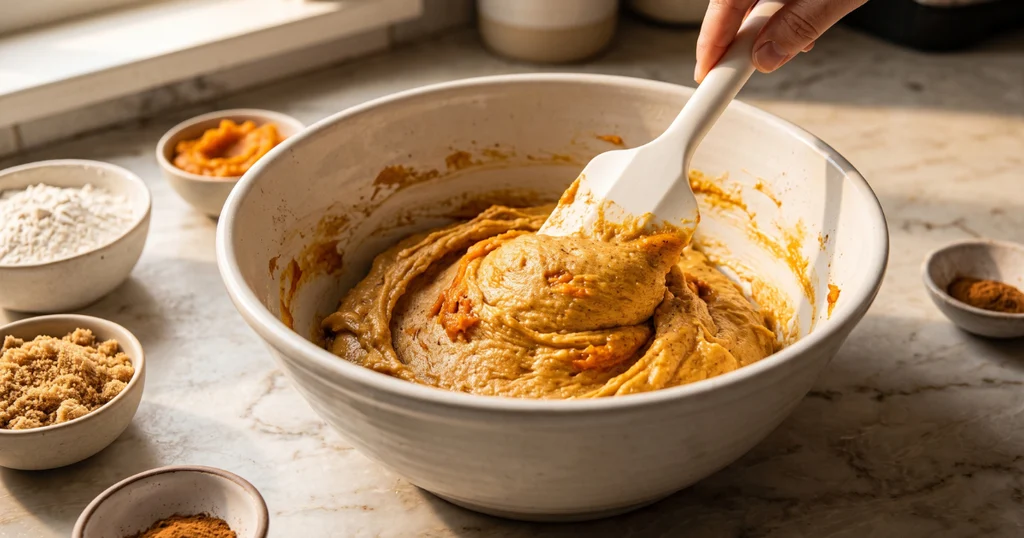
Step 5: Fold wet into dry. Pour the wet ingredients into the dry. Use a rubber spatula and fold — don’t stir aggressively. Stop as soon as no flour streaks remain. The dough will look a little soft and tacky; that’s normal.
Bake the Cookies
Step 6: Preheat and prep. Preheat your oven to 350°F (175°C). Line two baking sheets with parchment paper. Don’t use greased foil — it makes the bottoms spread too fast and brown unevenly.
Step 7: Scoop and space. Use a 1.5-tablespoon cookie scoop or two spoons. Roll each portion into a ball and place them 2 inches apart — these pumpkin cookies don’t spread much, but they need airflow. You should get about 22–24 cookies from this batch.
Step 8: Flatten slightly. Lightly press the top of each dough ball with your palm or the bottom of a glass to a disc about ½ inch thick. Because these don’t spread on their own, you control the final shape here.
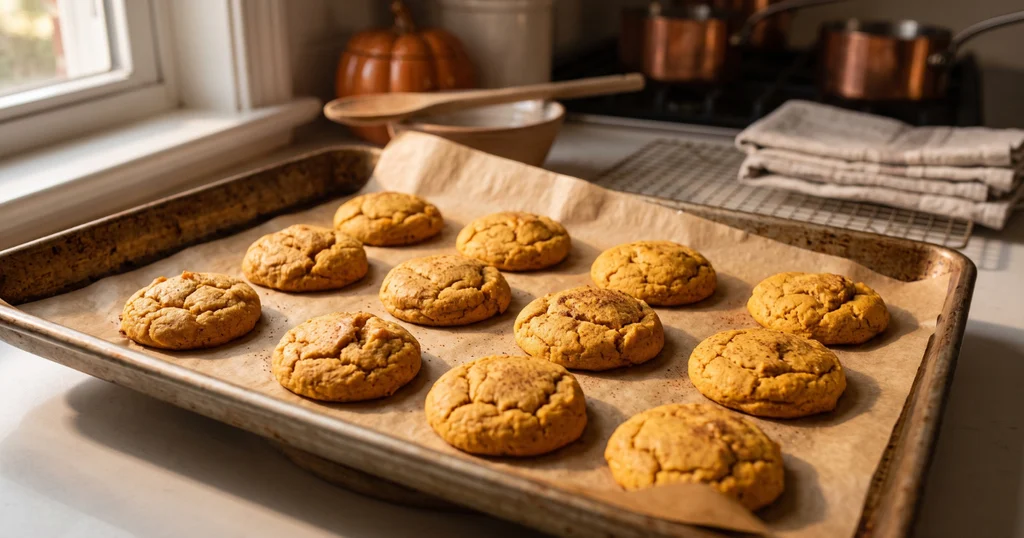
Step 9: Bake. Bake one tray at a time in the center rack for 11–13 minutes. The edges will look set and slightly golden; the center will look underdone — that’s your signal to pull them. They firm up as they cool. Overbaking is the #1 mistake with pumpkin cookies; if they look done in the oven, they’re already overdone.
Step 10: Cool completely. Let cookies cool on the pan for 5 minutes, then transfer to a wire rack. They need to be fully cool before glazing — at least 20 minutes.
Make the Brown Butter Glaze
Step 11: Brown the butter. In a small, light-colored saucepan (so you can see the color change), melt 4 tablespoons of butter over medium heat. Swirl or stir frequently. The butter will foam, then the foam will subside, and you’ll see golden flecks forming at the bottom. Once it smells nutty and the flecks are medium brown — not black — pour it immediately into a heatproof bowl. This takes about 4–5 minutes total.
Step 12: Build the glaze. Whisk the sifted powdered sugar and pinch of cinnamon into the brown butter. Add milk one tablespoon at a time until the glaze runs off a spoon in a slow, steady drizzle. Too thin and it disappears; too thick and it clumps.
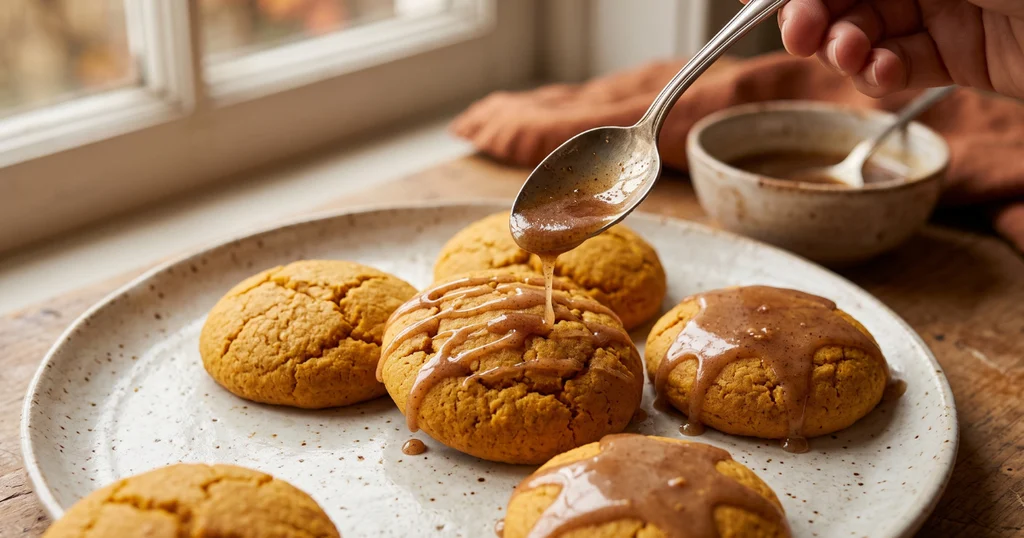
Step 13: Glaze and set. Using a spoon or fork, drizzle the glaze over each cooled cookie. Let them sit 15 minutes — the glaze will firm slightly at the edges but stay soft in the center. Serve at this point for the best texture.
Pro Tips and Common Mistakes
Don’t skip blotting the pumpkin. I know it feels fussy. The first time I did this recipe without it, I got cookies that slid off the spatula because they were so wet inside. The paper towel step takes two minutes and makes a massive difference.
Use only the yolk, not the whole egg. A whole egg adds both richness (yolk) and structure/lift (white). In pumpkin cookies, you already have plenty of moisture and lift from the leavening and puree. The white would make them puffier and drier — exactly what we’re avoiding.
Watch the brown butter closely. It goes from brown to burnt in seconds. I burned it on my first attempt because I walked away to answer my phone. Stay at the stove and keep swirling.
Bake one tray at a time. When I tested two trays at once, the bottom tray overbaked before the top had set. The center rack, one pan, 12 minutes is the formula I use every single time now.
Room temperature ingredients matter less here because we’re using melted butter, but if your pumpkin came straight from the fridge, let it come to room temp first so it doesn’t seize up the melted butter.
Variations and Substitutions
Chocolate chip pumpkin cookies: Fold in ¾ cup of semi-sweet or dark chocolate chips with the dry ingredients. Skip the glaze and serve plain — the chocolate does the flavor work. If you enjoy classic chocolate chip cookies, you’ll love this fall twist; the technique is similar to what we use in our Toll House Cookie Recipe.
Cream cheese frosting instead of brown butter glaze: Beat 4 oz of softened cream cheese with 1 cup powdered sugar, ½ tsp vanilla, and 1–2 tbsp milk until smooth. Spread on cooled cookies for a thicker, tangier topping.
Pumpkin snickerdoodle: Roll the dough balls in a mix of 2 tablespoons sugar and 1 teaspoon cinnamon before baking. Skip the glaze entirely.
Vegan pumpkin cookies: Replace egg yolk with 1 tablespoon of flaxseed meal mixed with 2.5 tablespoons of water (let it sit 5 minutes). Use plant-based butter — the cookies will be slightly softer. For the glaze, use oat milk.
Maple glaze variation: Replace the milk in the glaze with 2 tablespoons of pure maple syrup. The result is richer and pairs beautifully with the spice in the cookies.
DIY pumpkin pie spice: Combine 1 teaspoon cinnamon, ¼ teaspoon ginger, ⅛ teaspoon nutmeg, and ⅛ teaspoon cloves. This gives you exactly 1 teaspoon — scale up by 3x to replace the tablespoon called for in this recipe.
Storage, Reheating, and Make-Ahead Instructions
At room temperature: Store glazed pumpkin cookies in a single layer (or between parchment sheets) in an airtight container. They stay soft and fresh for up to 4 days. After day 4, the texture starts to change slightly.
Refrigerator: These cookies keep in the fridge for up to 7 days. The glaze firms up more in the cold, so let them sit at room temperature for 15 minutes before serving.
Freezer (baked): Freeze unglazed cookies in a zip-top bag with parchment between layers for up to 2 months. Thaw at room temperature for 30–45 minutes, then glaze just before serving.
Freezer (dough): Scoop the dough into balls on a parchment-lined tray, freeze until solid (about 1 hour), then transfer to a bag. Bake from frozen at 350°F for 14–16 minutes. I do this in October and pull from the freezer all through November.
Make-ahead tip: You can prepare the brown butter glaze up to 3 days ahead and store it in the fridge in a sealed jar. Warm it gently in the microwave for 15–20 seconds and stir well before using.
Serving Suggestions
These pumpkin cookies are good enough to eat plain, but here’s how I like to serve them:
Alongside a warm mug of spiced apple cider or chai — the spice profiles mirror each other perfectly. At a fall baking spread with a carrot cake or spiced layer cake, since the flavors complement rather than compete. Crumbled over a scoop of vanilla ice cream with a drizzle of caramel for an informal fall dessert. On a cookie gift plate for Thanksgiving — they hold their shape well during transport. Served as an after-school snack with a glass of cold milk; my kids devour them this way and ask for them by name.
If you’re building out a full dessert table, our Carrot Cake Recipe pairs beautifully with these — both are warm-spiced, crowd-pleasing, and easy to make ahead. And if you want another crowd-pleasing cookie option, the Butter Cookies Recipe is a classic that works year-round alongside these seasonal ones.
FAQ
Can I use pumpkin pie filling instead of pumpkin puree?
No — pumpkin pie filling already contains sugar, spices, and sometimes condensed milk. Using it will make your pumpkin cookies far too sweet and may cause texture issues. Always use plain canned pumpkin puree, or make your own by roasting and blending sugar pumpkin.
How long do pumpkin cookies stay soft?
At room temperature in an airtight container, they stay noticeably soft for 3–4 days. Day 1 and day 2 are the best — the glaze is set, the centers are pillowy. After day 4, they start to firm up, but a quick 10-second microwave zap brings them back.
Can I make pumpkin cookies without eggs?
Yes. Replace the egg yolk with 1 tablespoon of flaxseed meal mixed with 2.5 tablespoons of water. Let it sit for 5 minutes before adding. The cookies will be slightly more fragile fresh from the oven but firm up nicely once cool. The texture is nearly identical in my testing.
What’s the difference between pumpkin cookies and pumpkin cake?
The main difference is fat ratio and moisture content. Pumpkin cake uses more liquid, a higher proportion of pumpkin, and often vegetable oil — all of which create a pourable batter and an airy crumb. Good pumpkin cookies use blotted pumpkin, more fat relative to moisture, and less leavening so the result stays dense and chewy rather than fluffy. According to Serious Eats’ guide to cookie science, fat content and moisture are the two biggest variables in cookie texture.
Can I double this recipe?
Yes, easily. The dough scales perfectly — just double every ingredient and use two separate bowls if your mixing bowl is small. Bake in batches of one tray at a time for even results. I regularly double the recipe in November and freeze half the dough for later.
Why are my pumpkin cookies coming out cakey?
Three likely causes: you didn’t blot the pumpkin, you used a whole egg instead of just the yolk, or you creamed softened butter instead of using melted butter. Any of those will add lift or moisture that pushes the texture toward cake. The USDA’s moisture content data for pumpkin shows just how much water is in canned pumpkin — blotting is genuinely necessary, not optional.
Can I use fresh pumpkin instead of canned?
You can, but it takes more work. Roast a sugar pumpkin at 400°F for 45–50 minutes until tender, scoop out the flesh, and puree until smooth. Let it strain through a fine-mesh strainer for 30 minutes. Fresh pumpkin tends to be wetter than canned, so you’ll likely need to blot it more aggressively. The flavor is slightly more vegetal — some people love it, some prefer the consistent sweetness of canned.
Conclusion
These pumpkin cookies have become my most-requested fall recipe, and I make them almost every week from September through Thanksgiving. The brown butter glaze might seem like an extra step, but it’s ten minutes of work that turns a good cookie into a great one. Once you try blotting the pumpkin and using just the yolk, I think you’ll wonder why other pumpkin cookies recipes don’t mention these things. Keep a batch of dough in the freezer and you’re never more than 15 minutes from a warm, spiced cookie on any weeknight in fall. Give them a try and let me know how yours turn out.
Written by IJ oussama, home cook and food writer.