
Easy Chicken Breast Recipes for Busy Weeknight Dinners
Table of Contents
My son pushed his plate away three dinners in a row before I finally admitted the problem wasn’t him — it was my chicken. I’d been searching for chicken breast recipes that didn’t turn into dry, rubbery cutlets by the time they hit the table, and I kept landing on the same vague advice: “cook until done.” That phrase tells you nothing.
So I started timing everything, checking temperatures with an actual thermometer, and writing down what worked. What came out of that testing is the method below — one I’ve now made close to thirty times, tweaked twice after burning the butter in early attempts, and now make on repeat because it’s genuinely foolproof.
This isn’t a roundup of ideas I found somewhere else. It’s the exact method I use, with the exact mistakes I made along the way, so you can skip them.
Why This Recipe Works
Most chicken breast recipes fail for one reason: uneven thickness. A chicken breast is thick on one end and thin on the other, so by the time the thick end cooks through, the thin end is already tough.
Pounding the chicken to an even thickness fixes that in under two minutes. Combined with a quick sear and a low-and-slow finish, this is the version of chicken breast recipes that actually delivers on the “juicy” promise instead of just claiming it.
Ingredients
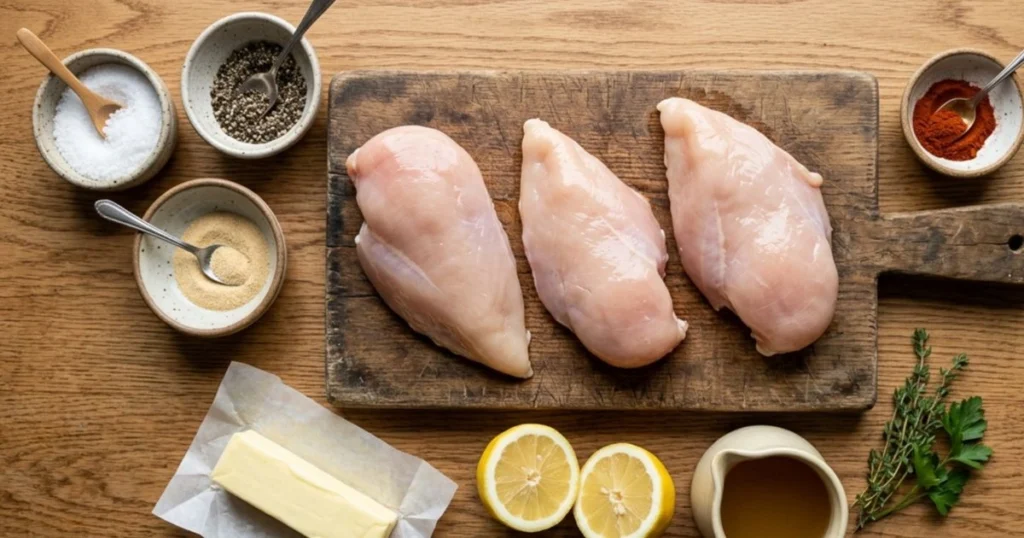
| Ingredient | Amount | Why It’s There / Substitute |
|---|---|---|
| Boneless, skinless chicken breasts | 4 (about 6 oz each) | The star of the dish; look for evenly sized pieces so they cook at the same rate |
| Kosher salt | 1 tsp | Seasons deep into the meat; use ¾ tsp if using fine table salt |
| Black pepper | ½ tsp | Balances the salt; freshly cracked has more punch |
| Garlic powder | 1 tsp | Adds savory depth without burning like fresh garlic can in a hot pan |
| Smoked paprika | 1 tsp | Gives color and a subtle smokiness; sweet paprika works as a substitute |
| Olive oil | 2 tbsp | Carries the sear; avocado oil works if you want a higher smoke point |
| Unsalted butter | 2 tbsp | Adds richness at the end; skip for a dairy-free version |
| Chicken broth | ¼ cup | Deglazes the pan and keeps the chicken moist while it finishes cooking |
| Fresh lemon juice | 1 tbsp | Brightens the finished dish; white wine vinegar is a fine swap |
Step-by-Step Instructions
Prep the Chicken
- Place each chicken breast between two sheets of plastic wrap and pound it to an even ¾-inch thickness with a meat mallet or rolling pin.
- Pat the chicken completely dry with paper towels — this step matters more than people think, because wet chicken won’t sear, it’ll steam.
- Mix the salt, pepper, garlic powder, and smoked paprika in a small bowl, then rub the mixture evenly over both sides of each breast.
Sear
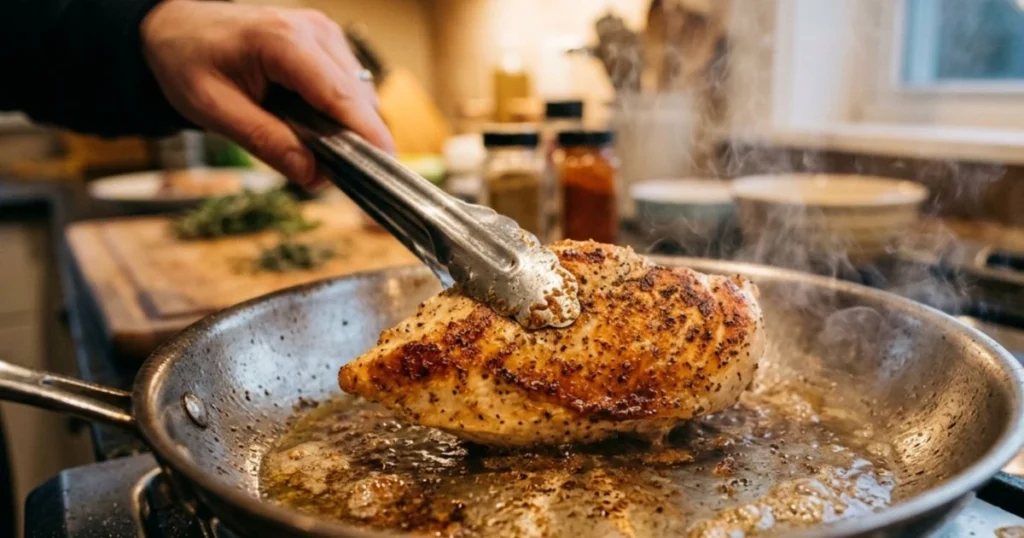
- Heat the olive oil in a large stainless steel or cast-iron skillet over medium-high heat until it shimmers, about 90 seconds.
- Lay the chicken in the pan without crowding it, working in batches if needed, and let it sear undisturbed for 4–5 minutes.
- Flip only once you see a deep golden crust form on the bottom — resist the urge to move it early, since that’s what tears the crust.
Finish Cooking
- Flip the chicken and cook the second side for another 4–5 minutes, until it’s golden as well.
- Add the butter, chicken broth, and lemon juice to the pan, then reduce the heat to medium-low.
- Spoon the pan sauce over the chicken and cook for 2–3 more minutes, until an instant-read thermometer inserted into the thickest part reads 165°F, which the USDA lists as the safe minimum internal temperature for poultry.
Rest
- Transfer the chicken to a plate and let it rest for 5 full minutes before slicing.
- Skipping this step is the single biggest mistake I made in early testing — cutting in too soon let all the juice run straight onto the cutting board instead of staying in the meat.
Pro Tips & Common Mistakes
The first time I made this, I cranked the heat to high thinking it would speed things up, and the butter burned black before the chicken was even cooked through. Medium-high is genuinely hot enough.
Don’t skip pounding the chicken to an even thickness. Of all the fixes I tried while developing these chicken breast recipes, this single step made the biggest difference in consistency.
Use a thermometer, not a timer alone. Chicken breasts vary enough in size that “12 minutes” on one piece might undercook a thicker one and overcook a thinner one.
Let the pan get properly hot before the chicken goes in. A cool pan is why so many chicken breast recipes online produce pale, steamed-looking chicken instead of a real crust.
Variations & Substitutions
These chicken breast recipes all use the same base method — pound, season, sear, finish, rest — with small swaps that change the whole flavor profile.
Garlic Herb Chicken Breast
Swap the smoked paprika for 1 teaspoon of dried Italian herbs, and stir 2 minced garlic cloves into the butter and broth mixture in step 8. This version pairs beautifully with a simple green salad.
Honey Mustard Chicken Breast
Whisk 1 tablespoon of honey and 1 tablespoon of Dijon mustard into the pan sauce instead of the lemon juice. It turns sticky-sweet as it reduces and clings to the chicken.
Cajun Spiced Chicken Breast
Replace the garlic powder and smoked paprika with 1½ teaspoons of Cajun seasoning. This is the version my husband requests most, especially served over rice.
Lemon Herb Grilled Chicken Breast
Skip the skillet and grill the pounded, seasoned chicken over medium-high heat for 4–5 minutes per side, then finish with a squeeze of lemon instead of the pan sauce. Great for warm-weather dinners.
Creamy Tuscan Chicken Breast
After searing, add ½ cup of chicken broth, ¼ cup of heavy cream, a handful of spinach, and a few chopped sun-dried tomatoes in place of the butter-and-lemon sauce. It turns this into a dinner-party-worthy dish with almost no extra effort.
If you’re looking for something heartier on a night when chicken breast alone won’t cut it, my chicken and sausage recipes round out the same weeknight rotation.
Storage, Reheating & Make-Ahead
Cooked chicken breast keeps well in an airtight container in the fridge for 3–4 days. According to Healthline, cooked chicken should generally be eaten within this window to stay both safe and at its best quality.
To reheat, warm slices gently in a covered skillet over low heat with a splash of broth, which prevents the chicken from drying out the way a microwave often does.
For make-ahead prep, season the raw chicken up to 24 hours in advance and store it covered in the fridge — the salt has time to work its way into the meat, changing the protein structure so it holds onto more moisture, a process America’s Test Kitchen has explained in depth when testing brined versus unbrined chicken breasts.
You can also freeze the raw, seasoned chicken breasts for up to 3 months; thaw overnight in the fridge before cooking.
Serving Suggestions
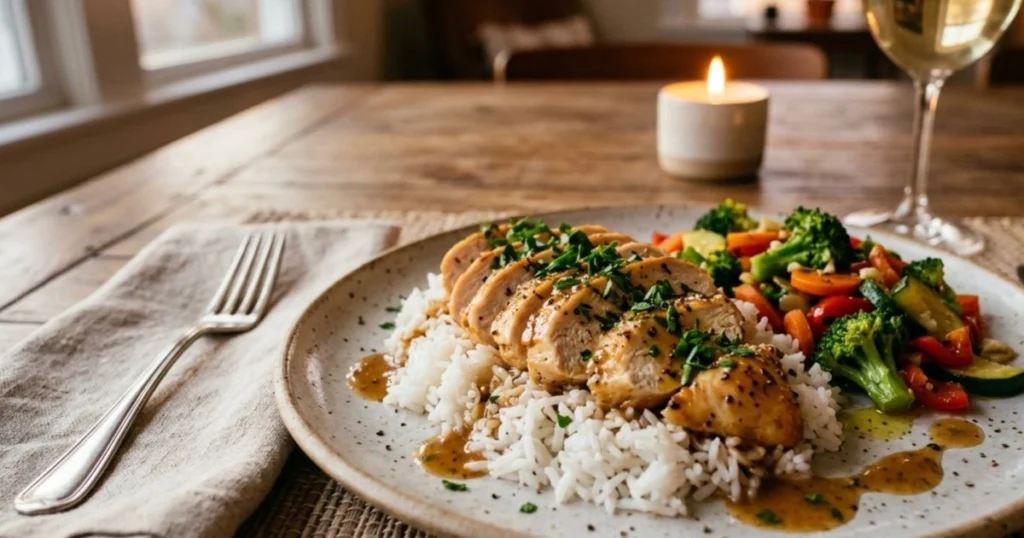
Sliced over a bed of rice with the pan sauce spooned on top turns this into a complete dinner in under 10 extra minutes.
Pair it with roasted vegetables or a simple side salad for a lighter meal, especially if you’re leaning on this as one of your go-to healthy chicken breast recipes for the week.
For something more indulgent, serve it alongside creamy mashed potatoes, or check out our easy recipes collection for quick sides that come together in the same 30 minutes.
If you’re feeding a crowd, this chicken also slices well for sandwiches or salads the next day, making it one of the more versatile chicken breast recipes for meal prep.
Frequently Asked Questions
Can I use frozen chicken breasts for this recipe?
Thaw them fully in the fridge first. Cooking from frozen leads to uneven results, since the outside overcooks long before the inside reaches a safe temperature.
How long does it take to cook chicken breast on the stove?
With pounded, even chicken breasts, expect about 8–10 minutes of total searing time plus 2–3 minutes finishing in the sauce, so roughly 12 minutes start to finish.
What’s the difference between searing and pan-frying chicken breast?
Searing uses higher heat for a shorter time to build a crust, while pan-frying typically uses more oil and moderate heat throughout. This method leans on searing first, then finishes gently.
Can I make chicken breast recipes like this one ahead of time for meal prep?
Yes — cook a full batch, let it cool, and portion it into containers. It reheats well and holds up in the fridge for 3–4 days.
Why did my chicken breast turn out dry?
It’s almost always one of three things: skipping the pound-to-even-thickness step, cooking past 165°F, or slicing immediately instead of resting for 5 minutes.
Is chicken breast a good source of protein?
Yes — a 6-ounce cooked chicken breast provides roughly 50 grams of protein, making it one of the leaner, higher-protein options among common chicken breast recipes.
Final Thoughts
This method took me a dozen imperfect dinners to land on, but it’s the one I now trust without thinking twice. Pound it even, season it well, sear it hot, and let it rest — that’s really the whole secret behind chicken breast recipes that actually stay juicy.
If you’re building out your weeknight rotation, my Chicken Parmesan recipe and Chicken Spaghetti recipe both use this same base chicken as their starting point.
Written by IJRecipes, home cook and food writer.