
Chocolate Cupcake Recipe Ingredients – Easy & Moist Guide
Table of Contents
There’s a moment that almost every baker remembers. You pull a tray of chocolate cupcakes out of the oven, the kitchen smells unbelievably good, and then — disappointment. They’re dry. They sank in the middle. The flavor is flat. Sound familiar?
Here’s the thing: that outcome almost never happens because of poor technique. It happens because of ingredients — the wrong ones, the wrong amounts, or the wrong understanding of what each one actually does. Once you truly understand your chocolate cupcake recipe ingredients, something shifts. You stop guessing and start baking with real confidence.
This guide walks you through every ingredient you need, explains exactly why it belongs in your batter, and shows you how to get rich, moist, deeply chocolaty cupcakes — every single time.
Why Your Chocolate Cupcake Recipe Ingredients Make or Break the Result
Most baking failures aren’t about what you did — they’re about what went into the bowl before you even started mixing. The ratio of wet to dry ingredients determines moisture. The type of fat you use shapes the crumb. The cocoa powder you grab off the shelf affects both color and depth of flavor.
When you understand the role of each ingredient, you stop following recipes blindly and start making smart decisions — even when you need to substitute something on the fly.
The Complete Chocolate Cupcake Ingredients List
Before diving into the details, here’s a full breakdown of what you’ll need to make 12 perfectly moist chocolate cupcakes:
Dry Ingredients
| Ingredient | Quantity | Purpose |
|---|---|---|
| All-purpose flour | 1 cup (125g) | Structure and body |
| Unsweetened cocoa powder | ½ cup (50g) | Rich chocolate flavor |
| Granulated sugar | ¾ cup (150g) | Sweetness and moisture retention |
| Baking soda | 1 tsp | Rise and lift |
| Baking powder | ½ tsp | Additional leavening |
| Salt | ¼ tsp | Flavor balance |
Wet Ingredients
| Ingredient | Quantity | Purpose |
|---|---|---|
| Large eggs | 2 (room temp) | Binding and structure |
| Buttermilk | ½ cup (120ml) | Tenderness and moisture |
| Vegetable oil | ½ cup (120ml) | Long-lasting moisture |
| Melted unsalted butter | ¼ cup (60g) | Richness and flavor |
| Pure vanilla extract | 1 tsp | Depth of flavor |
| Hot coffee or hot water | ½ cup (120ml) | Blooms cocoa, intensifies chocolate |
Breaking Down Each Ingredient – What It Does and Why It Matters
Flour: The Structural Backbone
Your choice of flour has a direct impact on the texture of your cupcakes. All-purpose flour is the standard, and it works beautifully. If you want a lighter, more delicate crumb, swap it for cake flour — just reduce the measurement slightly (remove 2 tablespoons per cup of AP flour used).
Whatever you do, avoid bread flour. The high gluten content makes cupcakes dense and chewy — not the result you’re after.
One more thing: always measure your flour using the spoon-and-level method. Scooping directly from the bag packs the flour in, which can add 20–30% more than the recipe calls for — and that alone can leave your cupcakes dry and heavy.
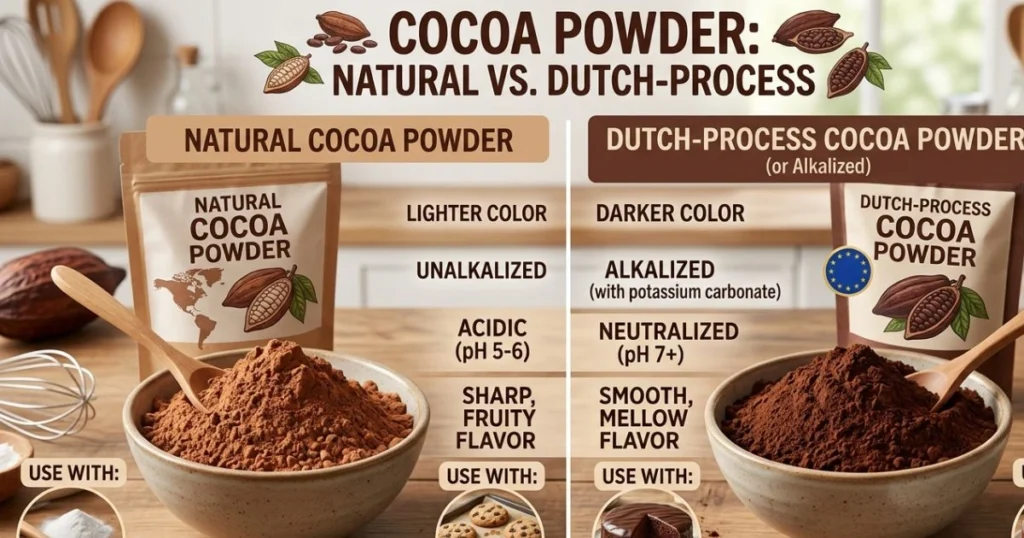
Cocoa Powder: Natural vs. Dutch-Process
This is where a lot of bakers get tripped up. Not all cocoa powders behave the same way in a recipe.
Natural cocoa powder contains natural acids that interact with baking soda. to help baked goods rise properly. to help baked goods rise properly. It produces a sharper, more intense chocolate flavor with slightly fruity undertones. It’s the go-to for classic American-style chocolate cupcakes.
Dutch-process cocoa powder has been alkalized to neutralize acidity. It’s richer in color, silkier in texture, and delivers a smoother, more balanced chocolate taste.
It pairs best with baking powder rather than baking soda.
The key rule: don’t swap one for the other without adjusting your leavening agents. They react differently, and getting this wrong affects both rise and taste.
Top picks worth picking up: Valrhona, Ghirardelli, or Hershey’s Special Dark all deliver excellent results.
Baking Soda and Baking Powder: Getting the Lift Right
These two aren’t interchangeable, and using them incorrectly is one of the most common reasons cupcakes fall flat — or rise too fast and collapse.
- Baking soda needs an acidic ingredient to activate. In this recipe, it reacts with the buttermilk and natural cocoa to create lift.
- Baking powder is self-contained and activates with heat and moisture alone.
Using both gives your cupcakes the best of both worlds — a good initial rise and sustained lift throughout baking. Too much of either, though, and you’ll end up with a metallic aftertaste or cupcakes that puff up fast and sink in the center.
Eggs: Binding, Structure, and Richness
Two large eggs at room temperature is the sweet spot for a standard 12-cupcake batch. Room temperature eggs emulsify into the batter more easily, creating a smoother, more uniform texture.
The yolks add richness and fat; the whites provide structure. Together, they give your cupcakes that satisfying, springy crumb that holds its shape once cooled.
If you’re baking vegan, two flax eggs (2 tablespoons ground flaxseed + 6 tablespoons water, rested for 5 minutes) work as a reliable substitute.
Oil vs. Butter: Why You Should Use Both
This is perhaps the most impactful decision in your chocolate cupcake recipe ingredients. Here’s how they stack up:
| Factor | Vegetable Oil | Butter |
|---|---|---|
| Moisture | High — stays soft for days | Lower — can dry out after 24 hrs |
| Flavor | Neutral | Rich and complex |
| Texture | Soft, tender crumb | Slightly denser |
The smart move? Use both. Oil keeps the cupcakes moist well past day one, while butter brings the flavor that makes them taste homemade and rich. This combination is the secret behind cupcakes that taste just as good the next day as they do fresh from the oven.
Buttermilk: The Ingredient You Shouldn’t Skip
Buttermilk does two things that regular milk simply can’t. First, its natural acidity tenderizes the gluten strands in the flour, giving you a softer, more delicate crumb. Second, it reacts with the baking soda to help your cupcakes rise.
No buttermilk in the fridge? No problem. Add 1 tablespoon of white vinegar or lemon juice to ½ cup of whole milk, stir briefly, and let it sit for 5 minutes. That’s your buttermilk substitute — and it works just as well.
Hot Coffee or Hot Water: The Game-Changing Ingredient
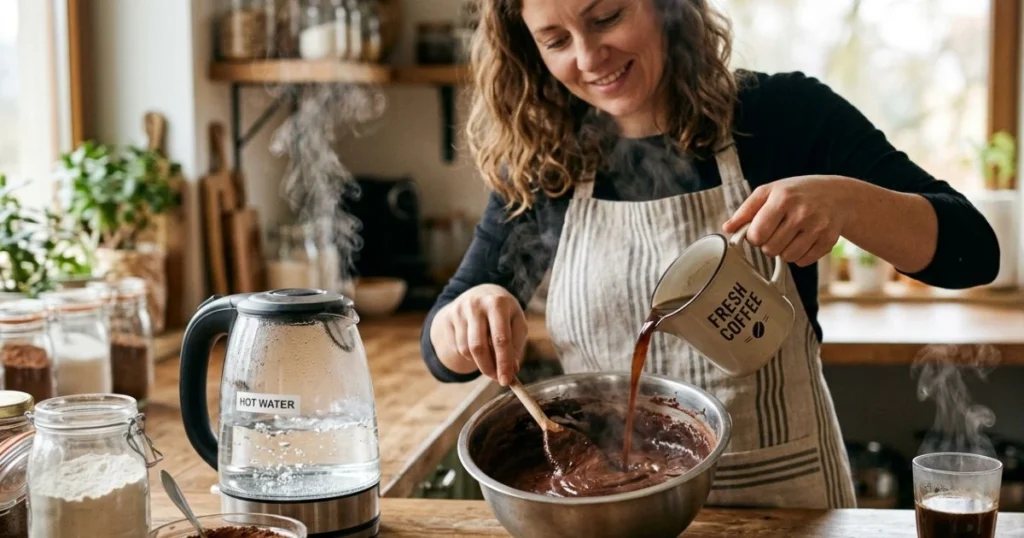
If you’ve never added hot coffee to your chocolate cupcake batter before, prepare for a revelation. Hot liquid “blooms” the cocoa powder — it opens up the flavor compounds and releases a depth of chocolate that simply isn’t possible with cold or room-temperature liquid.
Coffee amplifies the chocolate without making your cupcakes taste like a latte. If you’d rather skip caffeine, hot water works perfectly — you’ll still get a noticeable improvement in flavor over room-temperature liquid.
This single ingredient swap is what separates average chocolate cupcakes from the ones people ask you to bring to every gathering.
Vanilla Extract: The Supporting Actor That Matters
Vanilla in a chocolate recipe might seem unnecessary — but it’s not. Vanilla rounds out the bitterness of cocoa and adds a layer of warmth and complexity that makes the overall flavor feel more complete.
Always reach for pure vanilla extract over imitation. The difference in flavor is noticeable, especially in a recipe where every ingredient contributes to the final result.
Optional Ingredients That Take Your Cupcakes Further
Once you’ve mastered the basics, these additions can elevate your chocolate cupcakes to bakery-level quality:
- Espresso powder — intensifies chocolate flavor without any coffee taste
- Brown sugar (partial substitution for white) — adds molasses depth and extra moisture
- Sour cream — creates a richer, denser crumb than buttermilk
- Chocolate chips folded into the batter — melty pockets of chocolate in every bite
- Melted dark chocolate — for a fudgier, more indulgent texture overall
Scaling Your Ingredients for Any Batch Size
| Ingredient | 6 Cupcakes | 12 Cupcakes | 24 Cupcakes |
|---|---|---|---|
| All-purpose flour | ½ cup | 1 cup | 2 cups |
| Cocoa powder | ¼ cup | ½ cup | 1 cup |
| Sugar | ⅜ cup | ¾ cup | 1½ cups |
| Eggs | 1 | 2 | 4 |
| Buttermilk | ¼ cup | ½ cup | 1 cup |
| Oil | ¼ cup | ½ cup | 1 cup |
| Hot coffee/water | ¼ cup | ½ cup | 1 cup |
Putting It All Together: The Right Mixing Order
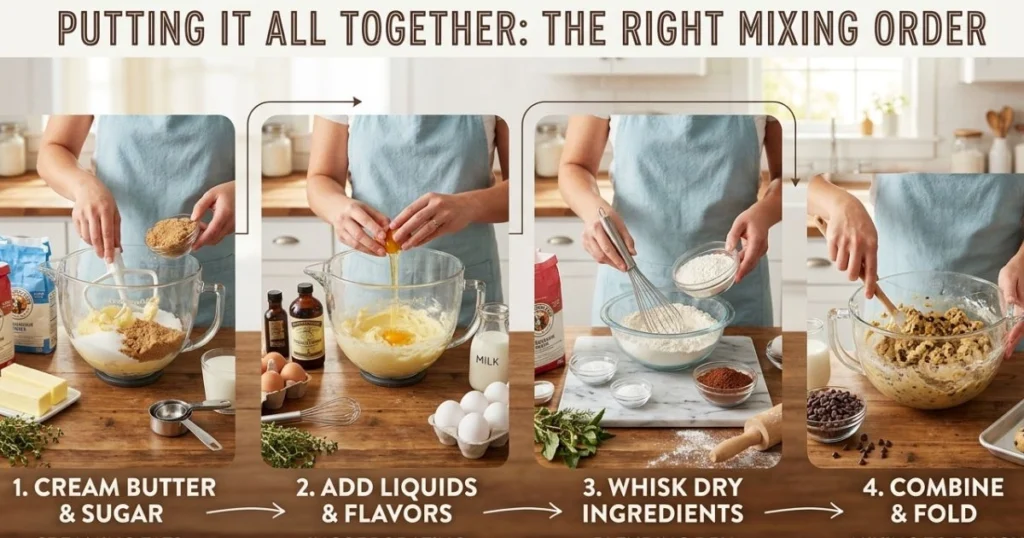
Getting the order of operations right prevents overmixing and ensures every ingredient does its job:
- Sift and whisk all your dry ingredients together in a large bowl
- In a separate bowl, whisk the wet ingredients — eggs, oil, buttermilk, vanilla, and melted butter
- Pour wet into dry and stir until just combined — a few streaks of flour are fine
- Slowly stir in the hot coffee or water — the batter will be thin, and that’s completely normal
- Fill lined cupcake tins ⅔ full to leave room for rise
- Bake at 350°F (175°C) for 18–20 minutes
Use the toothpick test: insert it into the center and look for a few moist crumbs — not wet batter, not completely clean. That’s your perfect window.
Conclusion
Now you have everything you need to bake chocolate cupcakes that are genuinely worth making — and worth sharing. Every ingredient in this list has a job, and when they all work together in the right proportions, the result is a cupcake that’s moist, rich, deeply chocolaty, and far better than anything from a box.
Your next step is simple: gather your ingredients, trust the process, and bake a batch this week. Once you experience the difference that understanding your chocolate cupcake recipe ingredients makes, you won’t go back to guessing.
Tried this guide? Drop a comment below with your results, share it with a fellow baker, or save it for your next baking session. Your perfect cupcake is one recipe away.
FAQ – Chocolate Cupcake Recipe Ingredients
What are the most important chocolate cupcake recipe ingredients for moisture? The biggest contributors to moisture are vegetable oil, buttermilk, and hot coffee or water. Oil keeps cupcakes soft for longer than butter alone, buttermilk tenderizes the crumb, and hot liquid blooms the cocoa for a richer, more hydrated batter.
Can I use water instead of buttermilk in my chocolate cupcake recipe ingredients? You can, but you’ll lose the tenderizing effect that buttermilk provides. A better substitute is whole milk with a tablespoon of vinegar or lemon juice — this mimics buttermilk closely and keeps the texture soft.
Why does my chocolate cupcake recipe call for both baking soda and baking powder? Each one activates differently. Baking soda reacts with acidic ingredients like buttermilk, while baking powder activates with heat. Using both creates a more reliable rise and a better overall texture.
How do I know if my chocolate cupcake recipe ingredients are fresh enough to use? Test your baking soda by dropping a little into vinegar — it should bubble immediately. Check the baking powder by mixing it with hot water.
Old vanilla extract loses its potency, and stale cocoa powder will produce a flat, dull flavor.
Is vegetable oil better than butter in chocolate cupcake recipe ingredients? Both have advantages. Oil creates a moister, longer-lasting crumb, while butter delivers superior flavor. For the best results, use both in your chocolate cupcake recipe ingredients — this approach gives you moist texture and rich taste in every bite.