
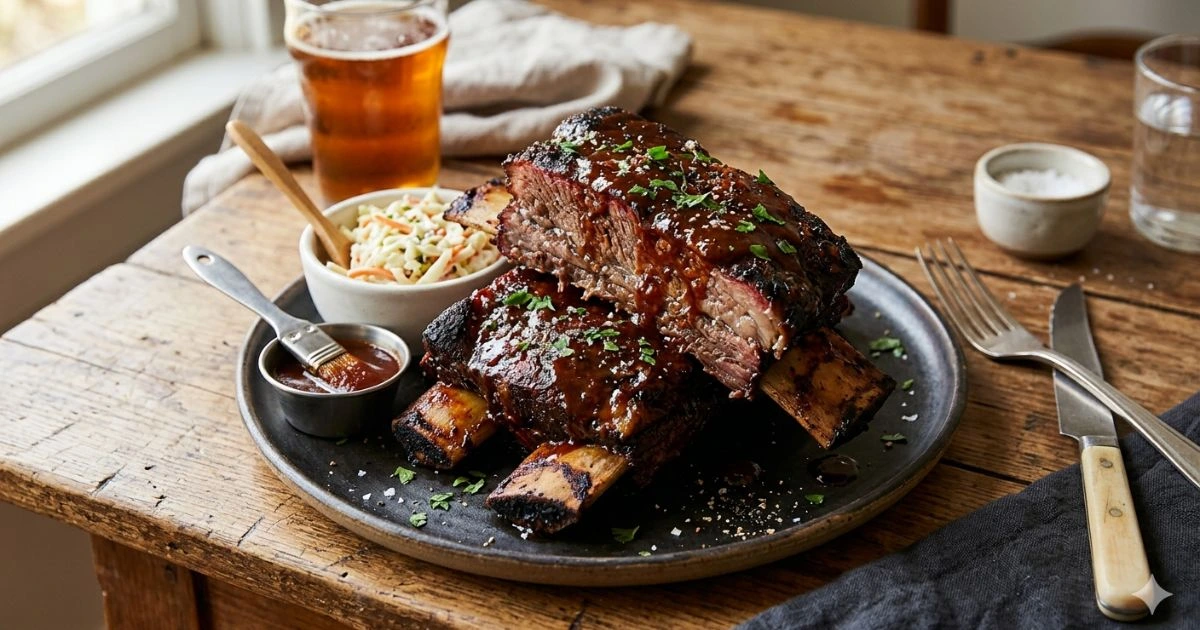
The Ultimate Beef Ribs Recipe for Juicy, Fall-Off-the-Bone Flavor
Table of Contents
Picture this: it’s a lazy Sunday afternoon, smoke drifting through the backyard, the kind of deep, meaty aroma that makes your neighbors lean over the fence and ask, “What are you cooking?” That moment — that feeling of anticipation, of something extraordinary slowly coming together — is exactly what a great beef ribs recipe delivers.
Whether you’re cooking for a crowd, treating your family to something special, or simply proving to yourself that you can nail competition-level ribs at home, this guide is built for you. Not just a list of ingredients, but a full walkthrough — from choosing the right cut to that final, glorious bite.
Let’s get into it.
What Makes a Perfect Beef Ribs Recipe?
Why Beef Ribs Are the King of the BBQ
If you’ve ever had properly cooked beef ribs, you already know they hit differently from pork ribs. The fat is richer, the meat deeper in flavor, and when done right, each bite carries that unmistakable beefy punch that no other cut can replicate.
Beef ribs have seen a significant rise in popularity across BBQ culture worldwide, largely driven by the Texas-style BBQ movement that champions simple seasoning and low-and-slow cooking. The result? A cut that rewards patience like nothing else on the grill.
The Two Main Types of Beef Ribs You Need to Know
Before you fire up your smoker or oven, you need to pick the right cut. Here’s a quick breakdown:
| Type | Meat Amount | Fat Content | Best Cooking Method | Flavor Intensity |
|---|---|---|---|---|
| Back Ribs | Low–Medium | Low | Oven / Grill | Mild–Medium |
| Plate Short Ribs | High | High | Smoker / Low & Slow | Rich & Bold |
| Chuck Short Ribs | Medium | Medium | Braise / Slow Cook | Deep & Savory |
For fall-off-the-bone results, plate short ribs are your best friend. Sometimes called “dino ribs,” these are the thick, meaty slabs you see at top BBQ joints — and yes, you can absolutely make them at home.
Ingredients for the Ultimate Beef Ribs Recipe
The Complete Ingredient List
The Ribs:
- 2–3 racks of beef plate short ribs (USDA Choice or Prime)
The Dry Rub:
| Ingredient | Quantity | Purpose |
|---|---|---|
| Coarse kosher salt | 2 tbsp | Flavor penetration & crust |
| Black pepper (coarse) | 2 tbsp | Classic Texas bark |
| Smoked paprika | 1 tbsp | Color & smoky depth |
| Garlic powder | 1 tbsp | Savory base note |
| Onion powder | 1 tsp | Sweetness & complexity |
| Brown sugar | 1 tbsp | Caramelization & balance |
| Cayenne pepper | ½ tsp | Subtle heat |
| Mustard powder | 1 tsp | Binding & tang |
The Spritz:
| Ingredient | Quantity | Purpose |
|---|---|---|
| Apple cider vinegar | ½ cup | Tenderize & add moisture |
| Beef broth | ½ cup | Deep flavor layer |
| Worcestershire sauce | 2 tbsp | Umami boost |
| Olive oil | 2 tbsp | Moisture & sheen |
Optional BBQ Glaze:
| Ingredient | Quantity |
|---|---|
| Ketchup | 1 cup |
| Brown sugar | ¼ cup |
| Apple cider vinegar | 2 tbsp |
| Smoked paprika | 1 tsp |
| Garlic (minced) | 2 cloves |
| Hot sauce | 1 tsp |
Step-by-Step Beef Ribs Recipe — The Ultimate Method
Step 1 — Prepping Your Beef Ribs Like a Pro
Your results begin long before the heat does. Start by flipping your rack bone-side up and locating the thin, papery membrane running along the back. Slide a butter knife underneath it, grab it with a paper towel for grip, and peel it clean off. Leaving this on creates a chewy barrier that blocks your rub from doing its job.
Next, trim any hard fat caps down to about ¼ inch — enough to keep the meat moist, not so much that it turns greasy. Pat the ribs completely dry with paper towels. Dry surface = better crust.
Season generously, wrap loosely in plastic, and let them rest in the fridge for a minimum of one hour. Overnight is better. This isn’t just about flavor — the salt draws moisture out and then back in, effectively seasoning the meat from within.
Step 2 — Applying the Perfect Dry Rub
Here’s a tip most people skip: don’t just sprinkle the rub on top. Press it in. Use your palms and fingertips to firmly press the spice blend into every surface — top, bottom, sides. This creates contact, and contact creates bark.
Want better adhesion? Brush a thin coat of yellow mustard over the ribs before applying your rub. Don’t worry — you won’t taste the mustard. It simply acts as a binder, helping the spices lock in place throughout the cook.
Step 3 — Choosing Your Cooking Method
Method A — Smoked Beef Ribs (The Gold Standard)
If you have access to a smoker, use it. This is the method that delivers the deepest flavor, the most striking smoke ring, and that bark you’ll want to photograph before eating.
- Temperature: 225°F–250°F (107°C–121°C)
- Wood: Oak is the classic choice. Hickory adds intensity. Cherry gives a subtle sweetness. Avoid mesquite for long cooks — it can turn bitter.
- Time: 6–8 hours for plate ribs
- Wrap: At 160°F–170°F internal temp, wrap in unwaxed butcher paper to push through the stall
Method B — Oven-Baked Beef Ribs (Indoor Alternative)
No smoker? No problem. Your oven can produce incredibly tender ribs with the right approach.
- Preheat to 275°F (135°C)
- Place ribs bone-side down on a wire rack over a foil-lined baking sheet
- Cover tightly with foil for the first 3 hours
- Uncover, brush with glaze if using, and cook for another 30–60 minutes uncovered
- Add a few drops of liquid smoke to your rub or glaze to replicate that smoky depth
Method C — Slow Cooker Beef Ribs (The Weeknight Hero)
When time is short but you still want fall-off-the-bone results, the slow cooker earns its keep.
- Setting: Low for 8 hours or High for 4–5 hours
- Add ½ cup beef broth to the bottom of the cooker
- Once done, transfer ribs to a baking sheet and broil for 5–7 minutes to develop color and caramelization
Method D — Grilled Beef Ribs (Weekend Warrior)
Set your grill up for indirect heat — coals or burners on one side, ribs on the other. Keep the lid closed as much as possible and maintain a consistent 250°F. Spritz every 45 minutes, and plan for 4–5 hours total.
Step 4 — Building the Bark, Managing the Stall & Spritzing
Around the two-hour mark, start spritzing your ribs every 45 minutes to an hour. The spritz keeps the surface moist, which allows more smoke to adhere, building layers of flavor. It also slows the outer cook so your bark develops evenly without burning.
You’ll likely hit the temperature stall somewhere between 150°F and 170°F — this is where the ribs seem to stop cooking for what feels like forever.Stay calm and resist the urge to turn up the heat. The stall is moisture evaporating from the surface, cooling the meat at the same rate it’s heating. This is where patience separates good ribs from great ones.
Step 5 — The Wrap
Once your internal temperature hits 160°F–170°F, it’s time to wrap. Here’s how your options stack up:
| Wrap Type | Moisture | Bark Preservation | Ease of Use |
|---|---|---|---|
| Butcher Paper | Medium | Excellent | Moderate |
| Aluminum Foil | High | Softens slightly | Easy |
| No Wrap | Low | Best | Simple |
For competition-style bark, go with butcher paper. For maximum tenderness with a softer exterior, foil works beautifully. Both approaches deliver ribs worth bragging about.
Step 6 — The Final Rest
You’ve put in 6, 7, maybe 8 hours. This isn’t the moment to hurry. Resting your ribs for a minimum of 30–45 minutes allows the internal juices — which have been pushed toward the center by heat — to redistribute throughout the meat. Cut too early and those juices run straight onto your cutting board instead of staying in your bite.
Wrap your rested ribs in a towel and tuck them into a cooler. They’ll stay perfectly warm for up to two hours using this “faux cambro” method — a trick borrowed from professional pitmasters.
Your ribs are done when a meat probe or toothpick slides in with zero resistance, like pushing into soft butter. Target temperature: 195°F–203°F.
Pro Tips for the Best Beef Ribs Recipe Every Time
Temperature Is Everything
Cooking by time alone is a gamble. Invest in a reliable dual-probe meat thermometer and track both your cooking chamber and your meat temperature throughout the process. Every rack behaves differently depending on thickness, fat content, and starting temperature.
| Doneness | Internal Temp | Texture |
|---|---|---|
| Just Done | 185°F (85°C) | Firm but tender |
| Fall-Off-the-Bone | 195°F–203°F (90–95°C) | Melt-in-mouth |
| Overcooked | 210°F+ (99°C+) | Mushy, dry |
Common Mistakes to Avoid
- Skipping the membrane removal
- Cooking at too high a temperature
- Opening the lid too often and losing heat
- Cutting into the ribs before resting
- Applying sauce too early — it burns before your bark forms
- Using wet wood chips, which produce bitter, acrid smoke
What to Serve with Your Beef Ribs
The richness of beef ribs calls for sides that either complement or cut through the fat:
- Creamy coleslaw — the acidity and crunch balance every bite
- Baked mac and cheese — pure comfort food harmony
- Pickled red onions — bright, tangy, and absolutely perfect
- Cornbread — to soak up every drop of those cooking juices
- Grilled corn on the cob — simple, smoky, and seasonal
For drinks, a bold Cabernet Sauvignon or smoked porter pairs beautifully. If you’re keeping it non-alcoholic, a cold sweet tea or sparkling lemonade hits the spot.
Frequently Asked Questions About Beef Ribs Recipe
How long does it take to cook a beef ribs recipe? It depends on your method — smoker takes 6–8 hours, oven 3.5–4.5 hours, slow cooker 8 hours on low, and grill 4–5 hours indirect.
What is the easiest beef ribs recipe for beginners to follow? The oven method. It’s the most controlled environment, forgiving of minor temperature fluctuations, and still delivers outstanding results.
How can I tell when my beef ribs recipe is fully cooked? Use the probe test — your thermometer should slide in with no resistance at 195°F–203°F. You can also use the bend test: pick up the rack with tongs at one end; it should bend dramatically and start to crack on the surface.
Can I make a beef ribs recipe without a smoker? Absolutely. The oven method with liquid smoke added to your rub or glaze produces deeply satisfying results that are far closer to smoked ribs than most people expect.
Why did my beef ribs recipe come out tough? Most likely culprits: membrane wasn’t removed, internal temp didn’t reach 195°F+, or the cook temperature was too high. Low and slow isn’t just a suggestion — it’s the whole game.
Does the 3-2-1 method work for a beef ribs recipe? The 3-2-1 method (3 hours smoke, 2 hours wrapped, 1 hour unwrapped) was designed for pork ribs. For beef back ribs, it can work well. For larger plate short ribs, you’ll likely need more time at each stage.
Final Thoughts on Mastering the Ultimate Beef Ribs Recipe
Great beef ribs aren’t complicated — but they do demand respect. Respect for the process, for the low temperature, for the rest. When you give this beef ribs recipe the time and attention it asks for, it gives back tenfold.
You now have everything you need: the right cut, the full ingredient breakdown, four cooking methods, pro-level tips, and the confidence to pull it off regardless of your setup.
This weekend, light the smoker, preheat that oven, or fire up the grill — and make something unforgettable. Share your results in the comments below, tag us on social media, and if you found this guide helpful, pass it along to someone who deserves a plate of the best ribs they’ve ever had.
Because some recipes aren’t just cooked. They’re experienced.