
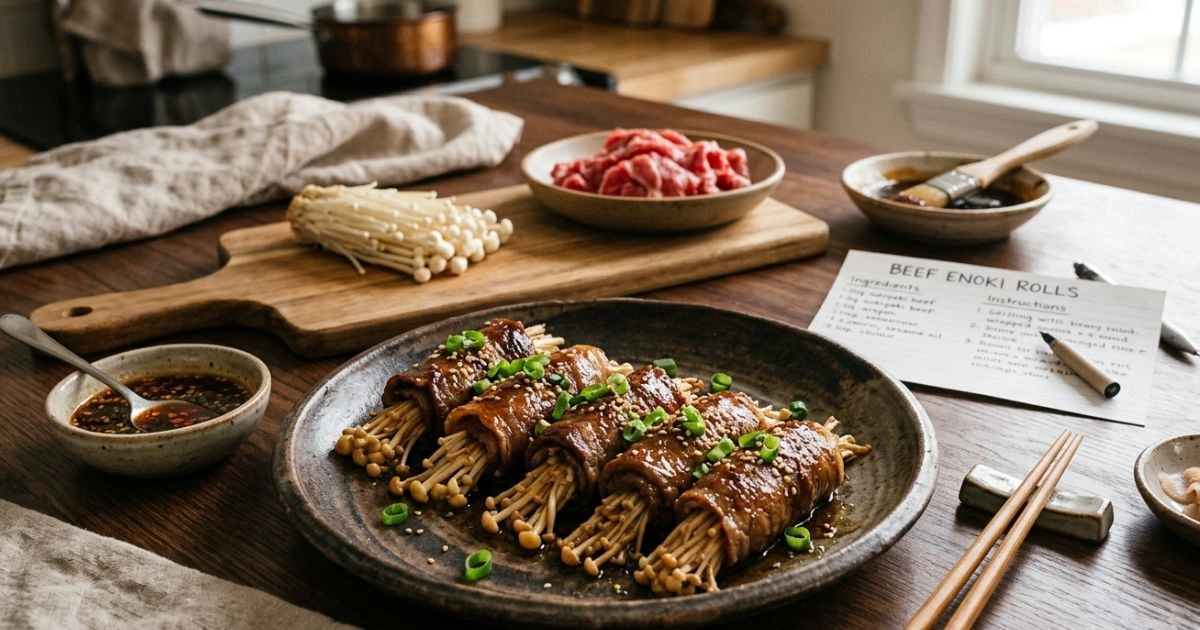
Beef enoki roll recipe: Flavorful Japanese-Inspired Bites
Table of Contents
There’s a moment — you probably know it — when a single bite of food stops you completely. Not because you’re hungry, but because something about it just lands. The flavor, the texture, the warmth of it. That’s exactly what happens the first time you make this beef enoki roll recipe at home.
Maybe you’ve had these at a Japanese restaurant, tucked between skewers and small plates, glowing under soft lighting with that sticky, caramel-dark glaze. Or maybe you stumbled across them online and thought, can I actually pull this off in my own kitchen? The answer is yes — and easier than you’d think.
These little rolls are tender, savory, slightly sweet, and layered with that deep umami punch that Japanese cooking does better than almost anyone. Once you make them, they’re going in your regular rotation. That’s a promise.
What Are Beef Enoki Rolls — And Why Should You Care?
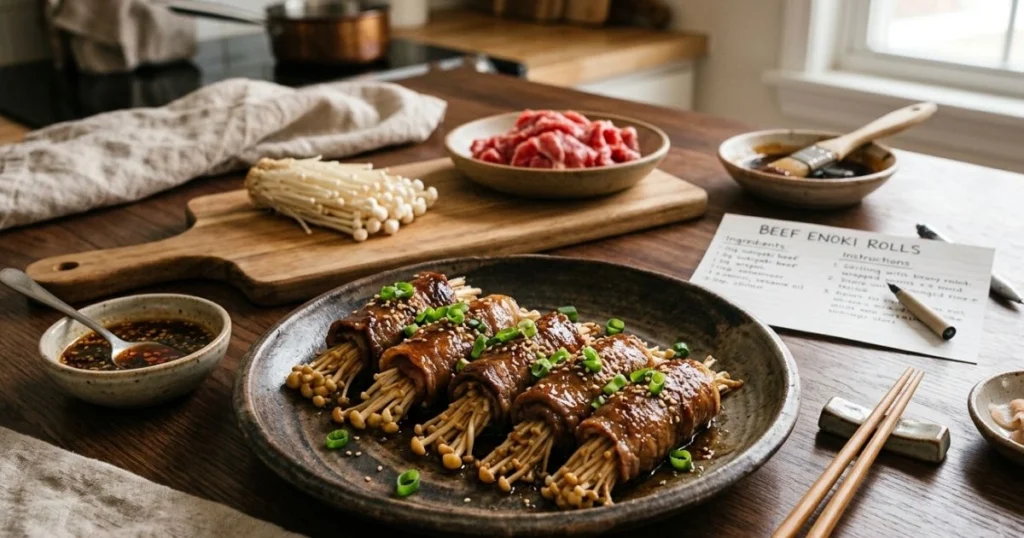
The Japanese Roots of This Dish
Beef enoki rolls come straight from the heart of Japanese izakaya culture. An izakaya is essentially Japan’s version of a gastropub — a relaxed, convivial place where people gather after work, order small plates, and share food over cold drinks. These venues are legendary for their yakitori skewers, fried tofu, and of course, gyuniku maki — meat-wrapped rolls.
The specific combination of thinly sliced beef and enoki mushrooms became a staple in both izakayas and yakiniku (Japanese BBQ) restaurants, where diners grill their own ingredients tableside. The pairing makes perfect culinary sense: the mushrooms are delicate and almost thread-like, which means they cook quickly and absorb surrounding flavors like a sponge. Wrap them in marbled beef and hit them with a hot pan? You’ve got something truly special.
Over the past decade, this dish has crossed borders and landed on tables worldwide — and for good reason. It looks elegant, tastes complex, and takes less than 30 minutes from start to finish.
What Makes This Recipe Work So Well
The magic here is contrast. You’ve got the richness of the beef against the lightness of the mushrooms. You’ve got the sticky, glossy glaze hitting a caramelized sear. You’ve got softness and a whisper of bite in every mouthful.
Beyond the flavors, this recipe is genuinely practical. You don’t need a culinary degree. You don’t need expensive equipment. What you need is decent ingredients, a hot pan, and about 25 minutes of your time.
Ingredients for Your Beef Enoki Roll Recipe
The Core Ingredients
Before you start cooking, gather everything in advance. Having your mise en place ready makes the process smooth and enjoyable.
| Ingredient | Quantity | Notes |
|---|---|---|
| Thin-sliced beef (ribeye or sirloin) | 200g / 7oz | Shabu-shabu cut is ideal |
| Enoki mushrooms | 200g / 1 pack | Trim base, separate into clusters |
| Soy sauce | 3 tbsp | Low-sodium works well |
| Mirin | 2 tbsp | Adds sweetness and gloss |
| Sake | 1 tbsp | Dry sherry as substitute |
| Sugar | 1 tsp | Helps with caramelization |
| Sesame oil | 1 tsp | For finishing aroma |
| Garlic (minced) | 2 cloves | Optional but highly recommended |
| Green onions | 2 stalks | Sliced thin, for garnish |
| Sesame seeds | 1 tsp | For garnish |
| Neutral cooking oil | 1 tbsp | For searing |
The Glaze — Broken Down
The glaze is where the dish gets its soul. It’s a simple combination of pantry staples, but the result is a deeply flavored, slightly caramelized coating that clings to every roll.
| Sauce Component | Amount | Role |
|---|---|---|
| Soy sauce | 3 tbsp | Savory, umami base |
| Mirin | 2 tbsp | Natural sweetness and shine |
| Sake | 1 tbsp | Adds depth and complexity |
| Sugar | 1 tsp | Helps glaze caramelize |
| Sesame oil | 1 tsp | Aromatic finish |
Mix all five together in a small bowl before you start cooking. You want it ready to pour the moment your rolls are seared.
Smart Variations Worth Trying
Your beef enoki roll recipe doesn’t have to be rigid. Once you’ve nailed the base version, here’s where you can take it:
- Tuck a thin strip of green onion or julienned carrot inside the roll for extra color and crunch
- Swap enoki for shimeji or shiitake mushrooms if that’s what’s available
- Add a sliver of cream cheese inside for a modern fusion twist
- Use thin-sliced chicken thigh in place of beef for a lighter option
- Stir a teaspoon of gochujang into the glaze for a spicy Korean-Japanese crossover
What You’ll Need in the Kitchen
You don’t need much — which is part of why this recipe is so accessible:
- A sharp knife and sturdy cutting board
- A non-stick skillet or cast iron pan
- Tongs or chopsticks for turning
- A small mixing bowl for your glaze
- Toothpicks to hold the rolls while searing
- A clean plate for assembly and presentation
That’s it. No special equipment, no hard-to-find tools.
Step-by-Step: How to Make the Beef Enoki Roll Recipe
Step 1 — Prep the Enoki Mushrooms
Take your pack of enoki mushrooms and cut off the root base — about 2 centimeters from the bottom. This is where the mushrooms clump together in a woody, inedible mass, so it goes straight in the bin.
Separate the mushrooms into small, even clusters. You’re aiming for bundles roughly the width of your finger — enough to fill the roll without overloading it. Once separated, pat them dry with a paper towel. This step matters more than you’d think: excess moisture in the pan will cause your rolls to steam instead of sear, and you’ll lose that gorgeous browned exterior.
Step 2 — Roll the Beef
Lay one slice of beef flat on your cutting board. If the slice is long, you may only need one; if shorter, you can overlap two slightly. Place a small cluster of enoki mushrooms at one end of the beef slice, positioning the mushroom tips so they poke out slightly at the top of the roll — this looks beautiful on the plate.
Roll the beef tightly around the mushrooms, moving forward evenly so the roll holds its shape. Place it seam-side down on a plate. Secure with a toothpick if needed, especially if your beef slices are thinner or shorter. Repeat the process until all your ingredients are used up.
Step 3 — Mix Your Glaze
In a small bowl, combine your soy sauce, mirin, sake, sugar, and sesame oil. Stir well until the sugar fully dissolves. Set it right next to your stove — you’ll need it quickly once the rolls are seared.
Step 4 — Sear the Rolls
Heat your skillet over medium-high heat and add the cooking oil. Let the pan get properly hot before adding anything — a hot surface is what gives you color and texture.
Place the rolls seam-side down first. This locks the shape immediately and ensures the roll stays tight throughout cooking. Sear for 1 to 2 minutes per side, turning carefully with tongs to brown all surfaces evenly. Your total searing time will be around 5 to 7 minutes depending on thickness.
You’re looking for a deep golden-brown exterior with the beef just cooked through. Avoid pressing the rolls down — let them sear naturally.
Step 5 — Add the Glaze
Once all sides are browned, reduce your heat to medium-low. Pour the glaze directly over the rolls in the pan. It will bubble immediately and start to reduce — that’s exactly what you want.
Gently turn the rolls in the glaze, coating every surface. Let everything cook together for 1 to 2 minutes until the sauce thickens slightly and clings to the beef like a glossy lacquer. If the glaze reduces too quickly, add a tiny splash of water to loosen it.
Remove the toothpicks before plating.
Step 6 — Plate and Serve
Arrange your rolls neatly on a serving plate, cut side up if you’ve sliced them, or whole if you prefer. Drizzle any remaining glaze from the pan over the top. Scatter sliced green onions and sesame seeds across the plate. Serve immediately — these are best eaten hot, right out of the pan.
Pro Tips for Getting It Right Every Time
Choosing Your Beef
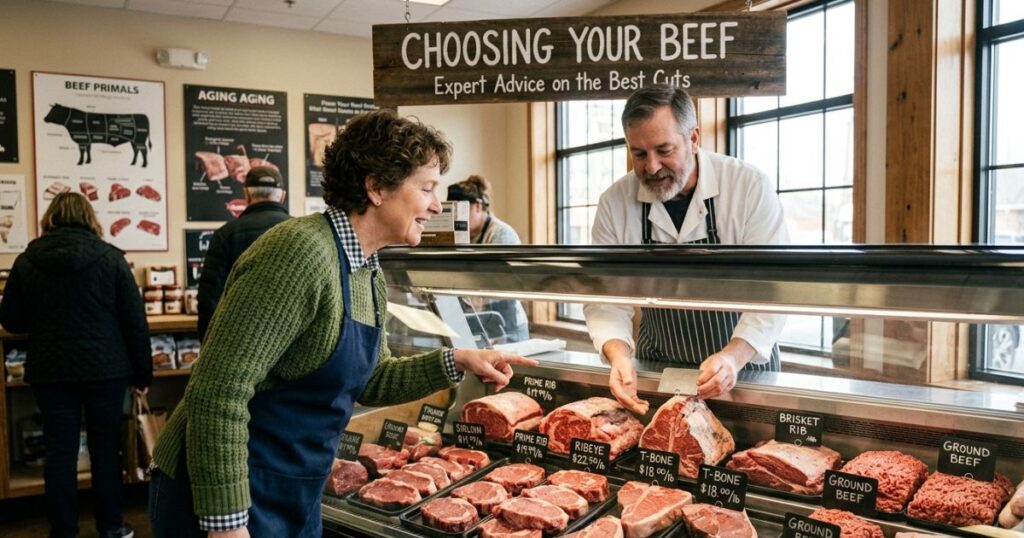
The most important variable in your beef enoki roll recipe is the cut and thickness of your beef. Thin is non-negotiable — you’re looking at 2 to 3mm slices maximum. Thicker than that and the beef will take too long to cook, the mushrooms will be overdone, and the roll won’t hold together neatly.
Ribeye is your best bet for flavor — the marbling melts during searing and bastes the mushrooms from the inside. Sirloin is leaner and equally delicious if you prefer less fat. Both are commonly available pre-sliced at Asian grocery stores under the label “shabu-shabu beef.” Alternatively, partially freeze a piece of beef for 45 minutes and slice it yourself with a sharp knife.
Avoiding the Most Common Mistakes
- Don’t crowd your pan. If you add too many rolls at once, the temperature drops and they steam instead of sear. Work in batches if needed.
- Don’t skip drying the mushrooms. Wet mushrooms = soggy rolls. That paper towel step is essential.
- Don’t walk away from the glaze. It reduces fast over medium-low heat. Stay present, keep turning, and pull the pan the moment it looks glossy and thick.
- Always sear seam-side first. This one move keeps your rolls from unraveling during the rest of the cooking process.
Storage and Make-Ahead Notes
If you’re prepping ahead for a dinner party or a busy weeknight:
- Assemble the rolls up to 6 hours in advance and keep them covered in the refrigerator
- Cooked rolls can be stored for up to 2 days in an airtight container in the fridge
- To reheat, place in a pan over medium-low heat with a small splash of water and cover briefly — avoid the microwave, which makes the beef rubbery
How to Serve Your Beef Enoki Rolls
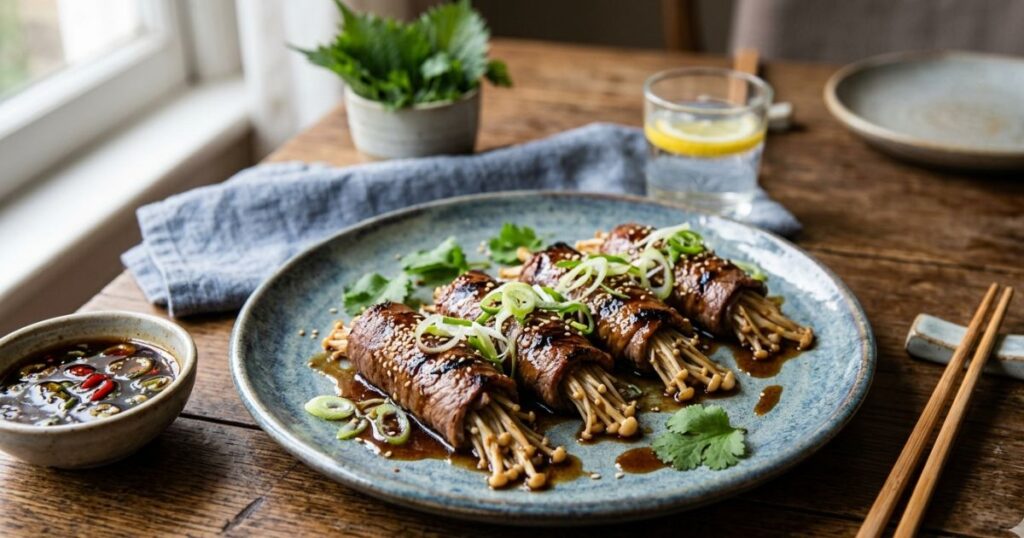
As a Starter or Appetizer
Serve 3 to 4 rolls per person on a small plate with a dipping sauce on the side. A simple mix of soy sauce, a dash of rice vinegar, and a pinch of chili flakes works beautifully. The rolls hold their own without sauce, but the option adds something interactive for guests.
As a Full Meal
Turn your beef enoki roll recipe into a complete dinner by pairing it with:
- A bowl of steamed Japanese short-grain rice
- A simple cup of miso soup with tofu and wakame
- A side of sunomono (Japanese cucumber salad with a light vinegar dressing)
- A small dish of pickled ginger or daikon to cleanse the palate between bites
Drink Pairings That Actually Work
| Drink | Why It Works |
|---|---|
| Cold junmai sake | Mirrors the sake in the glaze perfectly |
| Sapporo or Asahi beer | Cuts through the richness cleanly |
| Hot or iced green tea | Palate-cleansing, light, and authentic |
| Sparkling water with yuzu | Refreshing non-alcoholic option |
Nutritional Overview (Per Serving of 3–4 Rolls)
| Nutrient | Approximate Amount |
|---|---|
| Calories | 220–260 kcal |
| Protein | 18–22g |
| Total Fat | 12–15g |
| Saturated Fat | 4–5g |
| Carbohydrates | 8–10g |
| Sugar | 4–5g |
| Sodium | 580–650mg |
| Dietary Fiber | 1g |
Values are approximate and vary based on beef cut and exact glaze used.
Beyond the numbers, the ingredients themselves bring real nutritional value:
- Enoki mushrooms are low in calories but rich in B vitamins, fiber, and compounds studied for their immune-supportive properties
- Beef delivers high-quality protein, iron, zinc, and B12 — particularly valuable in a balanced diet
- Sesame oil brings heart-healthy unsaturated fats and antioxidants
- Garlic, when included, adds anti-inflammatory compounds that complement the dish without altering the flavor profile negatively
Variations to Keep Things Interesting
Once you’re comfortable with the base recipe, the real fun begins:
Spicy Version: Whisk a teaspoon of gochujang or sriracha into your glaze. Top the finished rolls with thin rings of fresh red chili. The heat plays brilliantly against the sweetness of the mirin.
Teriyaki Style: Swap your homemade glaze for a quality teriyaki sauce. Add a small splash of pineapple juice for a subtly tropical note that lifts the whole dish.
Air Fryer Method: Preheat your air fryer to 200°C (390°F). Place assembled rolls in the basket without overlapping. Cook for 6 to 8 minutes, flipping halfway through. Brush your glaze over the rolls during the final 2 minutes. You’ll get a slightly drier exterior but still excellent flavor.
Oven-Baked Version: Preheat your oven to 220°C (425°F). Arrange rolls on a foil-lined baking tray. Bake for 10 to 12 minutes, brushing glaze on halfway through. Finish under the broiler for 60 to 90 seconds for color.
Conclusion
This beef enoki roll recipe checks every box you want from a home-cooked dish — it’s fast, it’s impressive, it’s genuinely delicious, and it’s the kind of thing that makes people around your table ask for the recipe before they’ve even finished eating.
Whether you’re making it for a quiet dinner at home, bringing it to a gathering, or building it into your weekly meal rotation, the result is always the same: something that feels a little special, a little elevated, without actually requiring much effort at all.
Your kitchen is capable of producing this. The ingredients are accessible, the technique is learnable in one go, and the payoff is completely worth it.
Try this beef enoki roll recipe this weekend. Photograph it. Share it. Adjust it to your taste. And when you find your perfect version — with your preferred heat level, your chosen cut of beef, your personal twist on the glaze — make it yours entirely.
FAQ — Beef Enoki Roll Recipe
What exactly is a beef enoki roll recipe?
A beef enoki roll recipe is a Japanese-inspired dish where thinly sliced beef is wrapped tightly around clusters of enoki mushrooms, then pan-seared and coated in a sweet-savory glaze made from soy sauce, mirin, sake, and sesame oil. It’s a staple of Japanese izakaya and yakiniku dining culture.
Which beef cut works best for a beef enoki roll recipe?
Ribeye or sirloin sliced at 2 to 3mm thickness is ideal. Look for shabu-shabu cuts at Asian supermarkets or ask your butcher to slice a frozen block as thin as possible.
Can I make the beef enoki roll recipe without sake?
Absolutely. Substitute sake with dry sherry, or simply omit it and add a small extra splash of mirin. The depth of flavor changes slightly, but the result is still excellent.
How long does the beef enoki roll recipe take to prepare and cook?
From start to finish, you’re looking at 20 to 30 minutes — including prep, assembly, searing, and glazing. It’s one of the fastest impressive meals you can make.
Can I prepare the beef enoki roll recipe ahead of time?
Yes. Assemble the rolls up to 6 hours in advance and refrigerate them covered. Sear and glaze just before serving for the best texture and flavor.
Is the beef enoki roll recipe gluten-free?
Not by default. Regular soy sauce contains gluten. To make it gluten-free, substitute tamari for the soy sauce and verify that your mirin and sake are certified gluten-free.
What sides pair best with a beef enoki roll recipe?
Steamed Japanese rice, miso soup, cucumber sunomono, and pickled vegetables all complement these rolls perfectly. For a full spread, add a simple green salad with a sesame or ginger dressing.