
The Best Butter Cookie Recipe for Soft, Rich & Perfect Cookies
Table of Contents
Close your eyes for a second and picture this: a warm kitchen, the oven humming quietly in the background, and that unmistakable scent — buttery, sweet, faintly golden — curling through every room of your house. Chances are, that smell is already somewhere in your memory.
A grandmother’s tin on the counter at Christmas. A Saturday morning when the whole family lingered around the table longer than usual. That scent belongs to butter cookies, and it carries more weight than any recipe card ever could.
This guide hands you everything you need to recreate that feeling — deliberately, consistently, and deliciously. Whether you have baked cookies a hundred times or you are just finding your confidence in the kitchen, this butter cookie recipe will walk you through every decision, every technique, and every small trick that separates a forgettable cookie from one people ask for by name.
What Actually Makes a Butter Cookie Recipe Perfect?
Before you preheat anything, it helps to understand what you are aiming for. A truly exceptional butter cookie checks five key boxes that set it apart from the typical grocery-store version:
⦁ A tender, melt-on-the-tongue texture that holds together without crumbling in your hand
⦁ A pronounced, genuine butter flavour in every bite — not a faint background note
⦁ A delicate golden edge with a pale, slightly soft centre
⦁ Clean shape retention, especially if you plan to pipe or cut decorative forms
⦁ Reliable results that look and taste the same every single time you make them
None of those outcomes happen by accident.
They come from understanding your ingredients and treating them with a bit of care. That is exactly what this buttercookie recipe teaches you to do.
Why Your Butter Choice Changes Everything
The biggest flavour decision you will make in this recipe is the butter itself. Standard American butter sits around 80% butterfat. European-style butter — brands like Kerrygold, Plugra, or Land O’Lakes Extra Creamy — pushes that figure to 82 or 84%. That four-point difference translates directly into a richer flavour, a more tender crumb, and a dough that handles more smoothly. If you can get your hands on European-style butter, use it. Your cookies will taste noticeably better, and that is not an exaggeration.
Butter Cookie Recipe Ingredients at a Glance
This batch makes approximately 36 cookies (3-inch rounds). Every ingredient below has a specific job, and the notes column explains what happens when you swap things out:
Ingredient Amount Notes
Unsalted Butter 1 cup (226 g) European-style for richer flavour
Powdered Sugar 3/4 cup (90 g) Sifted — keeps texture silky
All-purpose flour – 2 cups (240 g), spooned and leveled, not packed.
Cornstarch 2 tbsp The secret to a tender crumb
Pure Vanilla Extract 1 1/2 tsp Real vanilla only
Salt 1/4 tsp Omit if using salted butter
Egg Yolk (optional) 1 large Adds golden colour & richness
Quick substitution note: If you only have salted butter, simply leave out the added salt. For a gluten-free version, a 1:1 gluten-free baking flour blend (Bob’s Red Mill or King Arthur work well) produces a comparable result. For a vegan batch, use a high-quality plant-based butter such as Miyoko’s — the texture stays solid, though the flavour will shift slightly.
How to Make This Butter Cookie Recipe — Step by Step
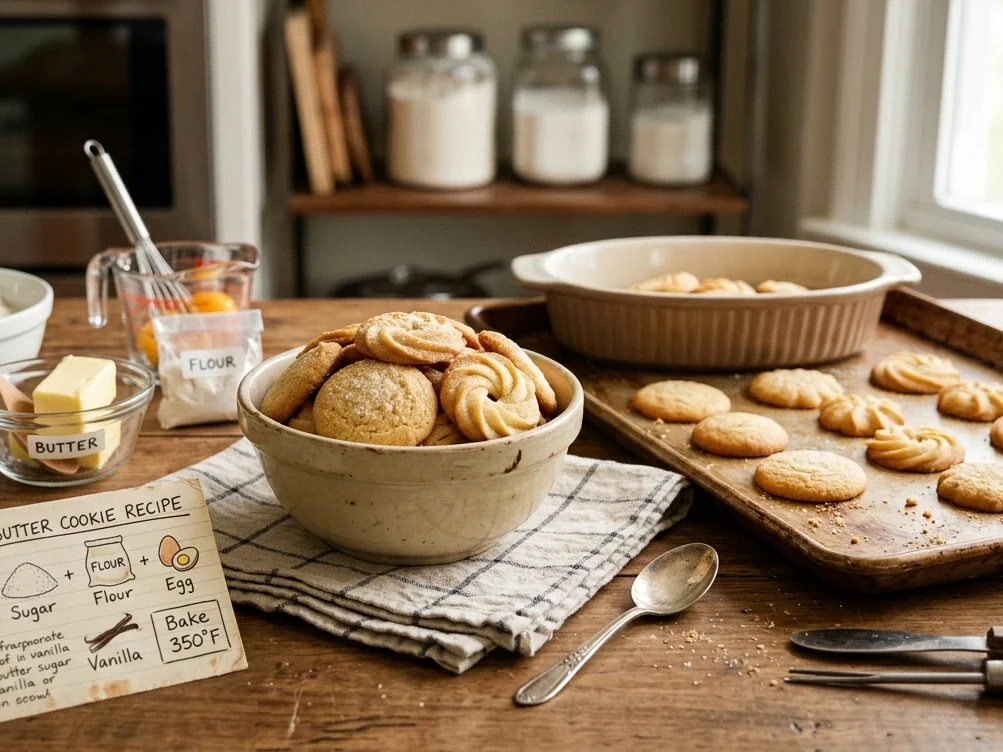
Good cookies follow a sequence. Rush one stage and the rest of the process compensates in ways that show up on the plate. Follow these steps in order, and your kitchen will smell incredible within the hour.
Step 1 — Get Your Butter Right
Pull your butter from the fridge 45 to 60 minutes before you start. You want it soft enough to press a finger into without force, but not greasy or translucent around the edges. Melted or over-softened butter causes your cookies to spread flat in the oven.
Using a stand mixer with the paddle attachment (or a hand mixer), beat the butter on medium speed for a full two to three minutes until it looks pale and fluffy. This is not optional — that creaming time builds the air pockets that give your cookies their lift and lightness.
Step 2 — Add Sugar, Then Flavour
Add your sifted powdered sugar and mix on low until it incorporates, then raise the speed to medium for another two minutes. The mixture should look almost whipped at this point. Next, add your vanilla extract and the egg yolk if you are using one. Mix until just combined.
Step 3 — Bring in the Dry Ingredients
Whisk your flour, cornstarch, and salt together in a separate bowl. Fold them into the butter mixture in two batches, mixing on low speed until just combined. This is the moment most home bakers go wrong — stop the mixer the instant you no longer see dry streaks. Overworking the dough at this point develops gluten and makes your cookies tough rather than tender.
Step 4 — Chill, Shape, and Bake
Divide the dough into two flat discs, wrap each one tightly in plastic wrap, and refrigerate for at least one hour. If you have the patience, overnight chilling deepens the flavour considerably. Cold dough holds its shape in theoven — warm dough does not.
When you are ready to bake, preheat your oven to 350 degrees Fahrenheit (175 Celsius) and line your baking sheets with parchment paper or a silicone mat. Roll the dough to about one-quarter inch thick, cut your shapes, and space them roughly one inch apart on the pan.
Bake for 10 to 13 minutes. The edges should pick up the faintest gold colour while the centres still look slightly underdone. That is exactly where you want them. Cookies keep cooking from the residual heat of the pan for another four to five minutes after you pull them from the oven, so resist the urge to bake them further.
Pro Baking Tips That Change Your Results
Small habits separate a confident home baker from someone who crosses their fingers every time. These tips apply directly to this butter cookie recipe, but they will carry over into nearly everything else you bake:
Weigh Your Flour
One cup of all-purpose flour measured by the scoop-and-pack method can land anywhere between 140 and 165 grams. Weighed properly, it should be 120 grams. That 45-gram swing is the difference between a tender cookie and a dry, crumbly one. Invest in a kitchen scale — it costs less than a decent bag of flour.
Do Not Rush the Cream
Two to three minutes of butter-and-sugar creaming feels unnecessarily long when you are standing there watching. Do it anyway. The air you incorporate at that stage cannot be added back later, and it directly affects how light and soft your finished cookies turn out.
Rotate the Pan
Most home ovens have hot spots. Rotating your pan 180 degrees at the halfway point of baking gives every cookie an equal chance at even browning. It takes four seconds and makes a visible difference.
Common Butter Cookie Problems — Solved
Here is a quick-reference guide so you know exactly what to adjust the next time something does not go to plan:
Situation What to Do
Cookies spread too flat Chill shaped dough for 30 min before baking
Texture turns tough Stop mixing the moment flour disappears
Pale, bland flavour Switch to European butter + real vanilla extract
Crumbly, dry texture Weigh your flour — don’t measure by volume
Uneven browning Rotate your pan halfway through baking
Five Variations Worth Trying With This Butter Cookie Recipe
Once you have the classic version down, the recipe becomes a canvas. Each variation below requires minimal extra work but delivers a noticeably different cookie:
- Brown Butter Cookies — Cook your butter in a light saucepan until the milk solids turn amber and it smells nutty, then chill until solid. Swap it in for regular butter and you get a cookie with deep caramel undertones that regular butter simply cannot match.
- Lemon Butter Cookies — Add one tablespoon of fresh lemon zest along with the vanilla. The citrus cuts through the richness and makes these feel bright and summery.
- Chocolate-Dipped Butter Cookies — Bake your cookies as normal, let them cool completely, then dip the base or one half into melted dark chocolate. Set on parchment until the chocolate firms. Simple and striking.
- Almond Butter Cookies — Replace half the vanilla extract with almond extract. The flavour reads as warm and slightly floral — a natural match for holiday tins.
- Slice-and-Bake Sprinkle Cookies — Fold a handful of rainbow sprinkles into the dough, then roll it into a log, wrap tightly, and freeze. Slice off rounds whenever you need a quick bake. A ten-minute job from frozen dough to oven.
How to Store Your Butter Cookies So They Stay Fresh
Baked butter cookies keep well at room temperature in a sealed container for up to seven days. Place a small piece of bread in the container — the cookies absorb just enough moisture from it to stay soft without turning soggy. Avoid storing them anywhere humid or near strong-smelling foods, since butter is highly absorbent.
Freezing Your Dough or Your Baked Cookies
⦁ Unbaked dough: Wrap tightly in plastic and foil. Keeps for up to three months. Thaw overnight in the fridge before rolling.
⦁ Baked cookies: Layer between sheets of parchment in an airtight container and freeze for up to three months. Thaw at room temperature for 20 to 30 minutes before serving.
⦁ Slice-and-bake log: Store frozen and slice rounds directly from frozen. Add two to three minutes to your baking time.
The Takeaway
A great butter cookie recipe is not complicated — but it does reward attention. Use real butter, and use good vanilla. Weigh your ingredients rather than eyeballing them. Chill your dough before it goes into the oven. Pull your cookies out while the centres still look ever-so-slightly underdone. Those four habits alone will produce cookies that taste like they came from somewhere that actually cares.
The recipe above gives you a reliable foundation. The variations give you room to make it your own. The troubleshooting table means you will know exactly what to adjust if your first batch throws a curveball.
More than anything, butter cookies are a reminder that the best things in the kitchen are often the simplest ones — flour, sugar, butter, time. That is all they have ever needed.
Ready to Bake? Preheat your oven, unwrap that block of good butter, and give this recipe a go today. Once your first batch comes out golden and fragrant, drop a comment below telling us which variation you tried first. Share this article with a fellow home baker who deserves a little joy in their kitchen — because great cookies are always better when shared.
Frequently Asked Questions About This Butter Cookie Recipe
Q: What is the best butter to use for a butter cookie recipe?
European-style unsalted butter with at least 82% butterfat gives you the richest flavour and most tender texture. Kerrygold and Plugra are two widely available options. If you can only find standard American butter, your cookies will still be good — just not quite as rich.
Q: Why do my butter cookies keep spreading flat in the oven?
Almost always, this comes down to butter that is too warm or too soft before you start mixing. Your butter should be pliable but not greasy. If your kitchen runs warm, chill the shaped cookies on the baking sheet for 20 to 30 minutes before they go into the oven. That rest time is usually all it takes.
Q: Can I make this butter cookie recipe without a stand mixer?
Yes — though your arms will feel it. Use very well-softened butter and a sturdy wooden spoon or silicone spatula to cream the butter and sugar by hand for five to seven minutes. A stand or hand mixer genuinely produces a better result, but hand-mixed cookies are worth making if that is all you have available.
Q: How long does the dough stay good in the refrigerator?
Wrapped tightly, the dough holds its quality in the fridge for up to three days. After that, freeze it for storage up to three months. The flavour of the dough actually deepens slightly after a night in the fridge, so making it a day ahead is never a bad idea.
Q: Is this butter cookie recipe the same as shortbread?
They are close relatives but not identical. Classic shortbread uses a higher butter-to-flour ratio with no egg, which produces a drier, more crumbly texture. This butter cookie recipe includes an optional egg yolk and cornstarch, making it softer and more cooperative if you want to pipe or cut shapes. Think of shortbread as the sturdier older sibling.
Q: How do I decorate these cookies?
A simple powdered sugar glaze (icing sugar plus a few teaspoons of milk) works beautifully and sets within an hour. Royal icing (icing sugar, meringue powder, and water) holds up better for detailed designs and dries completely hard. For a quick finish, press sanding sugar or sprinkles onto the tops before baking — no additional decoration needed.